
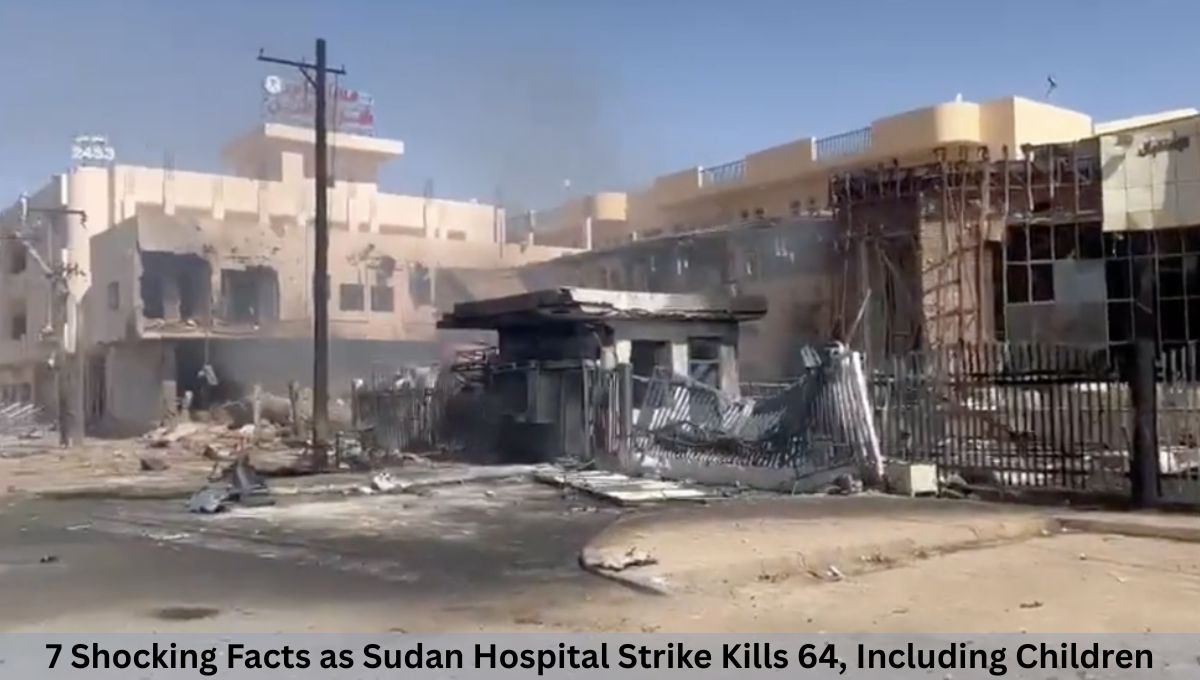
7 Shocking Facts as Sudan Hospital Strike Kills 64, Including Children, amid ongoing civil war. The war in Sudan has reached yet another devastating milestone, as a deadly strike on a hospital in the Darfur region has killed at least 64 people, including 13 children.
The attack, confirmed by the World Health Organization, has drawn widespread international condemnation and renewed urgent calls for an end to the violence.
The incident highlights the growing humanitarian catastrophe in Sudan, where healthcare facilities—once considered safe zones—are increasingly becoming targets.
With thousands already killed and millions displaced, the latest strike underscores the brutal reality of a conflict that shows no signs of slowing down.
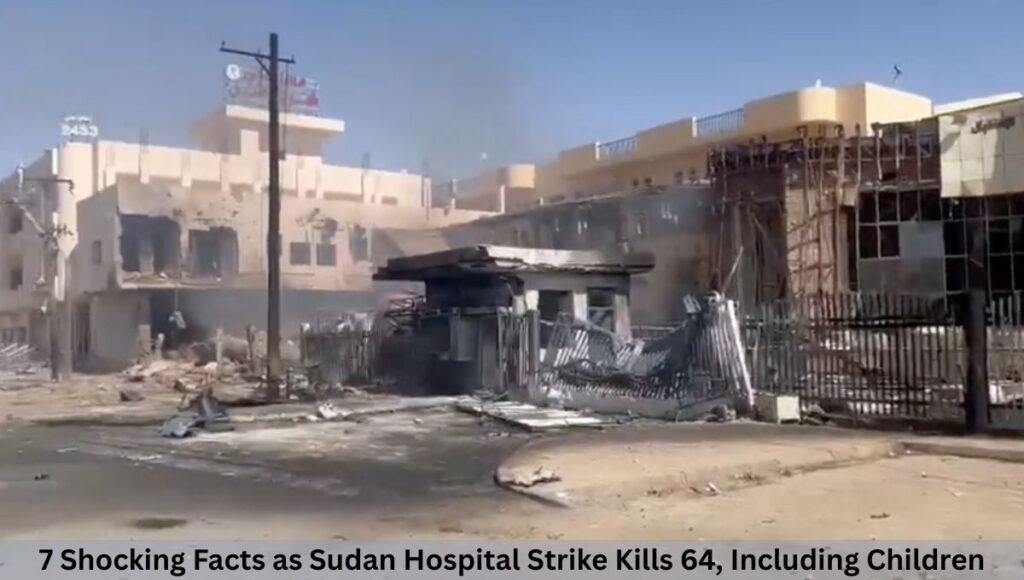
7 Shocking Facts as Sudan Hospital Strike Kills 64, Including Children
What Happened: Deadly Strike on a Hospital
Attack on Al-Daein Teaching Hospital
The attack occurred at the Al-Daein Teaching Hospital in East Darfur, a key medical facility serving the region’s population.
According to WHO Director-General Tedros Adhanom Ghebreyesus, the strike took place late Friday night and resulted in mass casualties.
Among the victims were:
- 64 people killed
- 13 children
- Multiple patients
- Two female nurses
- One male doctor
An additional 89 people were injured, including at least eight healthcare workers.
Hospital Rendered Non-Functional
The strike caused extensive damage to critical hospital departments:
- Paediatric unit
- Maternity ward
- Emergency services
As a result, the hospital has been rendered completely non-operational, cutting off essential medical care for thousands of people in the area.
A Pattern of Attacks on Healthcare
Rising Death Toll
The WHO has been tracking attacks on healthcare facilities through its surveillance system.
The latest figures paint a grim picture:
- Over 2,000 people killed in attacks on healthcare
- 2,036 deaths confirmed
- 213 attacks documented since the war began
These numbers highlight a disturbing trend:
healthcare facilities are increasingly being targeted in the conflict.
Escalating Violence Over the Years
Data shows that attacks on healthcare in Sudan are becoming more deadly:
- 2023: 64 attacks, 38 deaths
- 2024: 72 attacks, 200 deaths
- 2025: 65 attacks, 1,620 deaths
The sharp increase in fatalities indicates a shift toward more destructive methods, including the use of heavy weapons and drones.
Who Is Responsible? Conflicting Claims
Allegations of a Drone Strike
A Sudanese rights group known as the Emergency Lawyers reported that the attack was carried out by the Sudanese army using a drone strike.
However:
- The army has denied responsibility
- Some officials claim the intended target was a nearby police station
- No independent investigation has confirmed responsibility
WHO’s Neutral Position
The WHO verifies attacks but does not assign blame. Its role is limited to documenting incidents and assessing their impact on healthcare systems.
This lack of definitive attribution reflects the complexity of the conflict, where information is often contested and difficult to verify.
Sudan’s War: Background and Context
Origins of the Conflict
The war in Sudan began in April 2023, following a power struggle between:
- The Sudanese army
- The paramilitary Rapid Support Forces
What started as a political dispute quickly escalated into full-scale warfare, engulfing much of the country.
Control of Territory
Currently:
- The army controls eastern, central, and northern regions
- The RSF dominates much of Darfur in the west
This division has created a fragmented battlefield with multiple hotspots of violence.
Darfur: A Region Under Siege
Strategic Importance of Darfur
Darfur has long been a focal point of conflict in Sudan. The region is vast, resource-rich, and strategically significant.
The city of Al-Daein, where the hospital was attacked, is:
- The capital of East Darfur
- Under RSF control
- A frequent target of military operations
Repeated Attacks
The area has seen repeated strikes, including:
- Bombing of markets
- Destruction of infrastructure
- Civilian casualties
The latest hospital attack is part of a broader pattern of violence affecting the region.
Humanitarian Crisis Deepens
Mass Displacement
The war has created one of the world’s worst humanitarian crises:
- Over 12 million people displaced
- Millions forced to flee their homes
- Refugee flows into neighboring countries
Millions in Need of Aid
According to international agencies:
- Over 33 million people require humanitarian assistance
- Food insecurity is widespread
- Healthcare access is severely limited
The destruction of hospitals further exacerbates an already dire situation.
Healthcare Under Attack
Impact on Medical Services
The destruction of healthcare facilities has immediate and long-term consequences:
- Loss of emergency care
- Disruption of routine medical services
- Increased mortality rates
In conflict zones, hospitals are often the last line of defense for vulnerable populations. Their destruction leaves communities with few options.
Psychological and Social Effects
Beyond physical injuries, the impact includes:
- Trauma among survivors
- Fear of seeking medical care
- Breakdown of community trust
Use of Drones and Heavy Weapons
Changing Nature of Warfare
The Sudan conflict has seen increased use of drones and advanced weaponry.
According to UN officials:
- Drone strikes are now near-daily occurrences
- Explosive weapons are used in populated areas
- Civilian casualties are rising
International Concerns
UN human rights chief Volker Türk has expressed alarm over the growing use of such weapons, warning of their devastating impact on civilians.
Global Reaction and Condemnation
United Nations Response
The United Nations has strongly condemned the attack, describing it as:
- Appalling
- A violation of international humanitarian law
- A threat to civilian safety
Calls for Accountability
Global organizations are urging:
- Independent investigations
- Protection of healthcare facilities
- Accountability for those responsible
War Crimes and International Law
Targeting Hospitals
Under international humanitarian law:
- Hospitals are protected sites
- Attacks on healthcare facilities may constitute war crimes
The repeated targeting of such facilities raises serious legal and ethical concerns.
Allegations of Atrocities
Both sides in the conflict have been accused of:
- War crimes
- Crimes against humanity
The RSF, in particular, has been linked to atrocities in Darfur that some experts say resemble acts of genocide.
The Human Cost: Stories Behind the Numbers
Children Among the Victims
The deaths of 13 children highlight the indiscriminate nature of the violence.
Children are among the most vulnerable in conflict zones, often lacking access to protection and care.
Healthcare Workers Killed
The loss of medical staff—including nurses and doctors—further weakens the healthcare system, making recovery even more difficult.
Long-Term Consequences
Collapse of Healthcare Infrastructure
With hospitals destroyed or damaged:
- Medical capacity is severely reduced
- Disease outbreaks become more likely
- Long-term health outcomes worsen
Generational Impact
The effects of the conflict will likely be felt for years:
- Lost education opportunities
- Chronic health issues
- Economic instability
Efforts to Respond
WHO Support Measures
The WHO is working with local partners to:
- Strengthen primary healthcare services
- Provide trauma care supplies
- Increase treatment capacity
Challenges on the Ground
However, efforts face significant obstacles:
- Ongoing violence
- Limited access to affected areas
- Shortage of resources
“Enough Blood Has Been Spilled”
WHO chief Tedros issued a powerful call for peace, stating:
- “Enough blood has been spilled.”
- “Healthcare should never be a target.”
- “Peace is the best medicine.”
These words reflect growing global frustration with a conflict that continues to devastate lives.
What Happens Next?
Possible Scenarios
The future of Sudan remains uncertain.
Possible outcomes include:
- Continued escalation
- International intervention
- Negotiated settlement
Urgent Need for Action
Experts agree that:
- Immediate de-escalation is essential
- Civilian protection must be prioritized
- Humanitarian access must be expanded
Conclusion: A Crisis the World Cannot Ignore
The attack on the hospital in Darfur is more than a tragic event—it is a stark reminder of the human cost of war.
As healthcare systems collapse and civilians suffer, the need for urgent international action becomes increasingly clear.
Sudan’s conflict is no longer a regional issue—it is a global humanitarian crisis that demands attention, accountability, and, above all, a path toward peace.
Until then, the people of Sudan continue to endure unimaginable hardship, with each passing day adding to a toll that the world can no longer afford to ignore.
Also Read: UN Peacekeeping 2025: President Murmu Hails India’s Powerful Global Role
Also Read: “Enough Blood Has Been Spilled”: WHO Chief On Sudan Hospital Attack Killing 64
Related Posts:
- 7 Heartbreaking Facts About Venezuela's Earthquake Disaster
- Trump’s 20-Point Gaza Peace Plan Gains Urgent Global…

- 3 Explosive Conditions Iran Sets to End War with US…

- 5 Major Takeaways from the US Supreme Court's…

- 9 Explosive Claims as Trump Says US Winning Iran War

- 9 Explosive Signals as Trump Targets Cuba’s Oil…
