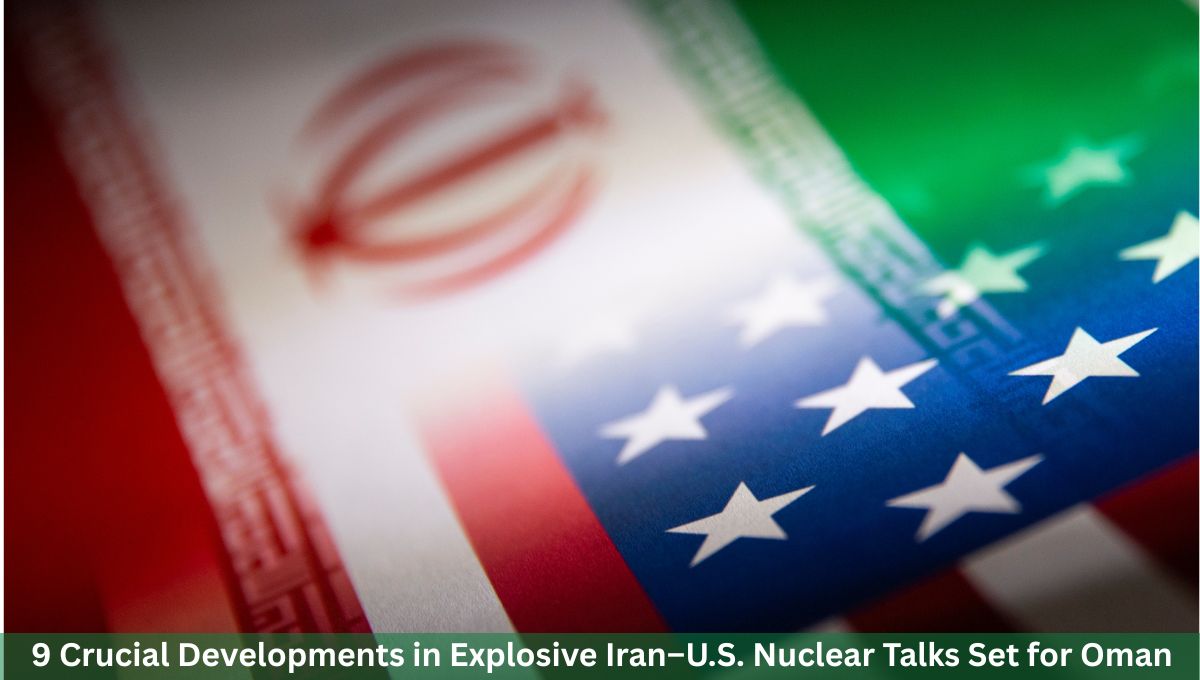
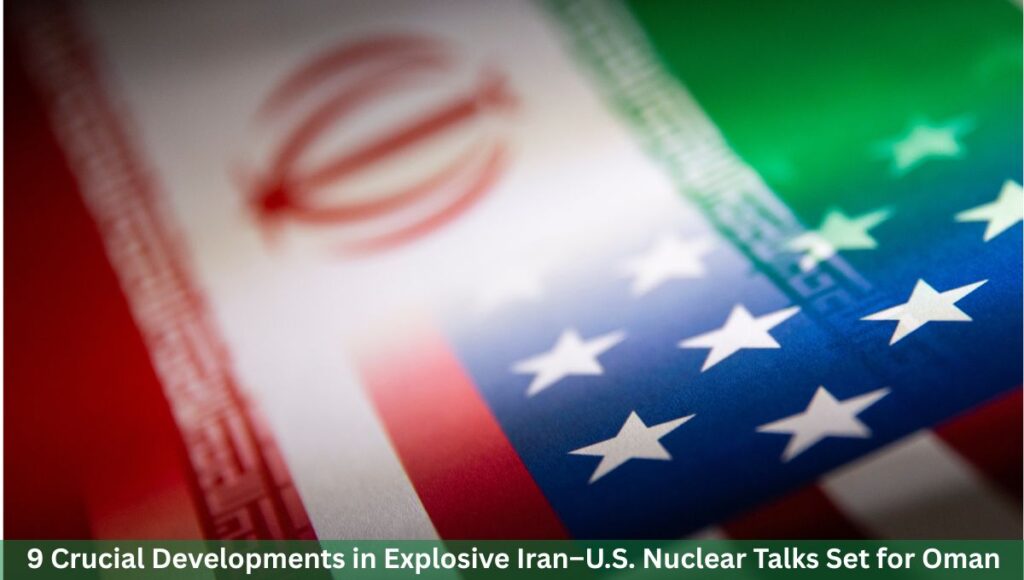
9 Crucial Developments in Explosive Iran–U.S. Nuclear Talks Set for Oman as war risks loom over fragile diplomacy. Nuclear talks between Iran and the United States are set to take place in Oman on Friday, February 6, marking a rare and highly fragile diplomatic engagement between two adversaries with no formal diplomatic relations for over four decades.
The announcement, confirmed by Iranian Foreign Minister Abbas Araghc., nationwide protests shaking Iran’s leadership, and renewed threats of U.S. military action from President Donald Trump. While the agreement to meet has temporarily eased fears of an imminent conflict, the negotiations remain precarious.
Both sides continue to disagree sharply over the agenda, with Iran insisting on talks strictly limited to its nuclear program and sanctions relief, while Washington demands broader discussions that include ballistic missiles, regional proxy groups, and human rights concerns.
This article breaks down the nine most crucial developments shaping the Oman talks, explains what is on the table, and assesses what is at stake—not just for Tehran and Washington, but for the entire Middle East and global security order.
9 Crucial Developments in Explosive Iran–U.S. Nuclear Talks Set for Oman
1. Why Oman Became the Chosen Venue
From Istanbul to Muscat: A Strategic Shift
The talks were originally expected to take place in Istanbul, Turkiye, with regional countries participating as observers.
However, Iran pushed for a last-minute change in both venue and format, ultimately insisting that negotiations be held in Oman and conducted strictly on a bilateral basis.
Oman has long served as a discreet intermediary between Iran and the West.
Previous backchannel negotiations hosted in Muscat laid the groundwork for earlier nuclear diplomacy, including discussions preceding the 2015 Joint Comprehensive Plan of Action (JCPOA).
Iranian officials argued that holding talks in Oman would ensure continuity with earlier nuclear-focused negotiations and prevent the agenda from expanding into areas Tehran considers non-negotiable.
U.S. Reluctance and Arab Pressure
Initially, Washington resisted the change. But according to U.S. officials, several Arab and Muslim leaders urgently lobbied the Trump administration not to abandon the talks, warning that a collapse in diplomacy could trigger military escalation with devastating regional consequences.
Ultimately, the White House agreed to the venue shift, emphasizing that it did so “out of respect for allies in the region,” even while remaining “very skeptical” about the chances of success.
2. The Central Dispute: What Will Be Discussed
Iran’s Position: Nuclear Program Only
Iran has drawn a firm red line. Officials insist that talks must focus exclusively on the nuclear file and the lifting of U.S. sanctions, a position reiterated by Iran’s semi-official Tasnim news agency.
From Tehran’s perspective, discussions on missiles, proxy forces, or internal repression represent unacceptable infringements on national sovereignty.
Washington’s Demands: A Broader Deal
The United States, however, sees nuclear constraints alone as insufficient.
Secretary of State Marco Rubio has made clear that any meaningful negotiations must also address:
- Iran’s ballistic missile arsenal
- Its support for armed proxy groups across the Middle East
- The violent crackdown on domestic protests
This fundamental disagreement over scope remains the biggest obstacle threatening to derail the talks before they even begin.
3. A Proposed Framework: What Mediators Have Suggested
Key Nuclear Provisions
According to sources familiar with the negotiations, mediators from Qatar, Turkiye, and Egypt have presented a proposed framework that includes:
- Zero uranium enrichment for three years
- Post-moratorium enrichment capped at below 1.5%
- Transfer of Iran’s stockpile of highly enriched uranium—including approximately 440 kg enriched to 60%—to a third country
These measures would represent some of the most stringent restrictions ever placed on Iran’s nuclear program.
Beyond the Nuclear File
The framework also extends into areas Iran has long rejected:
- Restrictions on the use and transfer of ballistic missiles
- A commitment not to arm regional nonstate allies
- A proposed nonaggression agreement between Tehran and Washington
As of now, neither side has publicly accepted or rejected the proposal.
4. Trump’s Calculated Pressure Campaign
Military Buildup as Leverage
President Trump has paired diplomacy with an unmistakable show of force.
The U.S. has deployed:
- An aircraft carrier
- Fighter jets and destroyers
- Surveillance aircraft and refueling tankers
These assets are now positioned in and around the Arabian Sea, signaling that military options remain firmly on the table.
Blunt Warnings from the White House
Asked whether Iran’s Supreme Leader Ayatollah Ali Khamenei should be concerned, Trump replied bluntly:
“He should be very worried.”
U.S. officials say the goal is not war, but leverage—forcing Tehran to negotiate from a position of weakness.
5. Iran’s Internal Crisis Shapes the Talks
Aftermath of a Bloody Crackdown
Iran enters negotiations amid its most severe internal unrest in decades.
Nationwide protests in December and January were met with brutal force, resulting in:
- Thousands killed
- Over 50,000 arrests, according to human rights groups
- Widespread international condemnation
U.S. officials believe the regime fears that a military strike could reignite mass protests and threaten its grip on power.
A Divided Leadership
While Supreme Leader Khamenei has maintained a defiant public stance, reformist President Masoud Pezeshkian recently signaled support for “fair and equitable negotiations,” suggesting quiet internal debates within Iran’s leadership.
6. The Missile Issue: The Hardest Red Line
Why Missiles Matter More Than Uranium
Iranian officials have privately acknowledged that ballistic missiles, not uranium enrichment, may be the most difficult issue to resolve.
Iran considers its missile program a core element of national defense, especially after last year’s 12-day war with Israel, during which Iranian missiles breached Israel’s Iron Dome defenses.
Washington’s Concerns
The U.S. sees Iran’s missile arsenal as a destabilizing force capable of threatening Israel, Gulf states, and U.S. bases across the region.
For now, Iranian officials insist missiles are “off the table,” raising doubts about whether talks can progress beyond preliminary discussions.
7. Regional Players Try to Prevent War
Turkiye’s Diplomatic Push
Turkish President Recep Tayyip Erdogan has been one of the most vocal advocates for diplomacy, warning that foreign intervention in Iran would endanger the entire region.
Turkiye had hoped to host the talks itself and continues to work behind the scenes to keep negotiations alive.
Arab States Fear Escalation
Gulf countries, many within range of Iranian missiles, have pressed Washington to pursue talks rather than strikes, fearing economic chaos, oil market shocks, and regional instability.
8. A History of Failed Trust
JCPOA’s Lingering Shadow
Iran’s skepticism toward U.S. intentions remains rooted in history.
Tehran often points to the 2018 U.S. withdrawal from the JCPOA, when Trump abandoned the nuclear deal despite Iranian compliance verified by international inspectors.
Since then, trust has eroded to historic lows.
Recent Military Clashes
Recent incidents—including the U.S. shooting down an Iranian drone near the USS Abraham Lincoln and confrontations in the Strait of Hormuz—underscore how quickly miscalculations could spiral into conflict.
9. What Happens If the Talks Fail
Military Escalation Risks
If diplomacy collapses, U.S. officials acknowledge that military options remain under active consideration.
Any strike on Iran could:
- Trigger retaliation against U.S. forces
- Disrupt global energy supplies
- Spark a wider regional war
A Narrow Diplomatic Window
Both sides appear to recognize that this may be the last viable opportunity to de-escalate before events overtake diplomacy.
As one U.S. official put it:
“We are not naive about the Iranians. If there is a real conversation to have, we will have it—but we won’t waste our time.”
Conclusion: Diplomacy on the Edge
The Iran–U.S. nuclear talks in Oman represent a high-risk, high-stakes gamble. While the decision to meet has momentarily pulled both countries back from the brink, deep mistrust, incompatible demands, and regional instability continue to threaten the process.
Whether these talks become a stepping stone toward renewed diplomacy—or the final pause before confrontation—will depend on whether both sides are willing to compromise on issues they have long considered untouchable.
For now, the world watches Muscat, hoping that dialogue can succeed where threats and force have repeatedly failed.
Also Read: 9 Explosive Warnings as Hezbollah Backs Iran Against Trump Threats
Also Read: What to know as Iran and US set for nuclear talks in Oman
Related Posts:
- 7 Powerful Facts About Ayatollah Ali Khamenei’s…

- 3 Explosive Conditions Iran Sets to End War with US…
- 9 Explosive Claims as Trump Says US Winning Iran War

- 7 Dead in Explosive Iran Protests as Economic Anger…

- 11 Explosive Warnings as Trump Vows to ‘Knock the…

- 10 Explosive Warnings as Donald Trump Calls Iran…