
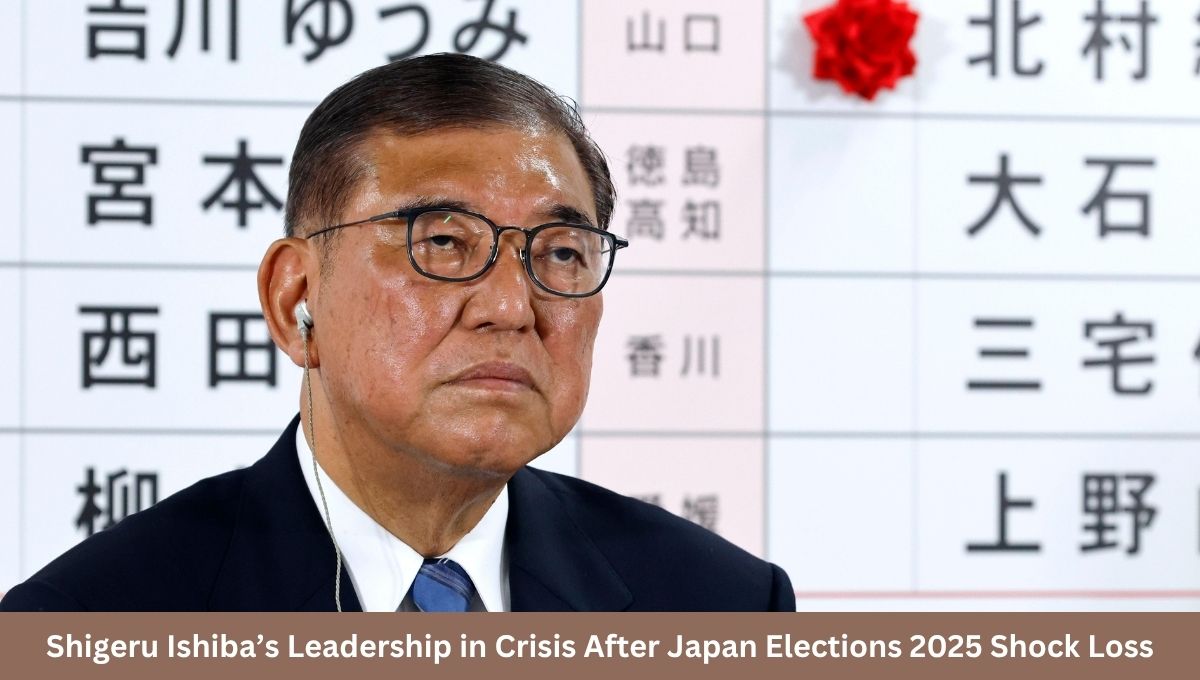
In a historic political upset, Shigeru Ishiba’s Leadership in Crisis After Japan Elections 2025 Shock Loss. Japanese Prime Minister Shigeru Ishiba and his ruling Liberal Democratic Party (LDP) suffered a stinging defeat in the 2025 Japan elections, losing their coalition’s majority in the upper house. With a weakening grip on power, rising economic frustration, and the rapid rise of the far-right Sanseito party, Ishiba’s future as Japan’s leader hangs by a thread.
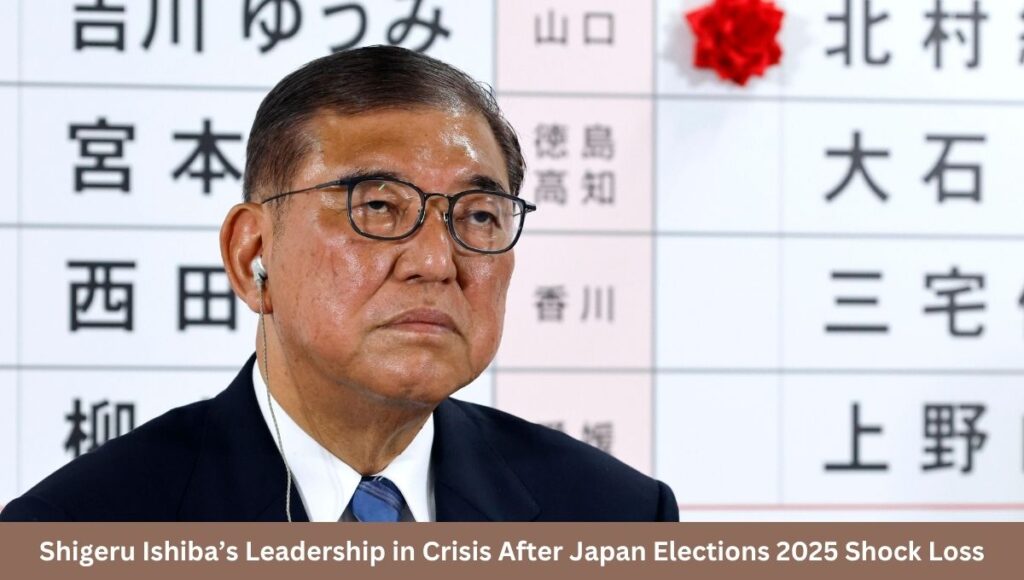
Shigeru Ishiba’s Leadership in Crisis After Japan Elections 2025 Shock Loss
Ruling Coalition Falls Short: The Numbers Behind the Loss
The election result marks a profound shift in Japanese politics, dealing the LDP its most significant blow in over a decade.
Out of the 124 contested seats (plus one to fill a vacancy), the LDP and its junior coalition partner Komeito won only 47, falling three short of the 50-seat threshold needed to retain a majority in the 248-seat House of Councillors.
Although the coalition still holds 122 seats overall, it no longer controls either chamber of the National Diet, marking the first time since the LDP’s post-war rise that it governs without full legislative power.
A New Challenger: Sanseito’s Far-Right Surge
The biggest surprise of the Japan elections 2025 was the meteoric rise of the far-right, populist Sanseito party.
The fringe movement, founded during the COVID-19 pandemic and fueled by YouTube-driven nationalism, skyrocketed from just one seat to 14, shaking the conservative foundation that the LDP has long dominated.
Sohei Kamiya, Sanseito’s charismatic and controversial leader, has refused to join the ruling coalition. His fear: being “crushed” by the LDP’s bureaucracy.
Instead, he’s positioning Sanseito as the voice of disillusioned voters angry over inflation, immigration, and what they view as Japan’s surrender in US trade negotiations.
Voter Discontent: Inflation and Economic Mismanagement
At the core of Ishiba’s defeat is economic anxiety. Japanese inflation, especially food prices, dominated the election discourse.
The cost of rice a staple has doubled in the last year, leaving households struggling to keep up.
Many voters accused Ishiba of being slow and inconsistent in addressing the crisis. Moody’s Analytics economist Stefan Angrick noted, “His policies on growth and inflation have flip-flopped.
The government’s delayed support failed to ease pressure on ordinary citizens.”
This widespread discontent created fertile ground for Sanseito’s populist rhetoric and also boosted the main opposition Constitutional Democratic Party (CDP), which gained 22 seats.
Looming Trade War: US-Japan Tariff Talks on the Brink
Compounding Ishiba’s woes is an escalating trade standoff with the United States. Former President Donald Trump back in office has imposed new tariffs on Japanese automobiles, steel, and aluminum, with a 25% tariff on additional imports set to hit on August 1 unless a last-minute deal is struck.
Despite seven trips to Washington by Japan’s trade envoy and a high-profile February meeting at the White House, negotiations remain stalled. Ishiba’s weakened political position now limits his leverage, sparking fears that Japan may be forced into a one-sided deal that could further harm its fragile economy.
Ishiba Stands Firm But for How Long?
Despite the crushing defeat, Shigeru Ishiba, 68, has vowed not to resign. Speaking at a tense press conference, he acknowledged the coalition’s poor performance but framed his leadership as necessary amid global instability.
“We must not allow politics to become stagnant at a time when Japan faces challenges from rising prices and international uncertainty,” Ishiba told reporters.
Yet many within the Liberal Democratic Party are unconvinced. Some LDP lawmakers believe a leadership change may be needed to restore credibility ahead of any potential snap election, especially if a no-confidence motion materializes.
Who Could Replace Ishiba?
Political watchers have already begun speculating about Ishiba’s successor. Among the most talked-about names:
- Sanae Takaichi: A hardline conservative and the runner-up in the last LDP leadership race.
- Takayuki Kobayashi: Former economic security minister, known for his hawkish stance on China and digital infrastructure.
- Shinjiro Koizumi: Media-savvy and the son of former PM Junichiro Koizumi, though he remains controversial.
Yet, despite dissatisfaction, some argue Ishiba may survive simply because there’s no clear alternative.
Political analyst Tomohiko Taniguchi commented, “There is a fair chance Ishiba will stay, given the lack of viable leadership contenders.”
Populist Messaging Takes Hold
Sanseito’s campaign was a masterclass in modern right-wing populism. Their anti-immigration and anti-globalization messages echoed familiar themes seen in Europe and the U.S.
Sohei Kamiya’s use of social media, paired with a nationalist platform titled “Japanese First,” appealed to voters frustrated by cultural change, rising crime, and perceived foreign threats.
The party’s warnings about a “silent invasion” of foreign nationals, though based on conspiracy theories, found traction in disillusioned communities.
While immigration ranks low in polling as a voter concern just 7% in a recent NHK survey Sanseito’s performance proves that even minority issues can shape elections if framed effectively.
Ishiba’s Gaffes and Image Woes
Beyond policy failures, Ishiba has also struggled with public image. A self-described military history buff, he’s often mocked for his awkward demeanor.
A recent viral video showing him eating an onigiri rice ball whole without closing his mouth ignited memes and ridicule.
He’s also been caught napping in parliament and failing to acknowledge foreign dignitaries at summits.
Critics say his demeanor reinforces a sense of disconnect from everyday citizens. Furthermore, Ishiba’s cabinet appointments have drawn criticism for gender imbalance naming only two women, down from five under his predecessor, Fumio Kishida.
Gridlock Looms in the Diet
With no majority in either chamber, Ishiba’s government faces an uphill legislative battle. Opposition parties have ruled out a unity government, raising the specter of parliamentary gridlock.
Observers warn that without bold reforms or a game-changing trade breakthrough, the government risks stagnation.
The opposition is already mulling a no-confidence vote, which if successful would dissolve the lower house and trigger early general elections.
In that scenario, the LDP may fare even worse, especially if public frustration continues to mount.
Can Ishiba Reform or Will He Resign?
The clock is ticking. Ishiba’s survival now hinges on his ability to:
- Deliver a favorable US-Japan trade deal before the August 1 deadline.
- Ease inflationary pressure on consumers.
- Address growing public and party discontent.
- Counter the momentum of Sanseito and similar fringe movements.
Failure on any of these fronts could make resignation inevitable whether by internal party revolt or public pressure.
A New Era for Japanese Politics?
The 2025 Japan elections may be remembered as the turning point when postwar political norms began to unravel.
The LDP’s historical dominance has been shaken, populist politics have entered the mainstream, and voter priorities are shifting toward economic survival and national identity.
Whether Ishiba remains in power or a new leader rises, Japan’s political future is now more unpredictable than at any time in recent memory.
As one analyst put it, “The ground has shifted beneath the LDP. If they don’t adapt and fast they may find themselves swept away.”
Final Thoughts
The 2025 upper house election has placed Prime Minister Shigeru Ishiba in political peril. With a weakened coalition, rising inflation, failed US-Japan trade negotiations, and a surging far-right, the challenges are immense.
In a nation known for its political continuity, the public’s hunger for change has finally broken through. Whether Ishiba resigns or reforms, Japanese politics will never be the same again.
Also Read: Far-Right Sanseito Surges in Japan’s Elections as PM Ishiba Faces Pressure to Resign
Also Read: Can Ishiba hold on after election loss as Japan’s political crisis deepens amid US tariff threats?
Related Posts:
- Far-Right Sanseito Surges in Japan’s Elections as PM…

- Shigeru Ishiba Resigns as Japan’s Prime Minister…

- Japan’s PM Shigeru Ishiba Faces Make-or-Break Upper…

- Japan 2025: Conservative Powerhouse Sanae Takaichi…

- 12 Explosive Shifts as Japan’s Iron Lady Takaichi…

- Sanae Takaichi Becomes Japan’s First Female Prime…
