

In a major geopolitical flashpoint, Lula Slams Trump’s 50% Tariff as “Unacceptable Blackmail” Amid Bolsonaro Trial Tensions. Brazilian President Luiz Inácio Lula da Silva has issued a fiery rebuke to U.S. President Donald Trump’s recent announcement of a 50% tariff on Brazilian goods, set to take effect August 1.
Tying the tariff directly to the ongoing trial of former Brazilian President Jair Bolsonaro, Trump’s action has sparked international outrage and significantly strained U.S.-Brazil relations. Lula called the move “unacceptable blackmail” and vowed that Brazil will not bow to foreign pressure. “No gringo is going to give orders to this president,” he declared to roaring applause in the state of Goiás.
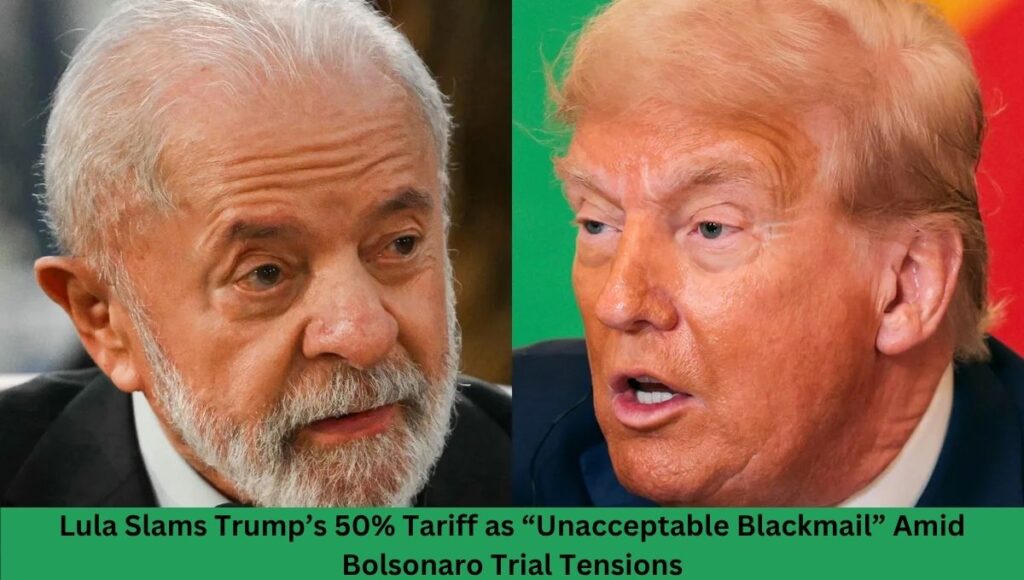
Lula Slams Trump’s 50% Tariff as “Unacceptable Blackmail” Amid Bolsonaro Trial Tensions
Trump’s Tariff Move: More Than Just Trade
On July 9, Trump announced sweeping tariffs on Brazilian imports, claiming the South American country has been unfair to both its own citizens and American companies.
However, in his letter publicly posted to Truth Social Trump made it clear that the primary motivation behind the tariffs was Bolsonaro’s prosecution for allegedly plotting a coup after losing the 2022 election.
“This trial should not be taking place. It is a Witch Hunt that should end IMMEDIATELY!” Trump wrote in a personal message to Bolsonaro, accusing Lula’s government of censorship and political persecution.
The move shocked diplomats and economists alike, especially since Brazil runs a trade deficit with the U.S., unlike many other countries Trump has targeted for tariffs.
Lula’s Response: Sovereignty, Not Submission
In a strong and politically resonant response, Lula rejected the tariff threat as an attack on Brazil’s sovereignty. “Trump was elected to be president of the United States, not emperor of the world,” he told CNN’s Christiane Amanpour.
He defended Brazil’s judiciary, which he said operates independently and without interference from the executive branch.
“Bolsonaro is not being tried personally he is being judged for the acts he committed to try to stage a coup d’état,” Lula clarified.
Lula also emphasized that Brazil won’t accept imposition from foreign powers, especially when it comes to judicial independence or trade policy. “Brazil will take care of Brazil, not the interests of others,” he said.
Bolsonaro Trial at the Heart of U.S.-Brazil Clash
Jair Bolsonaro, who governed Brazil from 2019 to 2022, is currently facing serious legal charges that could land him in prison for decades.
Prosecutors allege that he worked behind the scenes to overturn the results of the 2022 election, which Lula narrowly won.
Trump, a longtime ally of Bolsonaro, has framed the trial as a political witch hunt a strategy he also uses in reference to his own legal troubles in the U.S.
The two leaders have long echoed each other on key issues such as nationalism, media distrust, and electoral denial.
In his letter, Trump expressed personal concern: “I have seen the terrible treatment you are receiving at the hands of an unjust system turned against you.”
Trump Attacks Brazil’s Digital Policies and BRICS Ties
Trump’s criticisms extended beyond Bolsonaro’s legal woes. He blasted Brazil’s digital sovereignty push, accusing Lula’s government of censoring conservative voices and restricting free speech.
U.S.-based platforms like Rumble and X (formerly Twitter) have come under fire in Brazil for allowing disinformation and hate speech.
In addition, Trump singled out Brazil’s involvement in BRICS a bloc of emerging economies that includes Russia, China, India, and South Africa as a reason for the tariff move.
According to Trump, BRICS promotes “anti-Western priorities,” and Brazil’s increasing alignment with it poses risks to U.S. global influence.
The U.S. Trade Representative (USTR) has since opened a formal investigation into Brazil’s trade practices, citing potential restrictions on digital services, energy trade, and agricultural products.
Brazil Prepares Countermeasures and Diplomatic Pushback
Lula’s administration is not taking the tariff threat lightly. While publicly rebuking Trump, Brazil is also working behind the scenes with affected industries to mitigate the economic fallout and prepare potential retaliatory tariffs on American goods.
Foreign Minister Mauro Vieira confirmed that while Brazil opposes the “tone and manner” of Trump’s announcement, the country remains open to negotiations.
“If the circumstances are given, they will speak,” Vieira told CNN Brasil, referring to a potential Lula-Trump meeting.
Lula is expected to deliver a nationally televised speech outlining Brazil’s next steps, balancing assertive diplomacy with readiness to retaliate if necessary.
Lula Gains Political Ground as Nationalist Sentiment Rises
Amid the escalating trade dispute, Lula’s domestic approval has seen a notable boost. His nationalist tone and defense of sovereignty have resonated with many Brazilians, particularly younger voters and progressives.
Speaking to student activists, Lula said, “Brazil has only one owner: the Brazilian people,” while wearing a bold red shirt that underscored his long-standing association with workers’ movements and leftist politics.
Polls show increasing public support for Brazil’s tough stance on foreign interference, particularly among those who view Trump’s tariff as a veiled attempt to influence Brazil’s judiciary and upcoming elections.
Digital Sovereignty: Brazil’s Regulatory Battle with Big Tech
At the heart of the broader dispute is Brazil’s push for digital sovereignty, which includes proposed legislation to regulate and tax U.S. tech giants like Google, Meta, and YouTube.
Lula accuses these platforms of enabling “fake news, hate speech, and violence” in the name of free speech.
His administration has been pressing forward with new rules that would hold platforms accountable for disinformation and extremist content.
This has drawn criticism from U.S. conservatives and tech lobbyists who argue that Brazil is veering toward censorship.
Trump has echoed these concerns, stating, “Free speech is under attack not just in Brazil, but also in the United States.”
Bolsonaro’s Political Future: Senate Bid and 2026 Speculation
Despite facing trial, Bolsonaro has not faded from Brazil’s political landscape. He’s recently resurfaced in the media to promote his wife Michelle Bolsonaro’s potential Senate campaign, sparking speculation about his own ambitions for the 2026 presidential election.
Trump’s unwavering support for Bolsonaro further complicates matters, as it intertwines foreign policy with Brazil’s internal political dynamics.
Political analysts warn that if Bolsonaro is acquitted or sentenced lightly, it could inflame political divisions within Brazil.
If convicted, it may strengthen Lula’s mandate while reinforcing Trump’s image of global persecution of right-wing leaders.
Global Implications: A New Era of Hardline Diplomacy?
Brazil’s strong response to the Trump tariffs signals a potential turning point in Latin America’s relationship with the United States.
For decades, U.S. presidents have exerted significant influence in the region, but Lula’s defiance may inspire other leaders to resist similar pressure.
“Trump’s heavy-handed diplomacy is making it easier for leaders like Lula to justify greater independence from Washington,” said one São Paulo-based analyst.
Brazil’s growing alignment with BRICS and its vocal support for multipolar governance could further erode U.S. dominance in the Western Hemisphere if other regional powers follow suit.
What’s Next for U.S.-Brazil Relations?
The weeks ahead will be pivotal. With tariffs set to begin August 1 and Bolsonaro’s trial progressing, the U.S.-Brazil relationship could move into uncharted territory either toward escalation or reconciliation.
Both leaders face high political stakes: Trump is preparing for a possible 2028 White House run, while Lula seeks to consolidate his leadership and Brazil’s global influence.
Whether they choose dialogue or confrontation may shape not only their own legacies but also the future of international diplomacy.
As Lula summed it up: “Brazil will not accept anything imposed on it. We accept negotiation, not imposition.”
Final Thoughts
This standoff between Trump and Lula is not just about trade or one politician’s trial. It reflects deeper ideological divides over democracy, nationalism, and international order. As the world watches, the outcome of this dispute may define U.S.-Latin America relations for years to come and set the tone for global diplomacy in a polarized age.
Also Read: Trump’s Brazil Tariff: A 50% Political Gamble with Global Implications
Related Posts:
- 7 Explosive Developments as Brazil Jails Jair Bolsonaro

- Brazil’s Jair Bolsonaro is Sentenced to 27 Years for…

- Jair Bolsonaro Diagnosed with Skin Cancer After…

- Bolsonaro Condemns Brazil Supreme Court, Courts…

- “I Won’t Call Trump”: Lula Defiant After US Tariff…

- Trump Escalates Trade War: 50% Tariff on Brazil Over…
