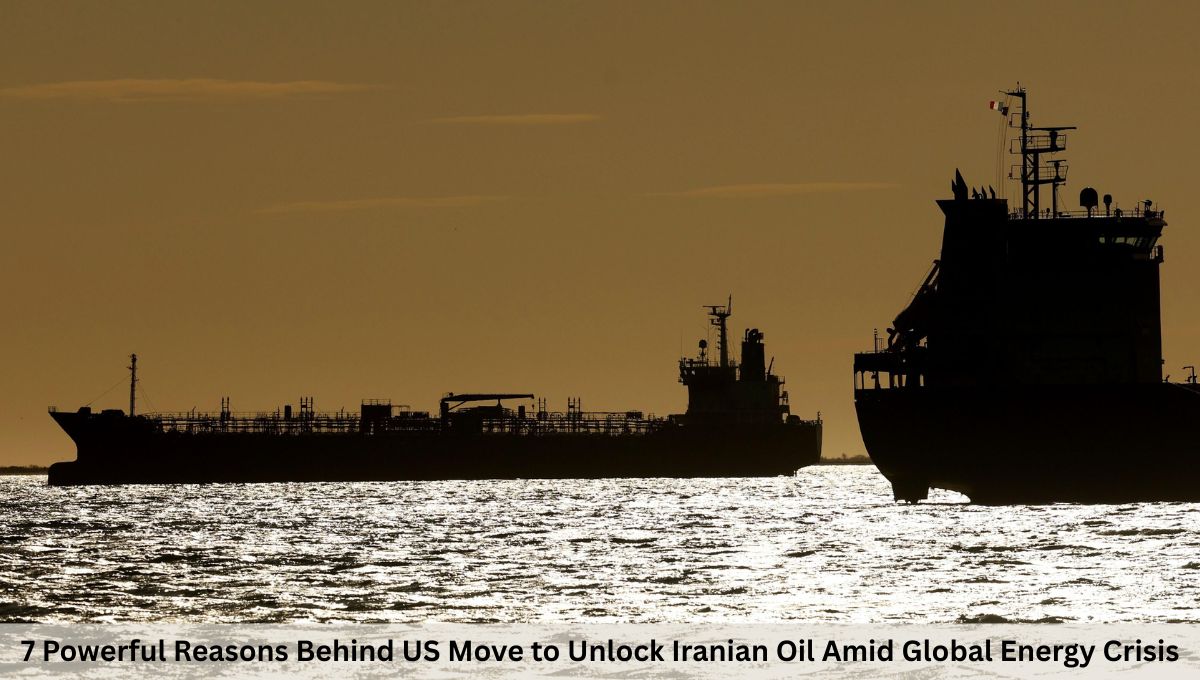
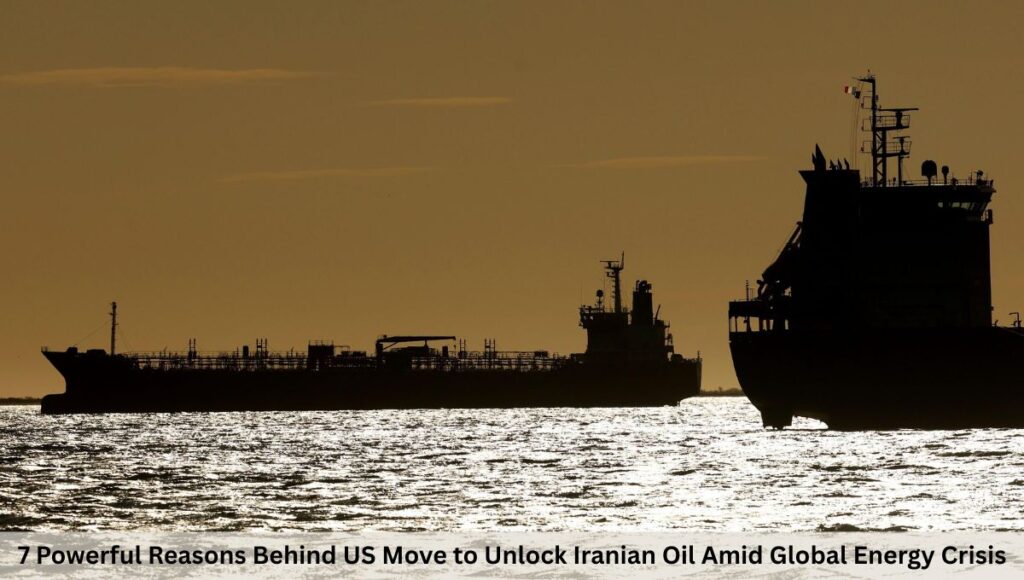
7 Powerful Reasons Behind US Move to Unlock Iranian Oil Amid Global Energy Crisis and geopolitical tensions. In a dramatic and somewhat unexpected policy shift, the United States has temporarily eased sanctions on Iranian oil, allowing the sale of crude already stranded at sea. The move is aimed at addressing a rapidly escalating global energy crisis triggered by ongoing geopolitical tensions in the Middle East.
At the center of this development is a 30-day waiver issued by the US Treasury, which permits the sale of Iranian crude oil loaded onto vessels before March 20 and delivered by April 19.
This short-term authorization is narrowly defined but carries potentially significant implications for global oil markets, energy prices, and international diplomacy.
The decision comes at a time when oil prices have surged sharply due to disruptions in supply routes, particularly through the Strait of Hormuz—a critical chokepoint that handles roughly 20% of global oil and gas shipments.
7 Powerful Reasons Behind US Move to Unlock Iranian Oil Amid Global Energy Crisis
What the US Sanctions Waiver Actually Means
The waiver does not represent a full lifting of sanctions on Iran. Instead, it is a highly targeted measure designed to unlock oil that is already in transit and unable to reach buyers due to existing restrictions.
Key Features of the Waiver:
- Applies only to oil already loaded on tankers by March 20
- Valid for deliveries completed by April 19
- Does not allow new production or new export contracts
- Includes crude oil and petroleum products
- Covers even sanctioned vessels under specific conditions
This means the policy is less about enabling Iran to ramp up exports and more about injecting immediate supply into a strained global market.
Why the US Is Taking This Step Now
1. Surging Oil Prices
Global crude prices have surged significantly, crossing the $110 per barrel mark in recent trading sessions.
The spike has been driven by supply disruptions and heightened geopolitical risks.
2. Strait of Hormuz Disruptions
The near-blockade of the Strait of Hormuz has severely impacted oil flows. This narrow waterway is one of the most critical energy transit routes in the world.
3. War-Induced Supply Shock
The ongoing conflict involving the US, Israel, and Iran has damaged energy infrastructure and disrupted logistics chains, creating a severe supply-demand imbalance.
4. Limited Policy Options
The US has already deployed several tools to stabilize markets:
- Strategic reserve releases
- Temporary easing of Russian oil sanctions
- Domestic production adjustments
Yet, these measures have not been sufficient to curb rising prices.
The 140 Million Barrel Question
The US Treasury estimates that the waiver could bring approximately 140 million barrels of oil into global markets.
However, estimates vary:
- Some analysts suggest up to 170 million barrels could be available
- Others argue the real figure may be lower due to logistical and legal constraints
How Significant Is This?
While 140 million barrels sounds substantial, it represents:
- Roughly 1.5 days of global oil consumption
- Less than two weeks of disrupted Middle Eastern supply
This highlights that the move is more of a short-term relief mechanism rather than a long-term solution.
Iran Pushes Back: “No Surplus Oil Available”
Iran has strongly disputed the US claims, stating that it does not have excess oil available for global markets.
According to Iranian officials:
- There is no floating surplus crude
- Most available oil is already allocated or accounted for
- The US move is seen as an attempt to influence market sentiment rather than reality
This contradiction raises an important question:
Is the oil physically available, or is this largely a psychological intervention aimed at calming markets?
India and Asia: The Biggest Beneficiaries?
Renewed Interest from Indian Refiners
Indian refiners are reportedly preparing to resume purchases of Iranian oil, pending government guidance and clarity on payment mechanisms.
India’s position is particularly important because:
- It relies heavily on imported crude
- It has relatively smaller stockpiles compared to peers
- It previously imported significant volumes from Iran before sanctions
Broader Asian Response
Other Asian countries are also evaluating the opportunity:
- Refiners are assessing compliance risks
- Payment and insurance mechanisms remain unclear
- Logistics involving “shadow fleet” tankers add complexity
Asia as a region depends on the Middle East for around 60% of its crude supply, making it highly vulnerable to disruptions.
The China Factor
One of the most interesting aspects of this development is the role of China.
Before the waiver:
- China was the primary buyer of Iranian oil
- Purchases were often made at discounted rates
- Much of the oil was effectively “hoarded” offshore
By allowing broader access to this oil:
- The US may reduce China’s pricing advantage
- Other countries can compete for the same supply
- Market dynamics could temporarily shift
Economic vs Strategic Contradictions
The policy reveals a significant contradiction in US strategy.
On one hand:
- The US is engaged in a military conflict involving Iran
- It aims to weaken Iran economically
On the other hand:
- It is enabling the sale of Iranian oil
- This could generate revenue for Iran
Critics Argue:
- The move may indirectly fund Iran’s activities
- It weakens the long-term effectiveness of sanctions
Supporters Counter:
- The oil would have been sold anyway (likely to China)
- Allowing allies to purchase it is strategically smarter
- The impact on Iran’s revenue access remains limited
Operational Challenges in Buying Iranian Oil
Even with the waiver, purchasing Iranian oil is far from straightforward.
Key Challenges:
- Payment Mechanisms
- Banking restrictions still apply
- Transactions may require complex routing
- Compliance Risks
- Companies must ensure adherence to US regulations
- Legal ambiguity creates hesitation
- Shipping Issues
- Many cargoes are on aging or sanctioned vessels
- Insurance coverage may be limited
- Contractual Constraints
- Some refiners are tied to existing suppliers
- Transitioning requires renegotiation
These factors mean that not all available oil will necessarily reach the market quickly.
Impact on Global Oil Prices
The primary goal of the waiver is to stabilize oil prices.
Short-Term Effects:
- Increased supply could ease immediate pressure
- Market sentiment may improve
- Price spikes could moderate
Long-Term Outlook:
- Impact likely to be temporary
- Prices will remain sensitive to geopolitical developments
- Sustained stability depends on reopening key supply routes
The Strategic Importance of the Strait of Hormuz
The Strait of Hormuz remains the single most critical variable in the global energy equation.
Why It Matters:
- Handles about 20% of global oil trade
- Key route for Middle Eastern exports
- Any disruption has immediate global consequences
Current Situation:
- Traffic has been significantly reduced
- Security risks remain high
- Energy infrastructure attacks continue
Until normal operations resume, global markets will remain under pressure.
A Pattern of Sanctions Relaxation
This is not an isolated decision.
In recent weeks, the US has:
- Eased sanctions on Russian oil
- Issued multiple waivers related to energy supply
- Taken steps to boost domestic and international production
This suggests a broader strategy focused on:
- Maximizing global supply
- Preventing economic fallout
- Maintaining political stability
Political and Economic Pressures
The decision is also influenced by domestic and global pressures.
Domestic Concerns:
- Rising fuel prices
- Inflation risks
- Political implications
Global Concerns:
- Supply chain disruptions
- Economic slowdown risks
- Energy security challenges
Balancing these factors has forced policymakers into difficult trade-offs.
Is This a Turning Point in Energy Policy?
The move could signal a shift in how sanctions are used in geopolitical conflicts.
Possible Implications:
- Greater flexibility in sanctions enforcement
- Increased focus on economic stability
- Blurring lines between economic warfare and market intervention
However, whether this becomes a long-term trend remains uncertain.
What Happens After the 30-Day Window?
The waiver is temporary, and its expiration could create new challenges.
Possible Scenarios:
- Extension of the Waiver
- If market pressures persist
- Return to Strict Sanctions
- If geopolitical conditions improve
- Broader Policy Changes
- Including wider easing of restrictions
The next steps will depend heavily on:
- The progress of the conflict
- Oil market conditions
- Diplomatic developments
Conclusion: A High-Stakes Balancing Act
The US decision to temporarily ease sanctions on Iranian oil reflects the complexity of today’s global energy landscape.
It is a calculated move aimed at addressing immediate supply shortages while maintaining broader strategic objectives.
While the release of up to 140 million barrels could provide short-term relief, it is unlikely to resolve the deeper structural challenges facing global energy markets.
Ultimately, the situation underscores a harsh reality:
In times of crisis, even long-standing policies can be reshaped by economic necessity.
As the world watches how this unfolds, one thing is clear—energy security and geopolitics are now more intertwined than ever before.
Also Read: 7 Explosive Reasons Oil Prices Are Surging as Trump Pushes Coalition to Reopen Strait of Hormuz
Also Read: US lifts sanctions on Iranian oil at sea in bid to ease supply pressures
Related Posts:
- 9 Strategic Reasons the US Allowed India to Buy…

- 7 Powerful Reasons the U.S. Is Letting Countries Buy…
- In 8 Moves, EU Targets China-Linked Refineries and…

- 7 Powerful Measures: Trump Sanctions Russian Oil…

- US Revokes Sanctions Waiver for Iran’s Chabahar…
- 7 Critical Ways Iran’s Yuan Oil Plan Could Shake the…