
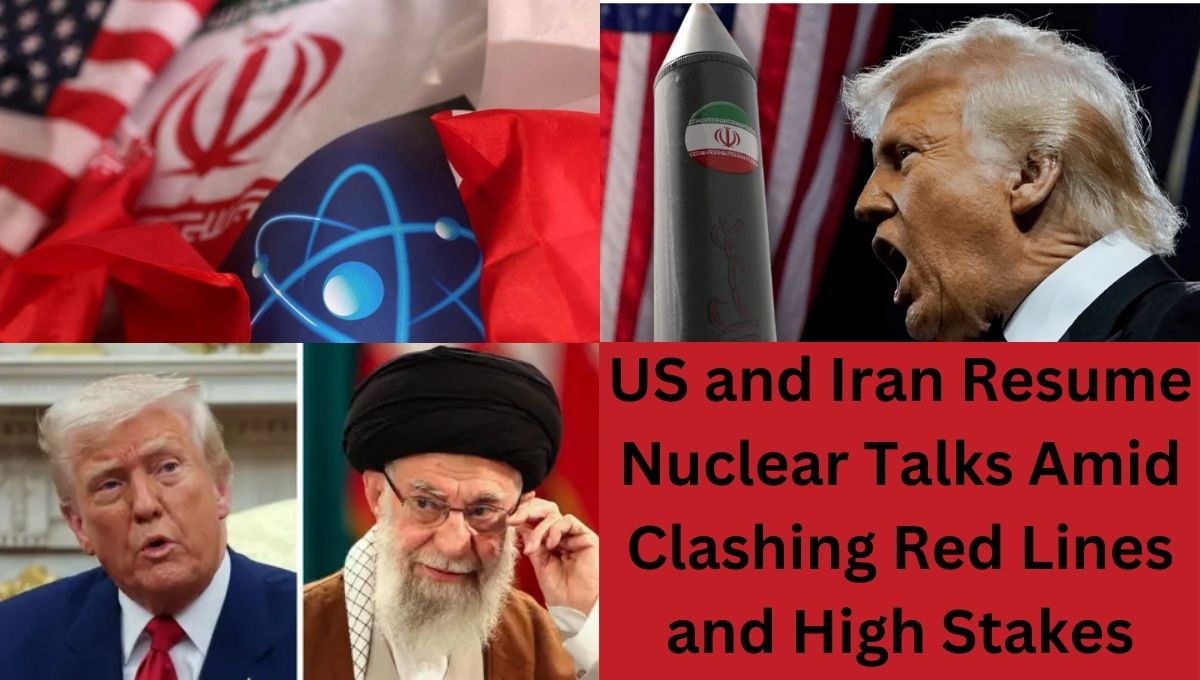
In Rome this Friday, US and Iran Resume Nuclear Talks Amid Clashing Red Lines and High Stakes. Iranian and US negotiators are scheduled to meet again on Friday in Rome to continue discussions aimed at resolving the long-standing dispute over Tehran’s nuclear program. This marks the fifth round of talks mediated by Oman since April. Despite both sides expressing a preference for diplomacy, tensions remain high due to deep-rooted disagreements on Iran’s uranium enrichment program a key “red line” for both parties.
US and Iran Resume Nuclear Talks Amid Clashing Red Lines and High Stakes
US and Iran Set to Resume Nuclear Talks in Rome
Fifth round of talks between Iran and the United States are set to take place on Tehran’s nuclear program amid uncompromising rhetoric on both sides.
Iran’s Foreign Minister Abbas Araghchi and US Middle East envoy Steve Witkoff are leading the delegations.
While Washington insists that Iran must halt uranium enrichment, Tehran refuses to end its program, insisting it is vital for peaceful civilian purposes.
This core issue continues to overshadow the negotiations and poses a significant barrier to any potential agreement.
Stark Differences on Uranium Enrichment
The central sticking point in the talks is Iran’s insistence on maintaining its uranium enrichment activities.
Tehran enriches uranium to about 60 percent purity, well above the 3-5 percent needed for civilian nuclear energy but below the 90 percent threshold considered weapons-grade.
US officials, including Secretary of State Marco Rubio, have clarified that Washington is willing to allow Iran a civil nuclear program but not uranium enrichment, labeling Iran’s current enrichment levels as unacceptable.
Iran’s Supreme Leader, Ayatollah Ali Khamenei, has called this demand “excessive and outrageous,” warning that the talks may fail if the US does not adjust its position.
Iranian Foreign Minister Araghchi emphasized, “Zero nuclear weapons = we DO have a deal. Zero enrichment = we do NOT have a deal,” underscoring Tehran’s refusal to halt enrichment even if it means walking away from negotiations.
The Legacy of the 2015 Nuclear Deal and Trump’s “Maximum Pressure” Campaign
The current talks come after former President Donald Trump withdrew the US from the 2015 Joint Comprehensive Plan of Action (JCPOA) during his first term.
The JCPOA had placed limits on Iran’s nuclear program in exchange for sanctions relief. However, Trump’s exit from the deal and reimposition of sweeping sanctions devastated Iran’s oil-dependent economy.
Since then, Iran has escalated uranium enrichment beyond JCPOA limits. Trump’s administration pursued a “maximum pressure” campaign, aiming to force Tehran back to the negotiating table with tougher terms.
Though this strategy strained relations, it failed to produce a renewed agreement during Trump’s first term.
Now in his second term, Trump is cautiously optimistic about the ongoing talks. White House press secretary Karoline Leavitt stated, “Negotiations are moving in the right direction,” but warned that the outcome could either be a positive diplomatic breakthrough or a serious escalation in conflict.
High Stakes for Regional Security and Global Economy
The failure of talks carries significant risks. Iran insists its nuclear ambitions are peaceful, but Israel and several Western nations remain deeply suspicious.
Israel’s Prime Minister Benjamin Netanyahu has made it clear Israel will never allow Iran to acquire nuclear weapons and has coordinated closely with the US.
Israeli officials have also reportedly considered military strikes against Iran’s nuclear facilities.
Iran has warned that any Israeli attack will prompt retaliation and held the US responsible for any such aggression. This fragile situation means the talks in Rome are more critical than ever.
Additionally, renewed conflict could disrupt global oil markets, pushing prices higher and causing economic uncertainty worldwide.
New US Sanctions Complicate Negotiations
Adding further tension, the US recently imposed new sanctions on Iran’s construction sector, which Tehran condemned as “vicious, illegal, and inhumane.”
This move is part of the ongoing “maximum pressure” campaign but complicates efforts to build trust between the two sides.
Despite these sanctions, both parties appear committed to continuing dialogue, though Iran has warned it will walk away if the US demands an end to uranium enrichment.
What to Expect from the Upcoming Talks
Friday’s talks in Rome will test whether the negotiators can bridge their “red lines.” Steve Witkoff, the US envoy, has reiterated the US position that Iran must cease uranium enrichment.
Meanwhile, Abbas Araghchi and the Iranian delegation remain firm that enrichment will continue regardless of the outcome.
The talks are expected to be both direct and indirect, with Oman mediating as a neutral facilitator. Observers remain cautiously hopeful but acknowledge that reaching a comprehensive deal will require significant compromises from both sides.
Conclusion: Diplomacy at a Crossroads
The US-Iran nuclear talks represent a critical juncture in Middle East diplomacy. With decades of mistrust and a complex history behind them, the negotiators face a difficult path ahead.
The world watches closely as these talks could either prevent a dangerous escalation or lead to increased instability in an already volatile region.
Also Read: Trump Warns Iran to ‘Move Quickly’ on Nuclear Deal or Face Fallout Amid Intensifying US-Iran Talks
Also Read: US, Iran Resume Nuclear Talks In Rome Amid Clashing Demands
Related Posts:
- 7 Powerful Facts About Ayatollah Ali Khamenei’s…
- 5 Major Takeaways from the US Supreme Court's…

- 9 Explosive Claims as Trump Says US Winning Iran War

- 3 Explosive Conditions Iran Sets to End War with US…
- 7 Heartbreaking Facts About Venezuela's Earthquake Disaster
- Afghanistan–Pakistan War 2025: Inside the 48-Hour Ceasefire
