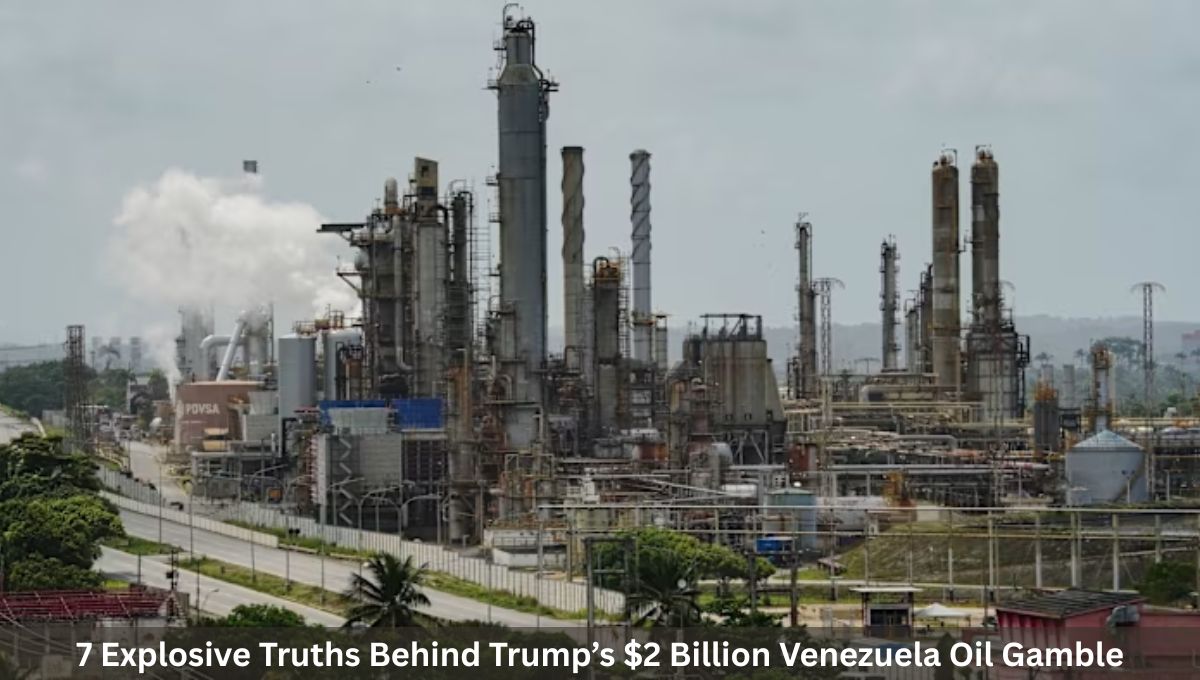
7 Explosive Truths Behind Trump’s $2 Billion Venezuela Oil Gamble that puts revenues under U.S. control. US President Donald Trump has once again placed Venezuela at the center of global geopolitical and energy debates.
In a dramatic announcement on Truth Social, Trump said that Venezuela’s “Interim Authorities” would sell between 30 million and 50 million barrels of oil to the United States at market prices, with the proceeds controlled by him as president and used to benefit both countries.
The declaration followed a stunning US military operation that led to the capture of Venezuelan President Nicolás Maduro, an event that has already reshaped political power in Caracas. But while Trump paints the oil deal as a strategic win for American consumers and Venezuelan recovery, analysts, oil executives, and legal experts warn that the reality may be far more complicated.
This article breaks down what Trump’s Venezuela oil plan really means—for oil prices, US energy companies, Venezuela’s future, and the global balance of power.
7 Explosive Truths Behind Trump’s $2 Billion Venezuela Oil Gamble
1. Trump’s Venezuela Oil Announcement: What Was Promised
Trump’s announcement was direct and unusually personal in tone.
“The Interim Authorities in Venezuela will be turning over between 30 and 50 MILLION Barrels of High Quality, Sanctioned Oil, to the United States of America,” Trump wrote. “This Oil will be sold at its Market Price, and that money will be controlled by me, as President of the United States of America.”
He added that Energy Secretary Chris Wright had been instructed to execute the plan “immediately,” with oil transported via storage ships directly to US ports.
Key elements of Trump’s claim
- Oil volume: 30–50 million barrels
- Pricing: Market price
- Control of revenue: US President
- Purpose: Benefit the people of Venezuela and the United States
- Execution: Immediate, via US Energy Department
If carried out in full, the deal could be worth up to $2 billion, depending on oil prices and discounts applied to Venezuelan crude.
2. Why 50 Million Barrels Sounds Big—but Isn’t
While “50 million barrels” sounds enormous, energy experts caution against overstating its impact.
Global context
- Global oil consumption: 100+ million barrels per day
- US production: ~14 million barrels per day
- Venezuela output: ~1.1 million barrels per day
Energy analysts point out that:
- 50 million barrels over a month would represent nearly all of Venezuela’s output
- 50 million barrels over a year would be modest and unlikely to significantly move global prices
As one expert put it: “The time frame is everything.”
Without clarity on how quickly the oil would be delivered, the market impact remains uncertain.
3. Venezuela’s Oil Wealth vs. Oil Reality
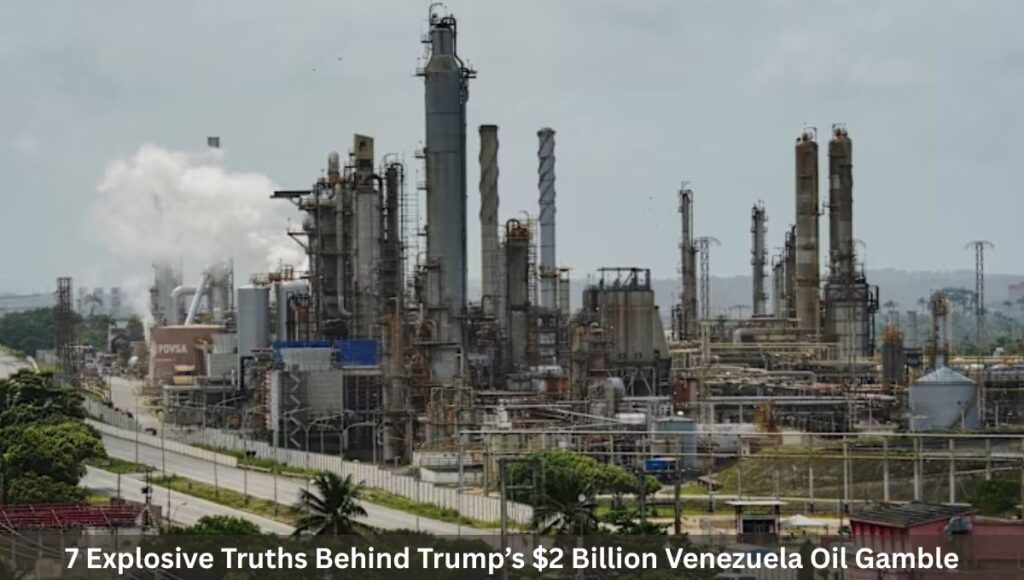
Venezuela holds the largest proven oil reserves in the world—around 303 billion barrels, more than Saudi Arabia, Iraq, and Russia.
Yet its oil sector is a shell of its former self.
What went wrong
- Nationalisation of oil assets under Hugo Chávez
- Years of underinvestment
- US sanctions
- Corruption and mismanagement
- Infrastructure collapse
Production has fallen from over 3 million barrels per day in the 1990s to around 1.1 million today.
Much of Venezuela’s oil is heavy crude, which is:
- More expensive to extract
- Harder to refine
- Less profitable at low prices
4. Trump’s Bigger Vision: Rebuilding Venezuela With US Oil Giants
Trump has repeatedly said American oil companies can revive Venezuela’s energy industry.
He claims:
- US firms are “ready and willing” to invest billions
- Oil infrastructure can be rebuilt quickly
- Venezuela can once again become a major oil producer
Industry response: Deep scepticism
Behind closed doors, oil executives are far less enthusiastic.
Key concerns include:
- Political instability
- Risk of expropriation
- Unclear legal framework
- Worker safety
- Billions in upfront investment required
One industry source told CNN bluntly:
“This isn’t like standing up a food truck operation.”
5. Chevron, Exxon, and Conoco: Who Really Benefits?
Chevron
- Only major US oil company still operating in Venezuela
- Produces 100,000–150,000 barrels per day
- Operates under a US sanctions license
- Best positioned to expand—if conditions improve
ExxonMobil
- Assets seized in mid-2000s
- Owed nearly $2 billion in compensation
- Focused on booming Guyana oil fields instead
ConocoPhillips
- Left Venezuela after nationalisation
- Owed over $10 billion in arbitration awards
- Still pursuing compensation
Executives from all three firms are expected to meet Trump officials, but none have committed to large-scale investment.
6. The Legal and Political Minefield
Trump’s assertion that he would personally control oil revenues has raised eyebrows.
Legal experts note:
- No modern US precedent for a president controlling foreign oil revenue
- Venezuela remains a sovereign state under international law
- Sanctions complicate payment flows
Meanwhile, interim president Delcy Rodríguez has sent mixed signals:
- Offering cooperation
- Rejecting claims that the US “runs” Venezuela
- Appealing to nationalist sentiment at home
“The government of Venezuela is in charge in our country, and no-one else,” Rodríguez said.
7. Can Venezuela’s Oil Industry Actually Be Revived?
According to Rystad Energy:
- $53 billion needed over 15 years just to keep production flat
- $183 billion needed to return to 3 million barrels per day by 2040
And that’s assuming:
- Political stability
- Sanctions relief
- Investor confidence
- Oil prices high enough to justify spending
At today’s prices, many executives see Venezuela as high risk, low reward.
Market Reaction: What Investors Think
Following Trump’s announcement:
- US crude prices dipped more than 1.5%
- Oil stocks like Chevron and Exxon rose
- Heavy crude discounts narrowed in the Gulf Coast
Markets appear cautiously optimistic—but unconvinced.
What This Means for the US and the World
For the US
- Short-term supply boost
- Potential gasoline price relief
- Strategic leverage over oil markets
For Venezuela
- Possible cash inflow
- Continued uncertainty over sovereignty
- Long road to recovery
For global oil markets
- Limited short-term impact
- Long-term uncertainty if sanctions ease
Conclusion: A Bold Gamble With Uncertain Payoff
Trump’s Venezuela oil plan is bold, dramatic, and politically charged. It fits neatly into his broader narrative of American strength, energy dominance, and aggressive foreign policy.
But behind the headlines lie stubborn realities:
- Venezuela’s oil industry is deeply broken
- US oil companies remain wary
- Legal and political risks are enormous
Whether this deal becomes a turning point—or another unrealised promise—will depend not on presidential declarations, but on stability, law, and economics.
For now, Trump’s Venezuela oil gamble remains exactly that:
a high-stakes gamble in one of the world’s most volatile energy theatres.
Also Read: 7 Explosive Moves: Trump Unveils His High-Stakes Venezuela Plan
Also Read: Donald Trump’s oil gambleIs it black gold — or fool’s gold?