7 Explosive Claims: Trump’s $600 Billion Tariff Windfall Shakes Markets as Supreme Court ruling nears. US President Donald Trump has once again thrust his aggressive tariff policy into the global spotlight, claiming that the United States has already collected—and will soon receive—more than $600 billion in tariff revenue.
As the Supreme Court prepares to rule on the legality of his sweeping trade measures, Trump is framing tariffs not just as an economic tool, but as a cornerstone of national security, financial strength, and geopolitical leverage.
In a series of posts on his Truth Social platform, the President accused the US media of deliberately downplaying what he described as one of the most consequential economic achievements of his administration.
The timing, he suggested, was no coincidence, coming just ahead of what he called a “historic” Supreme Court decision on presidential tariff authority.
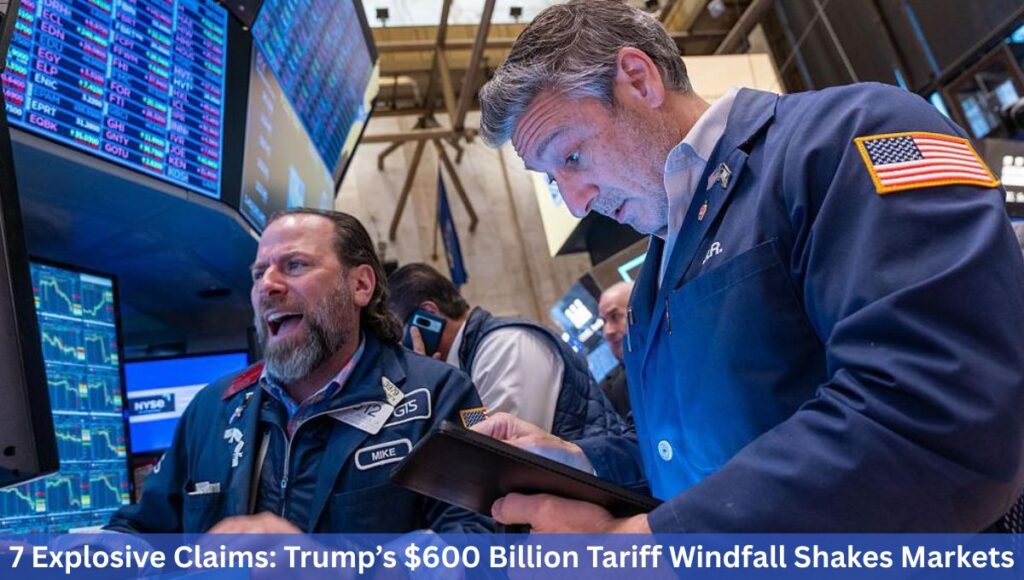
7 Explosive Claims: Trump’s $600 Billion Tariff Windfall Shakes Markets
Trump’s $600 Billion Tariff Claim Explained
“We have taken in, and will soon be receiving, more than 600 Billion Dollars in Tariffs,” Trump wrote, asserting that the revenue has fundamentally reshaped America’s economic standing.
According to Trump, the massive inflow of tariff revenue has strengthened the country on two fronts:
- Financial stability, by generating unprecedented government income
- National security, by reducing reliance on foreign supply chains and pressuring strategic rivals
He further argued that tariffs have made the United States “far stronger and more respected than ever before,” rejecting criticism that the measures hurt consumers or disrupt global trade.
Trump’s claim comes as the Supreme Court weighs whether his administration exceeded its authority by imposing broad import duties without explicit congressional approval.
Tariffs as a National Security Weapon
Since returning to the White House in January 2025, Trump has treated tariffs not merely as trade tools, but as instruments of national defense and foreign policy.
From Economics to Strategy
The administration has justified tariffs under the banner of emergency economic powers, arguing that:
- Trade deficits weaken national resilience
- Foreign dependence threatens defense readiness
- Economic leverage can shape diplomatic outcomes
Trump has repeatedly warned that striking down the tariffs would leave the US “financially defenseless” and exposed to foreign pressure.
“The biggest threat in history to United States National Security would be a negative decision on Tariffs by the US Supreme Court,” Trump previously said.
The Supreme Court Battle Over Tariff Authority
At the heart of the legal challenge is whether Trump lawfully used the International Emergency Economic Powers Act (IEEPA) to impose tariffs on dozens of countries.
Lower Courts Push Back
Federal courts have ruled that:
- IEEPA does not grant unlimited tariff authority
- Congress, not the president, traditionally controls import duties
- Trump overstepped executive powers
A permanent injunction was issued against enforcing many of the tariffs, and that decision was upheld on appeal.
Why the Supreme Court Matters
The Supreme Court’s decision could have sweeping consequences:
- If upheld: Presidential trade authority expands dramatically
- If struck down:
- Average US tariff rates could fall sharply
- Tens of billions may need to be refunded
- Existing trade deals could unravel
The court heard arguments in November and has deferred a final ruling to 2026, leaving tariffs in place for now.
Wall Street Reacts: Markets Hit Record Highs
As legal uncertainty looms, US financial markets are surging.
On Monday, Wall Street closed decisively higher:
- Dow Jones Industrial Average: Up 1.23% to 48,977.18 (record high)
- S&P 500: Gained 0.64% to 6,902.05
- Nasdaq: Rose 0.69% to 23,395.82
Trump has directly credited tariffs for the rally, thanking “Mr Tariff” — a nickname he applied to himself — for what he called “unparalleled greatness.”
Energy, Defense, and Financial Stocks Lead Gains
Energy Stocks Surge
Energy shares jumped after a US military move involving Venezuela fueled speculation that American oil firms could gain access to its vast reserves.
- Exxon Mobil and Chevron posted sharp gains
- S&P energy index rose 2.7%, its highest level since March
Financials and Defense Benefit
- Financial stocks rose 2.2%, with Goldman Sachs and JPMorgan hitting record highs
- Defense stocks pushed aerospace and defense indices to new peaks
Analysts expect 6.7% year-on-year earnings growth for financial firms in the December quarter.
India in the Crosshairs of Trump’s Tariff Policy
India is among the countries most affected by Trump’s aggressive tariff regime.
50% Tariffs on Indian Imports
Trump has imposed tariffs of up to 50% on Indian goods, including:
- A 25% levy linked to India’s purchases of Russian oil
- Heavy duties on garments, leather, and manufactured products
The US remains India’s largest export market, accounting for roughly 18% of total goods exports.
India’s Strategic Response: Diversifying Away from the US
According to reports, New Delhi is accelerating efforts to diversify exports away from the US.
Key Drivers Behind India’s Strategy
- Uncertainty over US tariff rollbacks
- Trump’s willingness to escalate penalties
- Sensitivity around agriculture and dairy market access
Experts quoted in international media express skepticism that Washington will significantly reduce tariffs, even if negotiations continue.
Trump on Modi: Praise Mixed With Pressure
Despite the trade tensions, Trump has struck a conciliatory tone toward Indian Prime Minister Narendra Modi — while maintaining leverage.
“Modi is a very good man; he is a good guy,” Trump said aboard Air Force One, adding that Indian leaders were eager to address his concerns.
At the same time, he issued a clear warning:
“They do trade and we can raise tariffs on them very quickly. It would be very bad for them.”
Why Trump Is Defending Tariffs So Aggressively
For Trump, tariffs are politically, economically, and ideologically central.
Core Arguments Behind His Trade Doctrine
- Tariffs correct “unfair” global trade practices
- They force trading partners to negotiate
- They fund government operations without raising domestic taxes
- They protect US manufacturing and defense supply chains
Trump has consistently rejected claims that tariffs fuel inflation, arguing instead that they strengthen long-term competitiveness.
Corporate Pushback and Legal Challenges
Major US companies have challenged the tariff regime.
Business Opposition Mounts
- Retail giants, including Costco, have sued for refunds
- Firms argue tariffs increase costs and disrupt supply chains
- Lawsuits seek to block continued collections
A Supreme Court ruling against the administration could force the US government to return tens of billions of dollars already paid.
What Happens If the Supreme Court Strikes Down the Tariffs
Analysts warn the impact would be immediate and far-reaching.
Potential Consequences
- Sharp reduction in effective US tariff rates
- Renegotiation or collapse of preliminary trade deals
- Loss of presidential leverage over allies and rivals
- Strengthened role of Congress in trade policy
For countries like India, such a ruling could dramatically improve negotiating leverage.
Trump’s Message to the Supreme Court
Trump has been unusually direct in addressing the court, urging justices to consider national security implications.
“PRAY THAT THE UNITED STATES SUPREME COURT ALLOWS OUR COUNTRY TO CONTINUE ITS UNPRECEDENTED MARCH,” he wrote, framing the decision as existential.
The rhetoric underscores how deeply tariffs are woven into Trump’s vision of American power.
Global Trade Order at a Crossroads
Beyond domestic politics, the case could redefine global trade norms.
- A pro-Trump ruling strengthens unilateral economic power
- An adverse ruling reinforces multilateral, rules-based trade
- Allies and rivals alike are watching closely
For now, tariffs remain in effect — and Trump is claiming victory.
Conclusion: A High-Stakes Gamble With Global Consequences
Donald Trump’s claim of a $600 billion tariff windfall is more than a boast. It is a political, legal, and economic argument aimed squarely at the Supreme Court, financial markets, and foreign governments.
Whether the court upholds or dismantles his tariff regime will shape:
- The future of US trade policy
- The balance of power between Congress and the presidency
- America’s role in the global economic order
Until then, Trump is doubling down — portraying tariffs as the backbone of American strength, and daring the nation’s highest court to say otherwise.
Also Read: 7 Key Insights into Trump’s $2,000 Tariff Dividend Promise to Americans
Also Read: Trump’s tariff fate could be decided by US Supreme Court this Friday