Trump has approved the strike plan on Iran and Trump to Decide on Iran Strike Within Two Weeks. White House says diplomacy still possible, but military strike on Iran remains firmly on the table. In a significant escalation of US involvement in the Iran-Israel conflict, President Donald Trump has reportedly approved a military strike plan on Iran. However, the White House says the final order is yet to be issued, as Trump opens a two-week window for possible diplomacy.
The developments come amid fierce hostilities between Iran and Israel, with both sides trading missile attacks, escalating regional instability, and triggering renewed fears of a larger war in the Middle East.
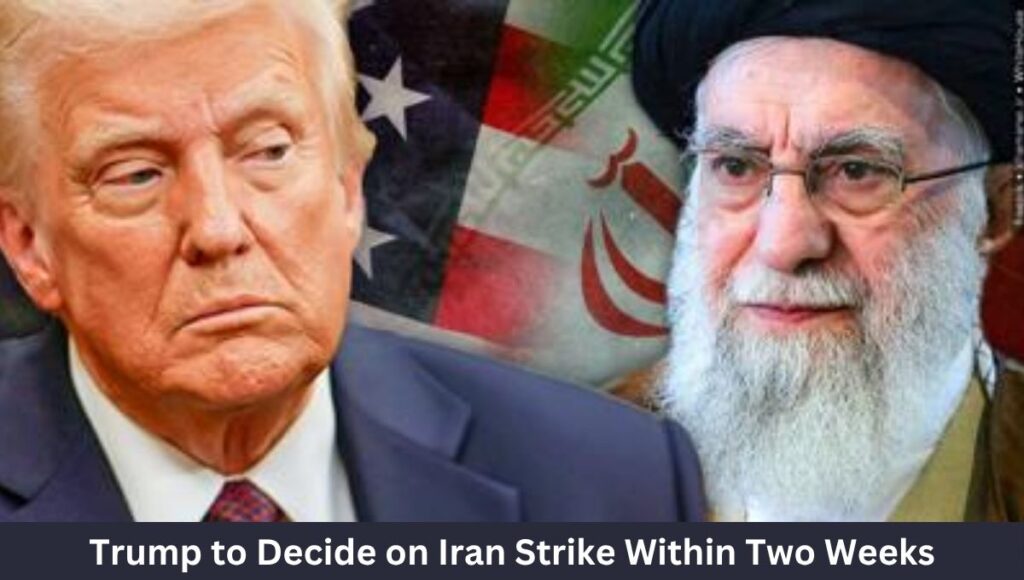
Trump to Decide on Iran Strike Within Two Weeks
Trump: “I May Do It, I May Not Do It”
In his latest comments, President Trump left the door open for both options a military strike or a diplomatic deal. “I may do it, I may not do it,” he told reporters, underscoring the weight of the decision.
While the President confirmed that a military plan is in place, he added that diplomacy was still his preferred route provided Iran halts its nuclear ambitions.
“If it’s a choice between fighting and having a nuclear weapon, you have to do what you have to do,” Trump said.
White House Confirms Two-Week Timeline
On Thursday, White House Press Secretary Karoline Leavitt confirmed that Trump would make a final decision within two weeks.
“Based on the fact that there’s a substantial chance of negotiations that may or may not take place with Iran in the near future, I will make my decision whether or not to go within the next two weeks,” Leavitt quoted Trump as saying.
Leavitt emphasized that Trump’s top priority is preventing Iran from developing a nuclear weapon, warning that Tehran already has the necessary materials to assemble one.
“All they need is a decision from the supreme leader to do that,” she said.
Iranian Strike on Israeli Hospital Sparks Outrage
The urgency of the situation escalated sharply when Iran launched a missile barrage that struck the Soroka Medical Center in Beersheba, Israel, injuring over 80 people. Residential areas near Tel Aviv were also hit, resulting in more than 240 casualties across Israel.
Israeli Prime Minister Benjamin Netanyahu, while standing outside the damaged hospital, vowed retaliation. “Tehran’s tyrants will pay the full price,” Netanyahu declared.
Israel Vows to Continue Strikes With or Without the US
Israeli Defense Minister Israel Katz directly threatened Iran’s Supreme Leader Ayatollah Ali Khamenei, saying: “This man absolutely should not continue to exist.”
While US officials previously said Trump vetoed an Israeli plan to assassinate Khamenei, Trump later clarified: “There are no plans to kill him at least not for now.”
Israel has significantly expanded its military campaign against Iran’s nuclear infrastructure, including strikes on:
- Natanz uranium enrichment site
- Tehran-based centrifuge workshops
- Isfahan’s nuclear research center
- Arak heavy water reactor
Heavy Civilian Toll in Iran
According to a Washington-based Iranian human rights organization, the Israeli strikes have resulted in at least 639 deaths in Iran, including 263 civilians. Over 1,300 people have been injured since the offensive began last Friday.
The rising casualty toll has amplified calls for de-escalation, though neither side appears willing to step back.
Iran Refuses to Talk Until Bombing Stops
Iran’s position remains firm. Iranian officials insist they will not engage in further negotiations until Israel halts its strikes. The Biden administration, however, has not pressured Israel to stop the bombardment.
“Keep going,” Trump is reported to have told Netanyahu, reinforcing America’s unwavering support for Israel.
Europe Seeks to Mediate as Geneva Talks Loom
Meanwhile, foreign ministers from Britain, France, and Germany are traveling to Geneva for emergency talks with Iranian diplomats.
The aim is to reopen stalled nuclear negotiations, using a draft deal previously offered by US Special Envoy Steve Witkoff, which required Iran to abandon uranium enrichment entirely.
“This is a meeting between European leaders and Iran. The President supports diplomatic efforts from our allies that could bring Iran closer to taking his deal,” said a White House official.
Despite this, hopes for diplomatic success remain low, especially as Tehran has not budged on uranium enrichment — a core sticking point.
Inside the Situation Room: Weighing the Costs
President Trump has been holding frequent Situation Room meetings with CIA Director John Ratcliffe and Joint Chiefs Chairman Gen. Dan Caine, as well as Secretary of State Marco Rubio.
Trump is also reportedly consulting former strategist Steve Bannon, who has warned that any military action risks a long-term war.
The President has asked intelligence officials about the use of bunker-buster bombs on Iran’s underground Fordow nuclear facility, and how long such an operation might last.
“The President is unafraid to use strength if necessary,” said Leavitt. “But he is also a peacemaker and believes in peace through strength.”
Strategic Implications of a US Strike
Military experts caution that any US-led strike on Iran could spiral into a broader conflict, pulling in regional players like Hezbollah, and potentially provoking reactions from Russia or China.
Though Israel is ready to proceed alone, US military support would dramatically alter the balance — and the risks.
Diplomatic analysts also fear that a strike could collapse any remaining chance of a nuclear deal, hardening Tehran’s stance and sparking wider unrest in the Gulf and beyond.
Trump’s “Much Bigger” Vision
President Trump, while resisting immediate military involvement, hinted this week that he is looking for more than just a ceasefire.
“We want something much bigger than just a ceasefire,” he said, suggesting that any diplomatic resolution must include a full rollback of Iran’s nuclear program and long-term guarantees.
Conclusion: Two Weeks to Alter History
The next two weeks could determine whether the US enters another war in the Middle East, or whether diplomacy can avert disaster.
- Iran has made no concessions.
- Israel continues to escalate.
- Trump stands at the threshold, with the world watching.
With high-stakes diplomacy unfolding in Geneva, and military plans on standby, the clock is ticking on one of the most consequential foreign policy decisions of Trump’s presidency.
Also Read: Nuclear Anxiety in Gulf as Fears of Iran Strike Grow
Also Read: World reacts to US attacks on Iran
Related Posts:
- 11 Explosive Warnings as Trump Vows to ‘Knock the…

- 10 Explosive Warnings as Donald Trump Calls Iran…
- 12 Explosive Claims as Donald Trump Says Iran War…
- Trump's 3 Blunt Warnings to China and Russia Over…
- 7 Explosive Impacts of Trump’s 25% Iran Tariff on…
- 9 Explosive Claims as Trump Says US Winning Iran War