

Tension escalates with both Iran and its trading partners, as Trump Threatens Secondary Sanctions on Countries Buying Iranian Oil Amid Stalled Nuclear Talks. In a bold move, former US President Donald Trump issued a strong warning on Thursday against any country or entity purchasing oil or petrochemical products from Iran.
On his social media platform, Truth Social, Trump declared that anyone engaging in such trade would face immediate secondary sanctions and be completely cut off from doing business with the United States.
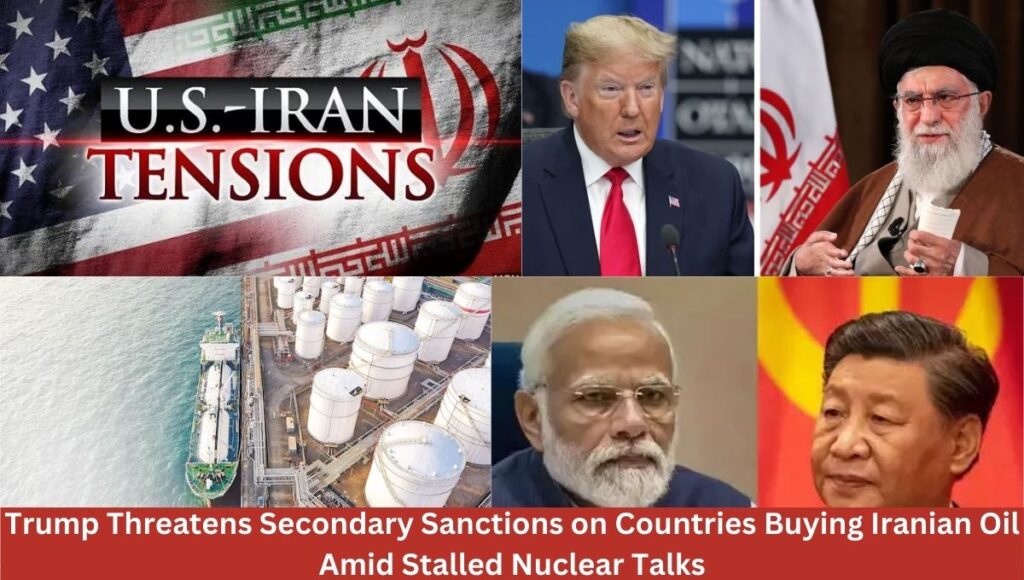
Trump Threatens Secondary Sanctions on Countries Buying Iranian Oil Amid Stalled Nuclear Talks
US President Donald Trump Warns of Secondary Sanctions on Iran Oil Buyers
Trump wrote, “All purchases of Iranian oil, or petrochemical products, must stop, NOW! Any country or person who buys ANY AMOUNT of oil or petrochemicals from Iran will be subject to, immediately, Secondary Sanctions. They will not be allowed to do business with the United States of America in any way, shape, or form.”
Trump’s “Maximum Pressure” Campaign Resurfaces
Trump’s remarks reflect a renewed commitment to his “maximum pressure” campaign against Iran, aimed at choking off Tehran’s vital oil revenue. During his first term the campaign began, which seeks to halt Iran’s ability to fund what the U.S. calls “destabilizing activities” across the Middle East, including its support for militant groups such as the Houthis in Yemen.
The secondary sanctions policy is aimed to deter not only Iran but also its international customers, specifically countries like China and India, from importing Iranian crude and petrochemical products. Currently the top buyer of Iranian oil, China, imported as much as 1.8 million barrels per day in March 2025, according to energy market data from Vortexa.
Nuclear Talks Delayed Amid Rising Tensions
Trump’s warning came shortly after the much-anticipated fourth round of U.S.-Iran nuclear talks was postponed, which was originally set to take place in Rome. Acting as the mediator, Oman, cited “logistical reasons” for the delay. Posting on X (formerly Twitter), Omani Foreign Minister Sayyid Badr bin Hamad Al Busaidi wrote that new dates would be announced once both parties agreed.
The delay was confirmed by Iranian Foreign Ministry officials and reiterated their commitment to a peaceful resolution. Abbas Araghchi, Foreign Minister stated that Iran remained hopeful for a fair agreement but warned that U.S. demands must be “realistic.”
Trump accused the regime of pursuing nuclear weapons under the guise of a peaceful energy program. He has insisted that Iran must halt its nuclear activities entirely. However, Iran maintains that its nuclear efforts are purely for civilian purposes and within its sovereign rights.
Impact on Global Oil Markets
Markets swiftly reacted to Trump’s statements. Brent crude increased 1.75% to settle at $62.13, while U.S. crude oil futures rose by 1.77% to close at $59.24 per barrel. Analysts suggest that up to 1.5 million barrels of Iranian oil per day could be removed from global supply chains if the U.S. successfully enforces these secondary sanctions.
President of Lipow Oil Associates, Andrew Lipow said, “This could significantly tighten the market. With OPEC+ already producing over quota, any disruptions from Iran’s exports could be magnified.”
India and UAE Firms Sanctioned
Several companies linked to Iran’s oil trade have already been sanctioned by the U.S. In February, over 30 entities, including four Indian companies were targeted by the Treasury Department for allegedly facilitating Iranian crude shipments. According to the State Department four UAE-based firms more recently, with trade ties to India were sanctioned for moving Iranian petroleum products.
U.S. Secretary of State Marco Rubio said, “These firms generated hundreds of millions of dollars in illicit funds for Iran’s destabilizing activities.” The companies, which include Shivnani Organics FZE and Solvent Organics FZE, are now barred from any business dealings with U.S. entities.
Operation Rough Rider: US Targets Houthis in Yemen
Aggressive posture of the Trump’s administration also extends to military operations in the region. Pete Hegseth Defense Secretary warned Iran of consequences for its alleged support of Yemen’s Houthi rebels, stating on X: “We see your LETHAL support to the Houthis. You were warned. You will pay the CONSEQUENCE at the time and place of our choosing.”
Under “Operation Rough Rider” the U.S. has been conducting airstrikes targeting Houthi infrastructure, following increasing threats to international shipping and American economic interests in the Red Sea.
Conclusion: Geopolitical Stakes Remain High
Trump’s delay of nuclear talks and reassertion of harsh oil sanctions underscore the fragile and volatile nature of U.S.-Iran relations.
The policy of secondary sanctions on Iran’s oil exports not only threatens the Iranian economy but also risks a broader geopolitical fallout, particularly with nations like China, which may not yield easily to U.S. pressure.
As negotiations continue to stall and military operations ramp up, the world watches closely to see whether diplomacy can prevail—or whether the confrontation will escalate further.
Also Read: Oil Prices Surge, Asian Markets Tumble: US-Iran Conflict Escalates
Also Read: China rejects US demands to halt Russian, Iranian oil imports
Related Posts:
- 10 Explosive Facts About Donald Trump’s $1 Billion…

- Trump’s 2025 Gaza Peace Plan Signing and Historic…

- Donald Trump’s Lavish UK State Visit: From Kate…

- “Don’t Want Them To Buy Russian Oil”: Trump Urges…
- What’s Next for Donald Trump After Court Rules His…

- Trump’s 20-Point Gaza Peace Plan Gains Urgent Global…
