

Impacts of the Trump-Putin Call on Ukraine’s 2025 Strategy amid hopes of renewed U.S. support. When U.S. President Donald Trump and Russian President Vladimir Putin agreed to another personal meeting — just hours before Ukraine’s President Volodymyr Zelensky was to arrive in Washington — it was a diplomatic curveball thrown at Kyiv. News of the two-and-a-half-hour phone call, announced while Zelensky was in transit, caught much of the world by surprise.
That call, in which the two leaders reportedly discussed Tomahawk missiles, trade prospects, and peace negotiations, threatened to steal the thunder from Zelensky’s high-stakes White House meeting. It raised fresh doubts in Kyiv about how committed Washington will really be to delivering game-changing arms. And it reopened the question of whether Trump might pivot toward Russia, especially as his frustrations with Putin have grown in public recently.
This article breaks down the 5 crucial impacts of the Trump-Putin call, explains how it complicates Ukraine’s strategy, and assesses what Zelensky must now confront in his Oval Office meeting.
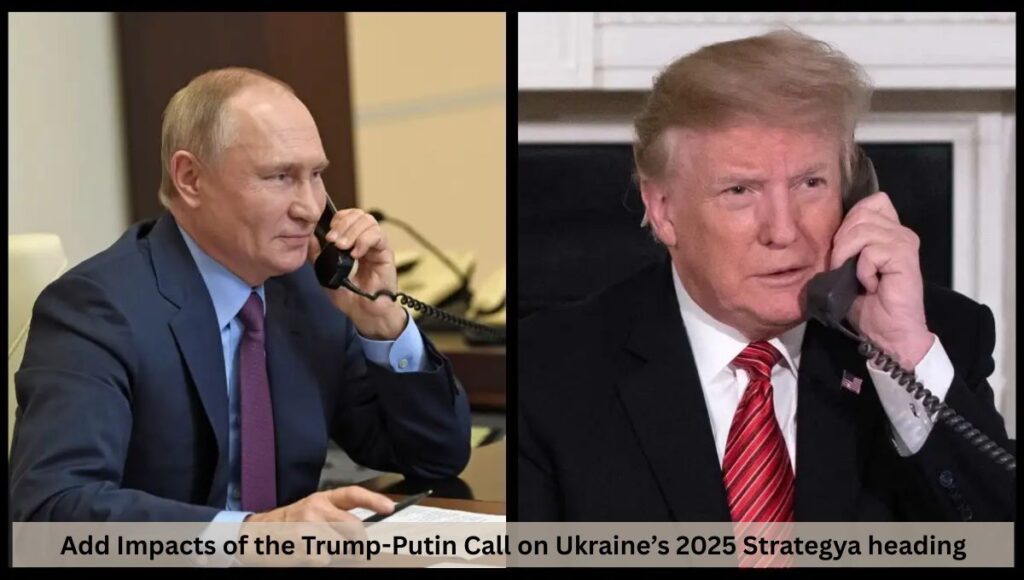
Impacts of the Trump-Putin Call on Ukraine’s 2025 Strategy
Undermining Zelensky’s Leverage
A preemptive diplomatic move
The timing of the Trump-Putin call was itself significant. It occurred while Zelensky was in flight, effectively inserting Moscow into the agenda even before Kyiv could make its case in person. Rather than awaiting Zelensky’s presentation, Trump and Putin started shaping the terms of their later summit in Budapest — a move that shifts leverage toward Russia.
By positioning the conversation in advance, Moscow forces Ukraine to respond to frames already partially set. Trump may claim he’s merely facilitating dialogue, but in practice he’s giving weight to Putin’s narrative before Zelensky ever steps into the Oval Office.
Dampening Zelensky’s bargaining power
One of Ukraine’s primary goals in the White House meeting is clear: permission to acquire Tomahawk long-range missiles. These missiles, with their ability to strike targets deep inside Russian territory, could change Kyiv’s strategic calculus and signal serious U.S. commitment.
But by engaging Putin on this question ahead of time and reportedly raising objections to Tomahawks, Trump gives Moscow an early advantage. If Trump intimates reservations, Zelensky will have less room to push. It’s akin to negotiating with one hand tied behind your back.
Shifting the narrative
Ukraine’s messaging has long centered on strength and justice — that only overwhelming firepower and sustained support can force Moscow to the table. But the Trump-Putin talk frames future negotiations as a bilateral U.S.–Russia deal in which Ukraine is a spectator.
In that scenario, Zelensky must fight to remain in control of the narrative: that Ukraine is not a pawn in a great power game but a sovereign actor whose security must be sustained.
2. The Tomahawk Question: Weapon or Leverage?
Why Tomahawks matter
Tomahawk cruise missiles are among the most advanced strike weapons in the U.S. arsenal: long range (circa 1,600 km), high precision, and deep penetration capability.
If Ukraine were to gain access to such missiles, it could target critical infrastructure or assets deep inside Russian territory — including logistics hubs, command centers, or supply lines — rather than remaining restricted to border zones.
That would allow Kyiv to threaten more consequential leverage. The very potential of Tomahawks — not necessarily their immediate use — becomes a diplomatic and deterrent tool.
Moscow’s warning, Trump’s hedging
Even before the summit announcement, Putin warned that equipping Ukraine with Tomahawks would represent a “totally new stage” of escalation — a warning Moscow characterizes as deterrence but which Kyiv sees as intimidation.
During the phone call, Putin reportedly reinforced that view, cautioning that supplying Tomahawks would damage bilateral relations. That gives Trump a pretext to appear cautious, mitigate risk, and possibly decline full support while appearing responsive.
Trump himself has previously used the missiles as rhetorical leverage: “I might say … if the war is not going to get settled, I’ll send them Tomahawks.” But he has also asserted that the U.S. must not deplete its own stockpile, creating ambiguity and room for retreat.
Practical obstacles to deployment
Even if Trump agrees in principle, real-world logistics will cause delays. Delivering Tomahawks to Ukraine involves infrastructure, training, command & control integration, compatible targeting intelligence, and supply chain guarantees. Some analysts estimate months may pass before full deployment—even assuming full political will.
Thus, Zelensky cannot count solely on theoretical approval — he must press for immediate deployments or interim assistance to bridge the gap.
Symbolism over utility?
Critics argue that the utility of Tomahawks might be overrated given that they may not decisively shift the balance of power on the frontlines, where heavy artillery, manpower, air defense, and air supremacy continue to dominate. However, even if their battlefield impact is incremental, the symbolism is powerful.
Approval would signal that the U.S. is willing to push deterrence beyond defense and into deeper offensive capability. In that sense, Tomahawks are less about battlefield change and more about political signaling. Zelensky must persuade that symbolism matters — and fast.
3. The Budapest Summit: A New Stage of Negotiation
Why Hungary?
The announcement that Trump and Putin will meet in Budapest, Hungary before or shortly after Zelensky’s White House meeting is itself calculated. Hungary — a member of NATO but with historically closer ties to Russia — serves as a neutral (or at least ambiguous) venue. It lessens the optics of a Moscow visit or a U.S. location, presenting the summit as balanced and diplomatic.
By moving the locus of talks to Europe, Trump signals that the Ukraine conflict is entering a diplomatic phase — one in which face-to-face engagement with Putin matters more than raw battlefield advances.
What the summit might yield — or stall
Given past US–Russia talks over Ukraine, expectations should be tempered. The Alaska summit in August failed to produce concrete agreements; Moscow emerged with few incentives to compromise. The Budapest meeting may similarly produce more process than substance.
Possible outcomes include:
- A ceremonial joint statement calling for peace or ceasefire.
- A roadmap for future talks involving third parties or international mediators.
- A softening of U.S. threats or demands in exchange for Moscow’s willingness to return to negotiation.
- Diplomatic face-saving offers by Russia — such as conditional ceasefires in limited zones — designed to buy time.
But absent Russian willingness to cede territory or accept Kyiv’s core demands, it is unlikely to yield durable breakthroughs.
A test of Trump’s consistency
Trump must navigate a delicate balance: affirming that U.S. support for Ukraine remains firm, while also engaging dialogue with Moscow. If the Budapest summit ends with equivocal statements or vague promises, those could be used as cover by the U.S. to pull back military support.
Zelensky’s visit to Washington now becomes a litmus test of how serious the U.S. is — is it pushing for change, or repositioning toward diplomatic détente?
4. Russia’s Desperation or Strategy?
The intensity of recent attacks
The diplomatic maneuvering by Moscow must be understood in light of its battlefield position. In the 24 hours prior to the Trump-Putin call, Russia launched dozens of missiles and over 300 drones at Ukraine, targeting civilian infrastructure and energy networks. The repeated strikes on the gas supply and electrical grid have triggered nationwide power outages, particularly dangerous as winter approaches.
Those actions signal urgency: Moscow is attempting to break Ukraine’s civilian morale, induce resource shortages, and force Kyiv (and its Western backers) into desperation. The timing suggests that Putin felt compelled to spin diplomacy soon, lest the situation becomes untenable.
Stalemate and incremental loss
On the frontlines, despite staggering losses, neither side has made dramatic breakthroughs. Any territorial gains come at enormous costs, and full-scale offensives have often stalled. At the same time, Ukraine’s evolving drone warfare, particularly against Russian fuel depots and supply hubs, is gradually eroding Moscow’s logistical strength.
In that sense, Putin’s reintroduction of dialogue is a gamble: perhaps a bid to avoid further attrition and buy breathing room, especially as Western patience or funding fatigue may rise.
Delay tactics as a war strategy
Russia has long shown proficiency in delay: offering talks without genuine intent to compromise, stretching out negotiation cycles, and using diplomatic engagement to undercut support momentum against it.
Moscow may view Trump’s willingness to meet as a pressure valve: the more it dialogue, the more it can shift focus from military pressure to diplomatic games. If Trump can be persuaded that he is the broker of peace, Russia hopes to reduce battlefield pressure and redirect global attention to negotiations.
5. What Zelensky Must Do — And Risks He Faces
Present a firm, unified front
In Washington, Zelensky must make clear that Ukraine is not a passive observer. He should insist that any talks with Russia must include Ukraine as a direct party, not merely as a subject of U.S.–Russia diplomacy. Presenting a unified domestic front — with military, political, and civil society coherence — strengthens his legitimacy.
Leverage public sentiment and alliances
Zelensky must appeal not just to Trump but to the American public, Congress, and allied nations. The optics matter: if he can turn global attention to the humanitarian cost of blackouts, civilian suffering, and Russian escalation, he may put indirect pressure on Trump. Cooperation with defense contractors and leveraging public statements of U.S. military leaders (e.g. promising “firepower”) may help.
Demand real deliverables, not vague promises
Given past disappointment with rhetorical support, Zelensky should push for concrete commitments: delivery schedules for Tomahawks, interim missile or drone systems, air defense systems, or intelligence sharing. He should avoid being entrapped by vague promises of future talks or exploratory diplomacy.
Anticipate subtle U.S. backtracking
History suggests that each time Trump grows frustrated with Putin’s intransigence, a conversation follows, and pressure is eased. Zelensky must be wary that Trump might ease sanctions, slow weapons transfer, or retreat from threats after face-to-face meetings with Putin. He must insert provisions for accountability, review mechanisms, and benchmarks into any agreement.
Prepare for internal and external scrutiny
Any major defense deal involving Tomahawks or large-scale escalation will invite scrutiny: from U.S. domestic critics, NATO allies nervous about escalation, and Russian propaganda labels. Zelensky should also prepare for damage control if agreements fail or are leaked prematurely.
Thematic Reflections & Outlook
Diplomacy as a chessboard, not a peace path
The Trump-Putin call is less about immediate peace than about repositioning the board. Russia and the U.S. are playing diplomatic chess: moving pieces, creating frames, maintaining initiative. Zelensky must keep his eyes on the board, not the rhetoric.
The double-edged sword of engagement
Dialogue has political value: it signals possibility, avoids isolation, and may deescalate where war fatigue rises. But it also risks legitimizing Russia’s narrative or providing cover for U.S. disengagement. Ukraine must accept engagement only under strict conditions: no cessation of hostilities until guarantees, accountability, and security structures are in place.
The role of Western allies & Congress
Even if Trump is hesitant, Zelensky must not rely entirely on one U.S. executive. He should cultivate direct ties with Congress, European governments, and defense firms. Multi-lateral support makes U.S. pullback less damaging. If Trump softens, other allies can step in to maintain pressure.
Winter is coming — urgency intensifies
Russia’s targeting of energy and gas networks indicates its attempt to weaponize the cold. Widespread blackouts and fuel shortages raise civilian suffering and political pressure. Every delay in support — especially during winter — enhances Russia’s leverage. Zelensky’s visit must secure fallback mechanisms, emergency relief, and resilience investments not just for military defense but civilian endurance.
The crucible of credibility
Above all, Ukraine’s path forward hinges on maintaining credibility: that it is a serious negotiating actor backed by powerful partners, not a victim begging for crumbs. If Zelensky leaves Washington without a strong agreement, it will embolden Russia, demoralize Ukrainians, and undermine future leverage.
Conclusion
The Trump-Putin phone call, arranged while Zelensky was en route to Washington, amounts to a high-stakes diplomatic ambush. It reshuffles leverage, injects preemptive narratives, and forces Kyiv to respond rather than initiate.
For Zelensky, the White House meeting is no longer just a pitch for arms — it is a struggle to retain agency. He must push for real commitments (especially Tomahawk deployment), anchor the war effort in global alliances, and prevent U.S.–Russia tête-à-têtes from sidelining Ukraine’s interests.
Whether the Budapest summit becomes a path to peace or a political theater, the next weeks will reveal much about Washington’s resolve, Moscow’s intentions, and Ukraine’s prospects. In the steely crucible of war and diplomacy, this may be the moment that decides whether Ukraine remains in control of its fate — or becomes a pawn in a new great power détente.
Also Read: Trump-Putin Alaska Summit: Putin Demands Donbas, Trump Pushes Ukraine Toward Deal
Also Read: Tomahawk missiles are Russia’s latest red line. Will Trump call Putin’s bluff?
Related Posts:
- Trump’s Bold 2025 Move: Tomahawk Missile Warning to Russia

- Trump–Zelensky Meeting 2025: Stylish Yet Strategic…

- US Tanks and Missiles Thunder in Indo-Pacific as…

- Flash Floods Slam New Jersey: Roads Submerged,…

- Putin’s Shocking Risks Ahead of Trump–Hungary Summit 2025

- Russia Bombards Kyiv with 550 Drones After…
