In a dramatic escalation of diplomatic pressure, Trump’s 10-Day Ultimatum to Russia Over Ukraine Raises Stakes, Sparks Global Tensions. U.S. President Donald Trump has slashed his previously announced 50-day deadline for Russia to reach a ceasefire agreement in Ukraine down to just 10 days.
The surprise announcement, made while speaking alongside UK Prime Minister Keir Starmer at Trump’s Turnberry resort in Scotland, has sent shockwaves through diplomatic circles and global energy markets. “There’s no reason in waiting. I want to be generous, but we just don’t see any progress being made,” Trump said, referring to Russia’s military campaign in Ukraine.
The shortened timeline is a clear signal of growing frustration within the Trump administration over Russian President Vladimir Putin’s refusal to engage in meaningful peace talks. And it’s not just rhetoric Trump’s warning comes backed by promises of crippling sanctions targeting both Russia and countries still buying its oil.
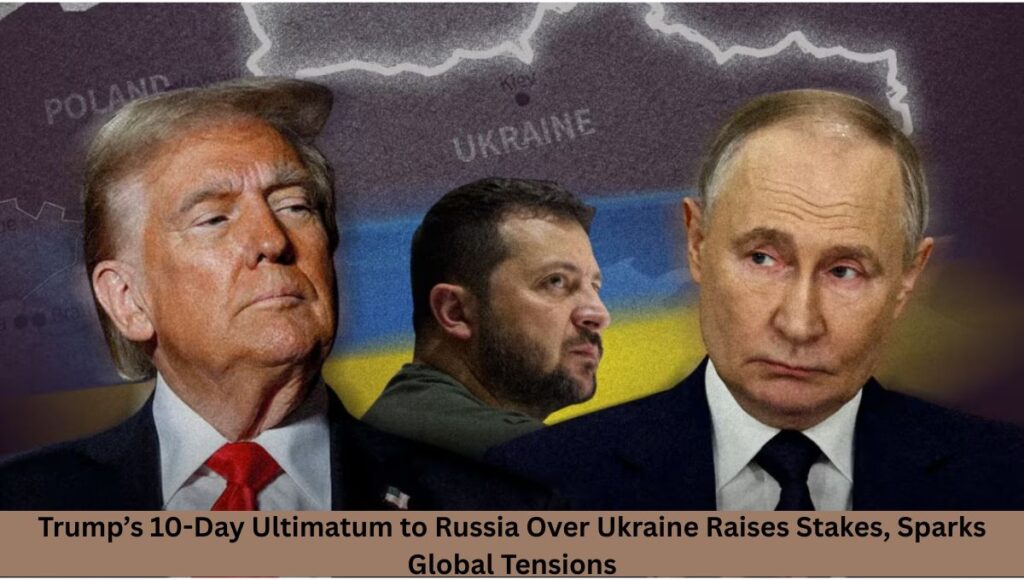
Trump’s 10-Day Ultimatum to Russia Over Ukraine Raises Stakes, Sparks Global Tensions
Medvedev’s Fiery Response: A Threat of War?
Trump’s new deadline didn’t go unnoticed in Moscow. Dmitry Medvedev, the former Russian president and a close ally of Putin, fired back in a chilling statement on social media platform X:
“Trump’s playing the ultimatum game with Russia: 50 days or 10.
He should remember two things:
1. Russia isn’t Israel or even Iran.
2. Each new ultimatum is a threat and a step towards war.”
Medvedev warned that this isn’t just a confrontation between Russia and Ukraine it risks drawing the U.S. directly into the conflict.
He also accused Trump of “following the Sleepy Joe road,” borrowing the nickname Trump often uses for President Biden.
The harsh rhetoric underscores the Kremlin’s longstanding position: Russia will not be pressured into peace, particularly not under what it sees as foreign ultimatums.
Ukraine Applauds Trump’s Tougher Tone
While Russia lashes out, Ukraine has welcomed Trump’s intensified pressure. Ukrainian President Volodymyr Zelensky expressed gratitude for what he called Trump’s “clear stance” and urgency.
“I thank President Trump for his focus on saving lives and stopping this horrible war,” Zelensky posted on X.
Andriy Yermak, Zelensky’s chief of staff, added on Telegram: “Putin only understands strength and this has been communicated clearly and loudly.”
Ukraine views Trump’s 10-day ultimatum as a necessary move to shift the momentum, especially after more than three years of war with no resolution in sight.
Trump Threatens Secondary Sanctions on Russian Oil Buyers
What makes this latest ultimatum different from previous ones is the scale of the proposed consequences.
Trump has pledged not only to impose 100% tariffs on Russian goods, but also to launch secondary sanctions on countries that continue purchasing Russian oil.
This move directly targets major Russian oil buyers like China, India, Turkey, and several EU nations.
“We’ll just boost domestic oil production to offset any impact,” Trump said aboard Air Force One, attempting to calm fears about the potential oil market fallout.
However, analysts are skeptical. Russia exported 4.68 million barrels of crude oil per day in June 2025, plus another 2.5 million in refined products.
That’s over 7 million barrels a day roughly 7% of the global supply. Removing even a portion of that from the market could send oil prices soaring.
Global Oil Markets React: Prices Begin to Climb
Following Trump’s 10-day ultimatum, global oil prices surged by nearly 3%, as markets began to price in the risk of real disruption.
Earlier warnings had been largely dismissed, but the shortened deadline and potential for secondary sanctions have investors worried.
The International Energy Agency (IEA) projects that global oil supply could rise by 2.1 million barrels per day in 2025, but replacing Russian output especially in the short term would be challenging.
OPEC nations like Saudi Arabia, the UAE, and Kuwait hold significant spare capacity, but deploying that reserve isn’t instantaneous.
Any delay or hesitation could cause a supply crunch and send fuel prices skyrocketing globally.
China and India in the Crosshairs
India imported approximately 1.5 million barrels per day of Russian oil in June, while China brought in over 2 million. These two countries represent a significant share of Moscow’s remaining oil revenue.
U.S. Treasury Secretary Scott Bessent confirmed that he raised the issue of secondary sanctions during recent trade talks with Chinese officials:
“Beijing could face high tariffs if it continued its Russian oil purchases,” Bessent warned.
While India may be more flexible partly due to its growing trade ties with the U.S. China is unlikely to cave, viewing its energy ties with Russia as strategically vital.
A potential confrontation with China over oil could therefore usher in a new phase of global trade tension.
Kremlin’s Lifeline: Can Russia Survive Oil Sanctions?
Oil and gas revenues have long formed the backbone of Russia’s federal budget, contributing up to 50% in some years. Any disruption in energy exports could deal a massive financial blow.
Still, the Kremlin is unlikely to fold under economic pressure alone. Last week, Russia briefly blocked foreign tankers from loading oil at its Black Sea ports, signaling a readiness to retaliate if provoked.
Russian officials remain defiant. Foreign Minister Sergey Lavrov dismissed Trump’s shifting deadlines as a “revolving door of nonsense,” while analyst Sergey Markov bluntly stated:
“Russia’s actual response to Trump’s ultimatum will be the same as it has been for the last 500 years to all ultimatums: Go away! Go to hell.”
Is Trump Serious Or Just Posturing?
Trump’s foreign policy record is mixed. He has issued ultimatums before like threatening reciprocal tariffs in April only to later soften his position under market pressure.
However, he also surprised allies in June by bombing Iran’s nuclear facilities, proving he can act decisively and without warning.
This unpredictability has made it difficult for analysts to determine whether Trump’s Russia ultimatum is a serious diplomatic gambit or a political maneuver aimed at boosting his re-election image.
With ongoing struggles to secure a peace deal in Gaza and rising criticism over his handling of global crises, Trump may be seeking a high-profile foreign policy “win.”
What’s Next: August 9–10 Deadline Approaches
Trump’s ultimatum has set the clock ticking. If Moscow does not offer tangible peace progress by August 9 or 10, the U.S. has indicated that sweeping new sanctions could be rolled out almost immediately.
The White House has not released a detailed sanctions roadmap, but officials suggest that tariffs, financial restrictions, and secondary sanctions could all be part of the package.
All eyes are now on the Kremlin. Will Putin flinch, or will he call Trump’s bluff?
The Bigger Picture: Geopolitical Risk on the Rise
The risk of broader confrontation is growing. Medvedev’s warning that this could escalate into a U.S.–Russia conflict may be extreme, but it reflects the unpredictable danger of escalating ultimatums.
Markets, governments, and energy suppliers alike are on edge. While a ceasefire remains the best-case scenario, the threat of oil shocks, retaliatory sanctions, and even military incidents cannot be ruled out.
As August approaches, the world finds itself on the edge of a geopolitical knife.
Conclusion: Countdown to Consequences
Trump’s decision to slash the Ukraine ceasefire deadline from 50 to 10 days has upended the diplomatic calculus surrounding the war. His threats of secondary sanctions against Russian oil buyers introduce major global economic risk and confront China, India, and others with difficult choices.
While Ukraine applauds the move, Russia remains defiant, and the world watches nervously. Whether this ends in negotiation or escalation depends largely on what happens in the next few days. With Trump’s ultimatum now public and the deadline approaching, the next chapter in the Russia–Ukraine war may be written in oil, tariffs, and high-stakes diplomacy.
Also Read: Ukraine and Russia Set for Fresh Peace Talks in Turkey Amid Renewed US Pressure
Also Read: Trump offered Putin victory in Ukraine. Why did Putin refuse?
Related Posts:
- Trump Slashes Putin’s Ukraine Ceasefire Deadline to…

- Trump to Host 2026 G20 Summit at His Florida Golf…

- Trump’s 2025 Gaza Peace Plan Signing and Historic…

- 7 Shocking Reasons FIFA’s Peace Prize for Trump…

- 9 Explosive Revelations as Trump Declares His Health…

- Trump Teases Major Russia Statement Amid Growing…