In a historic meeting in Beijing, Putin and Xi Hail ‘Unprecedented’ China-Russia Ties as Gazprom Signs A Major Gas Deal via Mongolia. Russian President Vladimir Putin and Chinese President Xi Jinping have reaffirmed their nations’ partnership, hailing relations at an “unprecedentedly high level.” The remarks came during a high-profile state visit in Beijing, where Russia’s state-owned energy giant Gazprom announced the signing of a legally binding agreement to build the Power of Siberia-2 natural gas pipeline.
The pipeline, which will run through Mongolia, is projected to deliver 50 billion cubic meters of Russian gas annually to northern China. Analysts note that the deal could replace nearly half of the natural gas volumes Russia previously exported to Europe before the Ukraine conflict disrupted trade. “This is a historic step in our partnership,” Putin told Xi. “We were always together then, and we remain together now.”
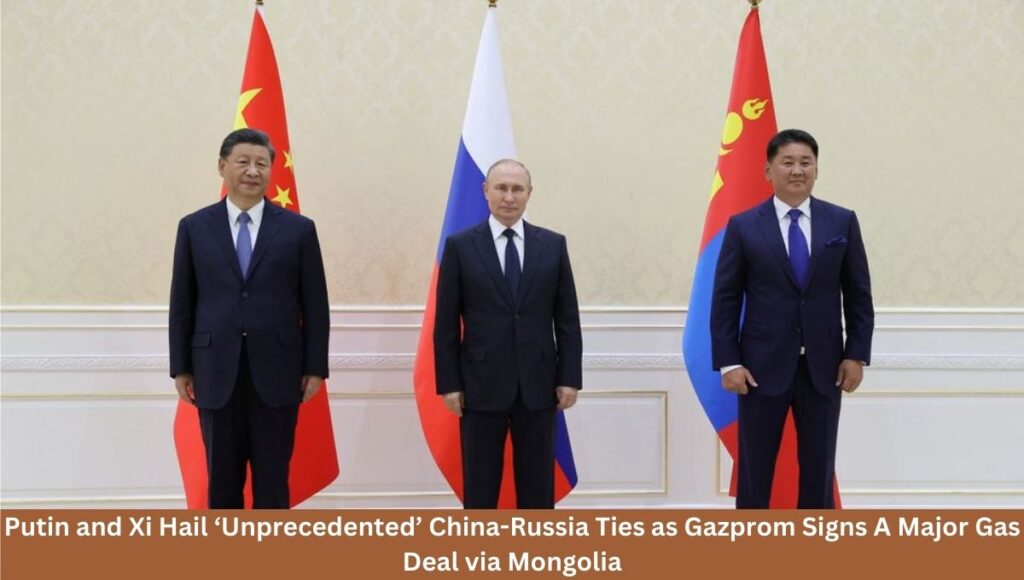
Putin and Xi Hail ‘Unprecedented’ China-Russia Ties as Gazprom Signs A Major Gas Deal via Mongolia
Power of Siberia-2: A Game-Changer in Energy Geopolitics
What the Deal Includes
Gazprom’s CEO Aleksey Miller confirmed that the 30-year supply deal would price Russian gas lower than what Europe pays, signaling Moscow’s intent to redirect its energy flows eastward.
The Power of Siberia-2 pipeline has long been under discussion but faced delays due to technical, financial, and geopolitical challenges.
The latest agreement demonstrates how Russia, under heavy Western sanctions, is pivoting decisively toward China as a primary energy market.
Why It Matters
- 50 bcm annually: Nearly half of Russia’s pre-war gas exports to Europe.
- Energy diversification: Strengthens China’s energy security while offering Russia a stable buyer.
- Strategic shift: Underscores Moscow’s reorientation from Europe to Asia.
For Beijing, the project provides a secure, long-term supply of natural gas, aligning with China’s broader push to reduce coal reliance and diversify energy imports.
Putin, Xi, and Khurelsukh: A Trilateral Summit
The deal was unveiled following a three-way meeting between Putin, Xi, and Mongolian President Ukhnaagiin Khurelsukh.
Mongolia’s role is central, as the pipeline will traverse its territory, bringing potential transit revenue and infrastructure investment.
Putin described the trilateral partnership as a “good-neighborly cooperation,” highlighting shared interests in stability and economic development across Eurasia.
Xi and Putin: Old Friends, New Era
At the Great Hall of the People in Beijing, Xi warmly addressed Putin as an “old friend,” while Putin echoed the sentiment by recalling the wartime alliance between the Soviet Union and China.
Quotes from the Leaders:
- Putin: “Our close communication reflects the strategic nature of Russia-China relations, which are at an unprecedented level.”
- Xi: “China is willing to work together with Russia to support each other’s development, uphold fairness and justice, and build a just global governance system.”
Their meeting highlighted the deepening political alignment between the two powers, both of whom share growing tensions with the United States.
Also Read: China-Russia ties are at ‘unprecedented level’, Vladimir Putin tells Xi Jinping
Global Context: Ukraine War and Western Sanctions
Russia’s pivot to China is a direct result of the fallout from its invasion of Ukraine in 2022. With European markets shutting off Russian energy imports, Moscow has sought to secure long-term buyers elsewhere.
China’s Position on Ukraine:
- Officially “neutral,” but continues extensive trade with Russia.
- Accused by the West of providing economic lifelines that soften the impact of sanctions.
- Calls for peace while criticizing Western arms shipments to Kyiv.
While Beijing refrains from openly endorsing the war, its economic and diplomatic backing of Moscow has been indispensable for Russia’s survival under sanctions.
The SCO Summit in Tianjin: Building Alternatives to the West
Putin and Xi’s talks followed the Shanghai Cooperation Organisation (SCO) summit in Tianjin, attended by leaders from India, Iran, Pakistan, and others.
At the summit:
- Xi condemned “Cold War thinking and bullying behavior,” a veiled reference to the U.S.
- Putin pushed for alternatives to Western-dominated financial systems, including a joint SCO payments system and the issuance of SCO bonds.
- Both leaders emphasized the need for a “just and reasonable global governance system.”
This reflects a broader effort by Moscow and Beijing to reshape the global order, challenging Western-led institutions like NATO and the EU.
Military Parade in Beijing: Symbolism of Unity
Xi and Putin’s meeting coincides with preparations for China’s largest-ever military parade, commemorating the 80th anniversary of the end of World War II in Asia.
Key Points:
- North Korean leader Kim Jong Un is expected to attend, marking a rare multilateral appearance.
- Western leaders will largely be absent due to opposition to Russia’s war in Ukraine.
- The event underscores China’s role as a global military power and its solidarity with Russia.
For Moscow, participating in the parade is symbolic of defiance against Western isolation. For Beijing, it is an opportunity to project power and leadership on the global stage.
Energy, Trade, and Strategic Alignment
The China-Russia relationship extends beyond energy. Bilateral trade hit record highs in recent years, with commodities, technology, and infrastructure projects at the center.
Key Aspects of Economic Cooperation:
- Energy security: Russia supplies oil, gas, and coal at discounted rates.
- Technology exchange: China provides electronics, semiconductors, and industrial goods.
- Financial cooperation: Increased use of the yuan and ruble in trade settlements, bypassing the U.S. dollar.
The Power of Siberia-2 deal cements this economic interdependence, ensuring Russia remains tied to China for decades.
Western Response and Global Implications
Western governments view the strengthening of China-Russia relations as a challenge to the existing international order.
- The U.S. has accused Beijing of undermining sanctions on Moscow.
- NATO sees the Moscow-Beijing axis as a growing security concern.
- Analysts warn that the partnership could reshape global energy markets, giving China leverage as a dominant buyer of Russian resources.
Mongolia’s Balancing Act
For Mongolia, the pipeline project represents both opportunity and risk. Sandwiched between two great powers, Ulaanbaatar has long sought to balance relations with Moscow and Beijing while maintaining ties with the West.
The transit fees and infrastructure investments from the pipeline could boost Mongolia’s economy, but reliance on its powerful neighbors could also limit its political independence.
Looking Ahead: A Strategic Alliance for the 21st Century
As Putin’s state visit continues, the Power of Siberia-2 deal is more than an economic arrangement it is a strategic statement.
- For Russia, it means resilience amid sanctions.
- For China, it strengthens energy security and bolsters its global standing.
- For the world, it signals an enduring Moscow-Beijing axis that will shape geopolitics for decades.
Conclusion
The meeting between Vladimir Putin and Xi Jinping in Beijing, alongside the signing of the Power of Siberia-2 gas pipeline deal, underscores the depth of China-Russia relations at a time of shifting global power. Both leaders framed their partnership as not only an economic necessity but also a political alliance against Western dominance.
As Putin put it: “We were always together then, and we remain together now.” The message to the world is clear: the Moscow-Beijing partnership is here to stay and it’s only getting stronger.
Also Read: Trump Finalizes Historic $1.35 Trillion EU Trade Deal, Slashes Tariffs to 15%
Related Posts:
- 7 Heartbreaking Facts About Venezuela's Earthquake Disaster
- 5 Major Takeaways from the US Supreme Court's…

- In 8 Moves, EU Targets China-Linked Refineries and…

- ‘Dragon and Elephant Must Come Together’: PM Modi…
- 7 Big Takeaways: Macron’s High-Stakes China Visit…

- 7 Powerful Facts About Ayatollah Ali Khamenei’s…