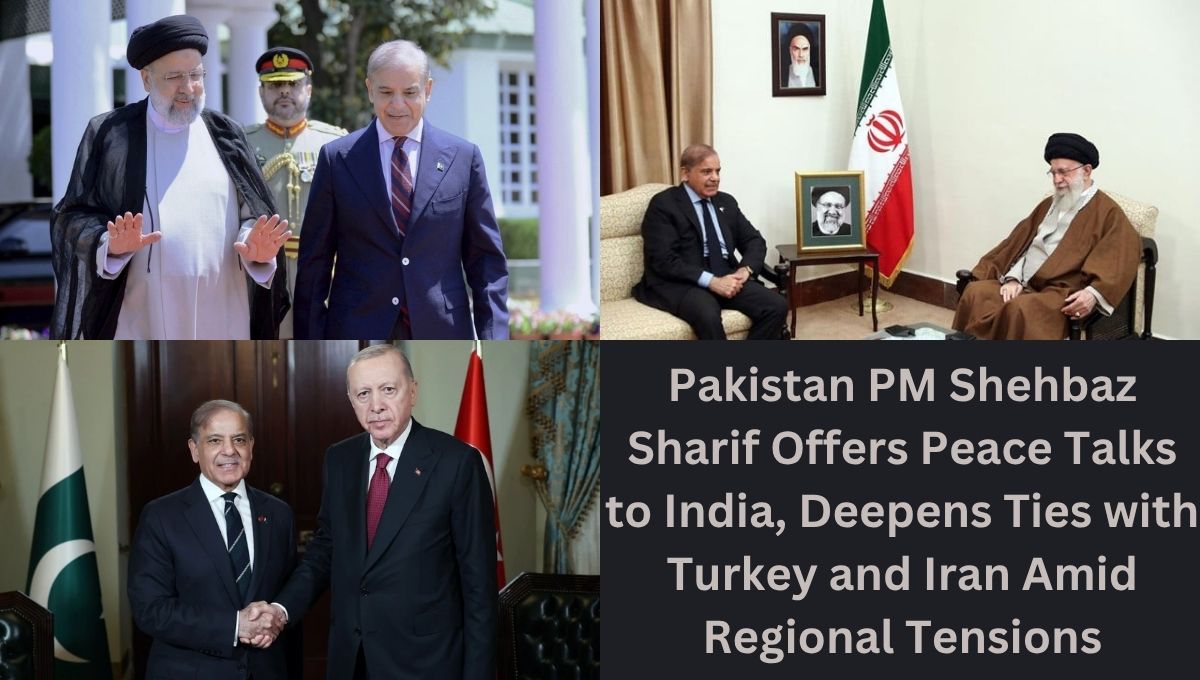
Recently in a big statement during his recent visit to Tehran, Iran Pakistan PM Shehbaz Sharif Offers Peace Talks to India, Deepens Ties with Turkey and Iran Amid Regional Tensions. Amid rising diplomatic tensions in South Asia, Pakistan Prime Minister Shehbaz Sharif met Turkish President Recep Tayyip Erdogan in Istanbul on May 25, 2025, expressing his gratitude for Turkey’s “resolute support” during the recent Pakistan-India military conflict. The two leaders were pictured walking hand-in-hand, symbolizing the growing political, economic, and military partnership between their countries.
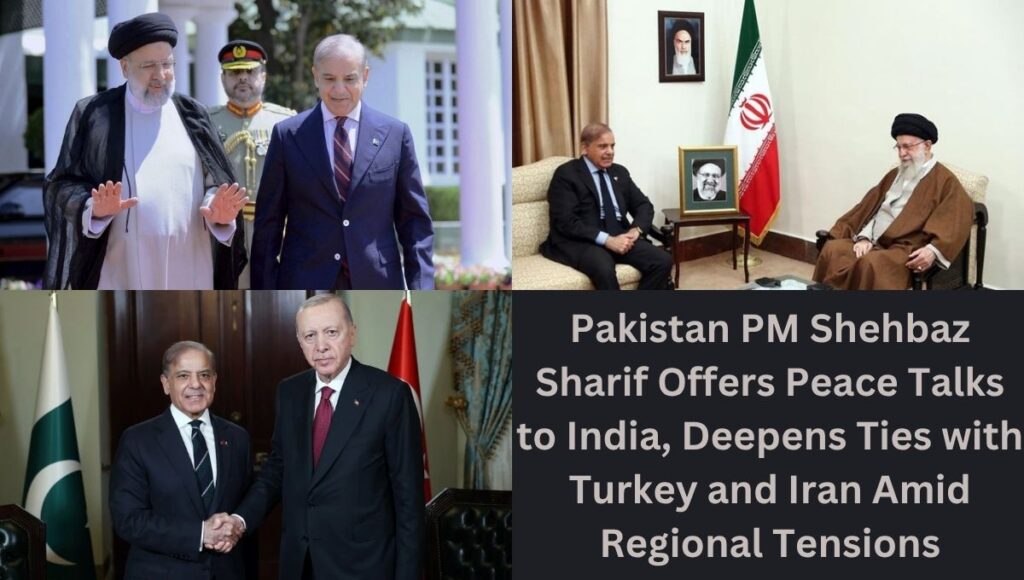
Pakistan PM Shehbaz Sharif Offers Peace Talks to India, Deepens Ties with Turkey and Iran Amid Regional Tensions
Pakistan PM Sharif Thanks Erdogan, Strengthens Ties with Turkey
“Had the honour of meeting my dear brother President Erdogan… Thanked him for his resolute support during the recent Pakistan-India standoff, which resulted in Pakistan’s overwhelming victory, Alhamdolillah!” Sharif posted on X (formerly Twitter).
The four-day conflict, referred to as Operation Sindoor in India, was marked by a series of Indian airstrikes on terror camps in Pakistan-occupied Kashmir (POK), following the April 22 Pahalgam terror attack that killed 26 Indian soldiers and civilians.
India-Turkey Relations Strained Over Military Support and Celebi Ban
Turkey’s alignment with Pakistan during the conflict, particularly the reported use of Turkish-made drones by Pakistan, has exacerbated India-Turkey tensions.
India’s Ministry of External Affairs issued a stern message to Ankara, urging it to press Islamabad to cease supporting cross-border terrorism and dismantle its terror infrastructure.
“We expect Turkey to strongly urge Pakistan to end its support to cross-border terrorism,” Indian foreign ministry spokesperson Randhir Jaiswal stated.
In a concrete move, India revoked aviation clearance for Turkish ground-handling firm Celebi, which had operations at major Indian airports, including Delhi, Mumbai, Bengaluru, and Hyderabad.
The decision underscores India’s dissatisfaction with Turkey’s regional stance and signals a hardening of New Delhi’s position.
Sharif in Tehran: Proposes Peace Talks with India
The next stop on Sharif’s diplomatic tour was Tehran, where he met with Iranian President Masoud Pezeshkian and Supreme Leader Ayatollah Ali Khamenei.
At a joint press conference, Sharif surprised many observers by publicly offering peace talks with India, aiming to resolve all longstanding disputes through dialogue.
“We want to resolve all disputes, including the Kashmir issue and the water issue, through negotiations. We are also ready to talk to our neighbour on trade and counter-terrorism,” Sharif declared. However, the olive branch came with a warning.
“If they [India] choose to remain aggressors, then we shall defend our territory… like we have done a few days ago,” he said, referencing Pakistan’s military retaliation to Operation Sindoor.
India’s Firm Stance: Terror and Talks Cannot Coexist
Indian Prime Minister Narendra Modi has consistently reiterated that any future dialogue with Pakistan will only focus on two core issues: Pakistan’s support for terrorism and the return of Pakistan-occupied Kashmir.
“Terror and talks cannot happen at the same time. Blood and water cannot flow together,” Modi asserted. New Delhi has also rejected any form of third-party mediation, including past offers from former U.S. President Donald Trump and now, indirectly, from Iran.
India continues to emphasize that lasting peace can only come once Pakistan dismantles terror networks on its soil and stops promoting the Kashmir dispute in global forums.
Operation Sindoor and Ceasefire Talks
The most recent military escalation was triggered by the Pahalgam terror attack in Jammu and Kashmir, which New Delhi attributed to Pakistan-based terrorist groups.
In retaliation, India launched Operation Sindoor on May 7, targeting terrorist training camps across the Line of Control (LoC) in POK. Pakistan responded with drone and missile strikes between May 8 and May 10, some of which were intercepted by Indian defense systems.
After high-level military talks, both countries agreed to a mutual ceasefire on May 10. This temporary calm allowed for regional diplomacy to resume and set the stage for Sharif’s outreach.
Iran-Pakistan Relations: From Border Tensions to Strategic Dialogue
Sharif’s visit to Tehran also signals a new chapter in Iran-Pakistan relations. Just months ago, both countries were engaged in military skirmishes after Iran launched airstrikes in Pakistan’s Balochistan region targeting the Jaish al-Adl group.
Pakistan responded with strikes against Baloch militant positions in Iran. The January 2024 incident had significantly damaged bilateral ties.
However, in Tehran, Sharif struck a reconciliatory tone. He thanked Khamenei and the Iranian leadership for their concern and support during the recent India-Pakistan crisis. Khamenei, in turn, called for peaceful resolution of all South Asian conflicts and praised Sharif’s diplomatic approach.
“We are delighted with the end of conflicts between Pakistan and India,” Khamenei stated.
Beyond South Asia, Iran and Pakistan found common ground in their stance on the Gaza crisis. Both countries have strongly condemned Israel’s military actions following Hamas’s attacks in October 2023, and have criticized other Muslim nations for normalizing ties with Israel under the Abraham Accords.
Khamenei praised Pakistan for not joining the Accords, calling it a “commendable stance.” Sharif echoed these sentiments, stating that both nations stand “united in support of Palestine” and called for an immediate and lasting ceasefire in Gaza.
India Balances Diplomacy with Iran Amid Regional Volatility
While tensions flared between India and Pakistan, New Delhi continued to pursue its strategic engagement with Iran. On May 9, India hosted Iranian Foreign Minister Abbas Araghchi for the 20th India-Iran Joint Commission Meeting.
Discussions covered terrorism, trade, and regional connectivity including the Chabahar Port project, a vital link for India to access Central Asia bypassing Pakistan. India appreciated Iran’s measured role in not exacerbating the India-Pakistan conflict and reiterated that its issues with Islamabad must remain bilateral.
India’s engagement with Tehran indicates a careful balancing act: maintaining its own national interests while monitoring growing Iran-Pakistan cooperation.
Kashmir and Counter-Terrorism: The Roadblocks to Dialogue
Although Sharif’s peace overture was welcomed by some observers as a positive signal, India remains cautious. Pakistan’s persistent references to Kashmir in international forums are viewed by India as attempts to internationalize what it sees as a strictly bilateral issue.
India maintains that terrorism is the primary hurdle in Indo-Pak relations. Without verifiable action by Pakistan to dismantle terror groups like Jaish-e-Mohammed and Lashkar-e-Taiba, New Delhi sees little scope for fruitful talks.
Conclusion: A Diplomatic Shift or Familiar Standoff?
Prime Minister Shehbaz Sharif’s dual visits to Turkey and Iran reflect Pakistan’s broader strategy of regional diplomacy aimed at consolidating alliances and countering India’s global narrative.
His offer of peace talks, though significant, is met with skepticism in India due to a history of failed dialogues and ongoing security threats.
India’s strategic patience and firm anti-terrorism stance continue to define its approach to Pakistan. Meanwhile, as global dynamics evolve from the Middle East to South Asia the geopolitical chessboard is becoming more complex.
Whether this moment marks a genuine opening for peace or a tactical pause before the next confrontation remains to be seen. One thing is certain: the road to lasting peace between India and Pakistan will require more than handshakes and social media posts.
It will demand trust, accountability, and bold political will on both sides.
Published by “The News” — your trusted voice in world affairs and South Asian diplomacy.
Related Posts:
- 7 Powerful Facts About Ayatollah Ali Khamenei’s…
- 3 Explosive Conditions Iran Sets to End War with US…
- Awkward and Hilarious Moments at Gaza Peace Summit 2025

- 5 Powerful Highlights as Trump Lands Second Nobel…

- 9 Explosive Claims as Trump Says US Winning Iran War

- China Hosts SCO Summit 2025 and Military Parade as…