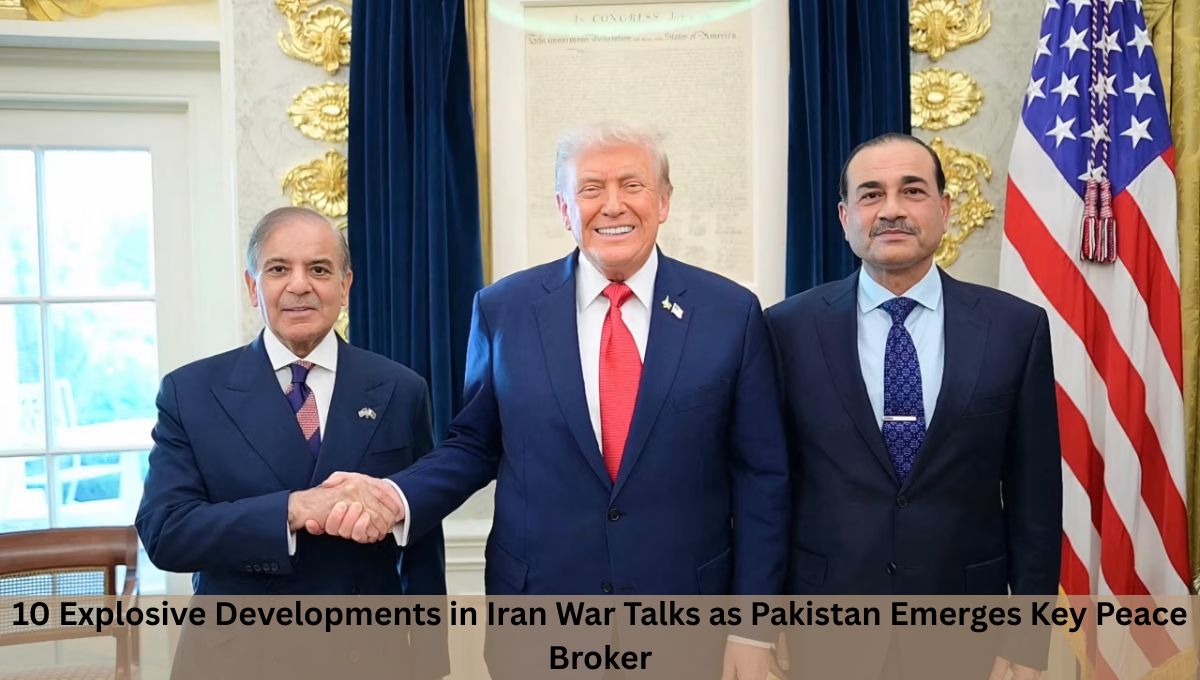
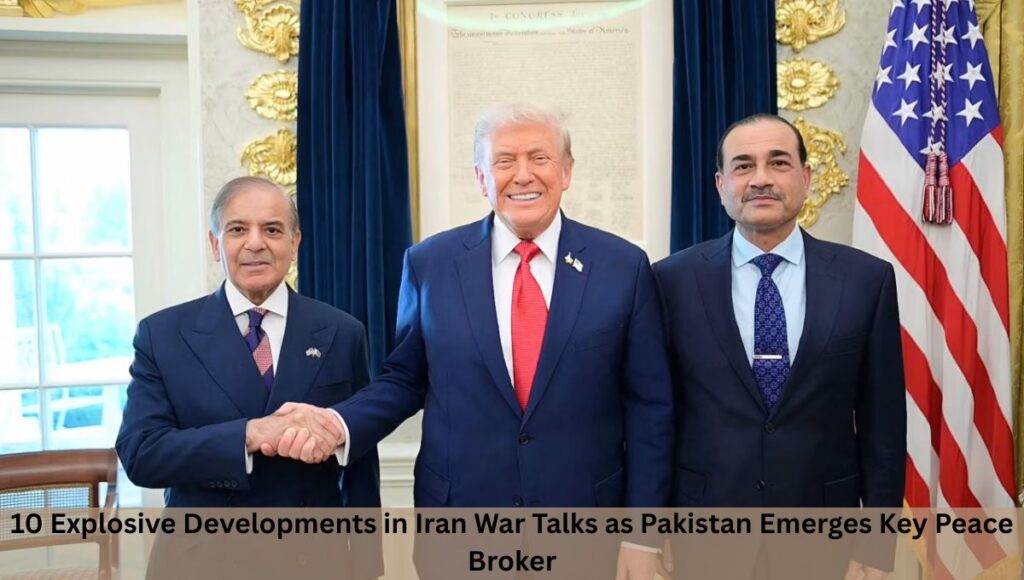
10 Explosive Developments in Iran War Talks as Pakistan Emerges Key Peace Broker amid rising global tensions. The ongoing conflict in the Middle East has entered a critical and volatile phase, with diplomacy struggling to keep pace with rapidly escalating military actions. As the Iran war stretches into its second month, global attention has turned toward Pakistan, where a high-stakes diplomatic effort is underway to prevent the conflict from spiraling into a wider regional catastrophe.
Top diplomats from Saudi Arabia, Turkey, and Egypt convened in Islamabad for urgent talks aimed at de-escalating tensions. While the United States and Israel remain absent from these discussions, the meeting underscores a growing regional push to prioritize dialogue over confrontation.
At stake is not just regional stability, but also the global economy, energy security, and the risk of a broader war that could engulf multiple nations.
10 Explosive Developments in Iran War Talks as Pakistan Emerges Key Peace Broker
Pakistan Steps Into the Spotlight as Mediator
A Strategic Diplomatic Shift
Pakistan has positioned itself as a central diplomatic player in the Iran conflict, offering to host direct talks between Washington and Tehran.
This marks a notable shift in Islamabad’s global role—from a peripheral actor to a potential peace broker in one of the world’s most dangerous conflicts.
Foreign Minister Ishaq Dar emphasized that Pakistan is ready to facilitate “meaningful” negotiations aimed at achieving a comprehensive and lasting settlement.
This initiative is not occurring in isolation.
Pakistan has leveraged its longstanding ties with both Iran and key Gulf nations, while also rebuilding strategic channels with the United States.
Balancing Competing Interests
Pakistan’s diplomatic maneuvering is complex.
It shares a border with Iran, maintains close defense cooperation with Saudi Arabia, and has recently improved relations with Washington.
This balancing act gives Islamabad a unique advantage—but also exposes it to geopolitical risks.
Successfully mediating between rival powers could elevate Pakistan’s global standing, while failure could deepen regional divides.
Inside the Islamabad Talks
Who Participated
The two-day meeting in Islamabad brought together:
- Saudi Arabia’s foreign minister
- Turkey’s foreign minister
- Egypt’s foreign minister
- Pakistan’s leadership, including Prime Minister Shehbaz Sharif
Notably absent were representatives from the United States and Iran, highlighting the significant gap that still exists between the primary adversaries.
Key Objectives of the Meeting
The discussions focused on:
- De-escalating military tensions
- Exploring frameworks for ceasefire negotiations
- Addressing economic fallout from the conflict
- Restoring stability in global energy markets
- Laying groundwork for potential US-Iran dialogue
Despite the absence of direct stakeholders, the meeting is seen as a preliminary step toward broader negotiations.
Strait of Hormuz: A Critical Flashpoint
Global Energy Lifeline Under Threat
One of the most pressing issues discussed was the Strait of Hormuz—a narrow but vital shipping corridor through which roughly 20% of the world’s oil supply passes.
The ongoing conflict has severely disrupted maritime traffic, sending shockwaves through global energy markets and triggering fears of prolonged economic instability.
A Small but Significant Breakthrough
In a notable development, Iran agreed to allow additional Pakistan-flagged ships to pass through the strait.
While limited in scope, this move is being viewed as a confidence-building measure that could pave the way for broader agreements.
Pakistan described the gesture as a “harbinger of peace,” though analysts caution that it does not signal a major shift in Iran’s strategic posture.
War on the Ground: Escalation Continues
Relentless Military Strikes
Even as diplomatic efforts intensify, the situation on the ground remains dire.
- Airstrikes have targeted key infrastructure across Iran
- Missile and drone attacks continue against Israeli and regional targets
- Explosions have been reported in major cities
- Strategic facilities, including industrial and energy sites, have been hit
The scale and intensity of the conflict suggest that neither side is ready to back down.
New Fronts Opening
The conflict has expanded beyond its original scope, with additional actors entering the battlefield.
Iran-aligned groups in Yemen have launched attacks targeting Israeli positions, raising concerns about the emergence of a multi-front war.
This expansion significantly increases the risk of regional destabilization and complicates any diplomatic resolution.
Iran’s Position: Firm and Defiant
Rejection of US Proposals
Iran has rejected a 15-point proposal put forward by the United States, which reportedly included conditions related to nuclear restrictions and regional security arrangements.
Instead, Tehran is developing its own framework for negotiations, with demands that include:
- Guarantees against future attacks
- Recognition of sovereignty over strategic waterways
- Reparations for damages caused by strikes
- An end to targeted actions against Iranian officials
Warnings of Retaliation
Iranian leadership has issued strong warnings against any escalation, particularly the possibility of a ground invasion.
Officials have made it clear that any such move would trigger a forceful response.
These statements reflect deep mistrust toward US intentions and underscore the challenges facing diplomatic efforts.
United States Strategy: Pressure Without Ground War?
Military Build-Up
The United States has deployed additional troops and military assets to the region, signaling readiness for multiple scenarios.
However, officials have indicated that objectives can be achieved without launching a full-scale ground invasion.
Diplomatic Ambiguity
While Washington continues to express openness to negotiations, its simultaneous military actions have fueled skepticism in Tehran.
This dual-track approach—combining pressure with diplomacy—has historically produced mixed results and remains a key obstacle to progress.
Human and Economic Cost of the War
Rising Death Toll
The conflict has already claimed thousands of lives across multiple countries.
Civilian casualties continue to mount, with widespread destruction affecting urban centers and critical infrastructure.
Economic Shockwaves
The war’s impact extends far beyond the battlefield:
- Oil prices have surged globally
- Supply chains have been disrupted
- Shipping routes remain unstable
- Food security concerns are rising
These effects are being felt worldwide, making the conflict a truly global crisis.
Pakistan’s Strategic Gains
Rebuilding Global Relevance
By stepping into a mediating role, Pakistan has successfully repositioned itself on the global stage.
Once criticized for its foreign policy approach, Islamabad is now being viewed as a key interlocutor in a high-stakes conflict.
Diplomatic Leverage
Pakistan’s ability to maintain relationships with multiple stakeholders gives it leverage that few countries possess.
This could translate into long-term strategic benefits, regardless of the outcome of the current crisis.
Challenges Ahead: A Fragile Path to Peace
Lack of Direct Engagement
One of the biggest obstacles remains the absence of direct talks between the United States and Iran. Without their participation, regional efforts can only go so far.
Deep Mistrust
Years of tension, sanctions, and conflict have created a deep trust deficit between the two sides. Bridging this gap will require sustained diplomatic effort and significant concessions.
Escalation Risks
With new actors entering the conflict and military actions intensifying, the risk of miscalculation remains high.
A single incident could derail diplomatic progress and trigger wider escalation.
Global Implications: Why This Conflict Matters
The Iran war is not just a regional issue—it is a global crisis with far-reaching consequences.
- Energy markets are directly affected
- International trade routes are at risk
- Geopolitical alliances are shifting
- Economic stability is under threat
The outcome of this conflict will shape global dynamics for years to come.
Conclusion: Diplomacy vs. Escalation
The talks in Islamabad represent a critical moment in the Iran war. They signal a growing recognition that military solutions alone cannot resolve the conflict.
However, the path to peace remains uncertain. With ongoing hostilities, competing interests, and deep-seated mistrust, diplomacy faces an uphill battle.
Pakistan’s role as a mediator offers a glimmer of hope—but whether it can translate into tangible progress depends on the willingness of key players to engage.
For now, the world watches closely as the balance between war and diplomacy hangs in the balance.
Also Read: 7 Alarming Nuclear Threats as China & Pakistan Missiles Could Reach US: Intel Warning
Also Read: Pakistan Says Ready to Facilitate US-Iran Talks Within Days
Related Posts:
- 3 Explosive Conditions Iran Sets to End War with US…
- 9 Explosive Claims as Trump Says US Winning Iran War

- 10 Explosive Signals: Trump Rates Iran War “15/10”…
- 10 Powerful Revelations from the Trump–Putin Call on…

- Trump’s 20-Point Gaza Peace Plan Gains Urgent Global…

- 7 Powerful Facts About Ayatollah Ali Khamenei’s…