France’s Political Crisis 2025: Macron’s Next Move to appoint a new prime minister within 48 hours. French President Emmanuel Macron is expected to appoint a new prime minister within the next 48 hours, his office confirmed, following weeks of political deadlock and public unrest.
The announcement comes as France faces mounting economic pressures, including a growing debt crisis, and political instability in the National Assembly. Outgoing Prime Minister Sebastien Lecornu, whose brief tenure lasted only 14 hours, led last-ditch negotiations with parliamentary parties over the past few days to break the deadlock.
Despite his efforts, he concluded that a majority of lawmakers opposed dissolving parliament for early elections, opening the way for Macron to appoint a new premier and stabilize the government. “On this basis, the President of the Republic will appoint a Prime Minister within the next 48 hours,” said the Elysee presidential office in a statement.
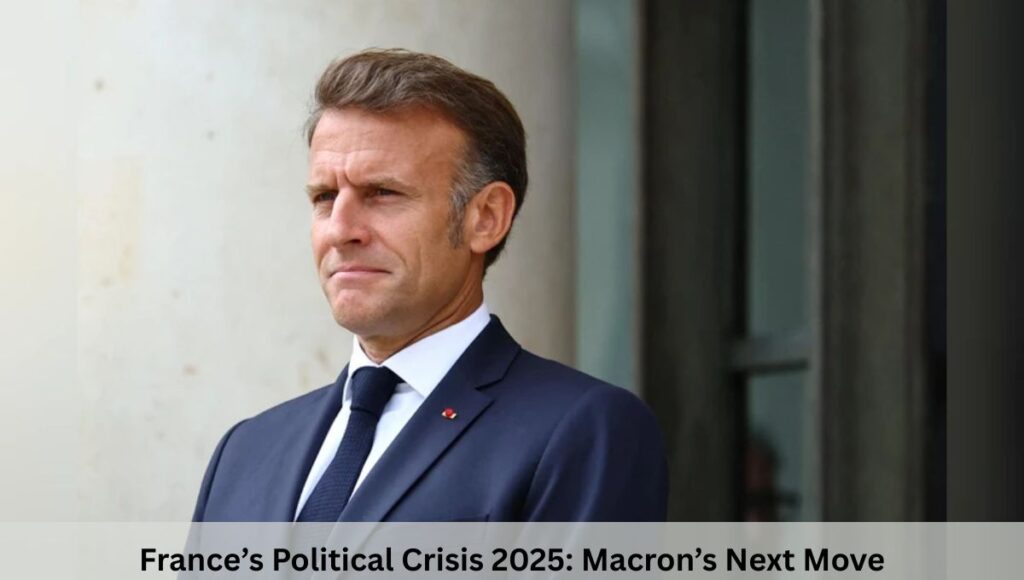
France’s Political Crisis 2025: Macron’s Next Move
Lecornu’s Short-Lived Tenure and Resignation
Sebastien Lecornu’s administration, the fifth under Macron in less than two years, came to an abrupt end after widespread criticism of his cabinet lineup, unveiled on Sunday. The cabinet largely retained ministers from the previous administration, angering both right- and left-wing parties.
Lecornu resigned the following day but continued to negotiate with lawmakers at Macron’s request.
“I tried everything,” Lecornu told French TV, referring to his efforts to reach a compromise. “This evening, my mission is finished.”
His brief administration was marked by confusion and intense scrutiny, with questions raised over whether Macron would call snap elections, reappoint Lecornu, or even resign himself.
Macron’s Options Amid Political Pressure
Macron’s choices were limited. He could:
- Call new parliamentary elections,
- Appoint a new prime minister, or
- Resign (which he has repeatedly ruled out).
Recent statements from Lecornu suggest Macron may have found a path forward without triggering early elections, signaling a potential centrist government acceptable to multiple factions in parliament.
France’s Political Deadlock
France’s National Assembly has been sharply divided since Macron dissolved parliament in June 2024 and called a snap election. The resulting hung parliament has hindered the passage of critical budget measures, including spending cuts and debt-reduction plans.
Three prime ministers have left office since December, highlighting the growing instability within Macron’s government.
“There are possibilities for a compromise in parliament. There is an absolute majority in the National Assembly that rejects a new dissolution,” Lecornu said, indicating that stability could be restored without elections.
Also Read: France is plunged further into political crisis. Here’s what could happen next
Opposition and Parliamentary Challenges
Macron’s efforts to form a stable government have faced resistance from both the far-right National Rally, led by Marine Le Pen, and left-wing parties. Opposition leaders have leveraged public dissatisfaction to block cabinet appointments and call for early elections.
Marine Le Pen warned:
“Every government that fails to address the concerns of the French people deserves to fall.”
Meanwhile, former prime minister Elisabeth Borne has suggested revisiting the controversial 2023 pension reform, which raised the retirement age from 62 to 64, as a potential step toward calming public unrest and enabling a stable coalition.
France’s Budget and Debt Crisis
Beyond political turmoil, France faces an escalating economic crisis. The inability to pass a budget has raised concerns over the country’s growing debt burden and its capacity to fund social programs.
France is Europe’s second-largest economy in terms of spending relative to GDP, with debt levels only behind Greece and Italy. The country’s budget deficit – the gap between government spending and revenue – ranks among the highest in the European Union.
Spending Pressures and Social Protection
The largest strain on France’s finances comes from social protection, including pensions, unemployment benefits, and healthcare. France spends 23.3% of GDP on social protection, second only to Finland in the EU, and 30.6% of GDP according to OECD standards, far above the US’s 19.8%.
Generous state pensions, early retirement ages, and financial support for families employing nannies or childcare workers further strain the budget.
“We do reimburse a lot of things that we basically can no longer afford to reimburse,” said Alexandra Roulet, economics professor at INSEAD and former adviser to Macron.
Debt Drivers: Pandemic and Energy Crisis
Recent crises have compounded France’s fiscal pressures. Government spending surged to protect households and businesses during the Covid-19 pandemic and to mitigate energy price spikes following Russia’s invasion of Ukraine in 2022.
Despite these efforts, public debt now stands at 116.5% of GDP, compared with 122.9% in the US. Investors are increasingly wary of France’s borrowing, pushing up government bond yields and highlighting the urgency of passing a stable budget.
Macron’s Policy Challenges
Macron’s government has faced criticism over austerity measures, proposed pension reforms, and high taxes. Public anger has been fueled by cuts to social spending, increased retirement age, and perceived favoritism toward wealthy individuals through tax reforms.
Earlier attempts to reduce health care and transport subsidies, alongside controversial pension reforms, have sparked nationwide protests and months of strikes.
Political Fallout and Public Sentiment
Macron’s popularity has plummeted since summer 2024. An Odoxa poll found that 57% of French citizens hold the president “entirely responsible” for Lecornu’s resignation, and 70% support Macron stepping down.
Even within his own party, Macron faces isolation, while internationally, he remains visible, notably recognizing Palestinian statehood and engaging in diplomatic efforts related to the Ukraine conflict.
Toward a New Prime Minister
Macron’s next choice for prime minister is critical. Media reports suggest a preference for a centrist figure capable of bridging partisan divides in the National Assembly. The new government will need to:
- Pass the 2026 budget before year-end,
- Reduce debt and deficit levels, and
- Rebuild public confidence in Macron’s administration.
Also Read: France’s PM Resigns: 5 Days of Political Turmoil
Potential Policy Shifts
Former Prime Minister Elisabeth Borne has indicated openness to suspending parts of the controversial pension reform to help forge stability. Such steps could alleviate public unrest and facilitate cooperation across party lines.
The new government is expected to prioritize technocratic competence over political ambition, avoiding candidates likely to run in the next presidential election.
France’s Economic Stakes
The ongoing political paralysis has tangible economic consequences. Delays in passing the budget have increased borrowing costs and raised investor concerns, especially as France’s fiscal position is under close scrutiny within the eurozone.
Holger Schmieding, chief economist at Berenberg Bank, called France “the weak link in the eurozone,” noting that political deadlock amplifies the country’s vulnerability despite its economic size.
Comparison With Other EU Countries
France’s borrowing costs have risen faster than Italy’s, despite Italy having a larger debt burden. Italy enjoys a stable parliamentary majority and has taken steps to reduce its deficit, contrasting sharply with France’s political stalemate.
“France has become more of a focus of concern than Italy,” said Andrew Kenningham, chief Europe economist at Capital Economics.
International Implications
While Macron faces domestic challenges, his international role remains significant. France’s political stability is closely watched by global investors and European partners, especially given ongoing geopolitical crises like the war in Ukraine.
Analysts warn that France’s debt costs could spike if far-right or far-left candidates win the next presidential election in 2027. The outcome of Macron’s next prime minister appointment could therefore have major implications for both domestic and international confidence in France.
Conclusion
France stands at a critical juncture as President Emmanuel Macron prepares to appoint a new prime minister within 48 hours. The decision follows weeks of political deadlock, the resignation of Sebastien Lecornu, and growing public frustration over austerity measures and pension reforms.
A new centrist government may pave the way for passing the 2026 budget, stabilizing public finances, and restoring confidence among investors. However, key challenges remain, including managing social protection expenditures, reducing the deficit, and navigating a deeply divided National Assembly.
Macron’s next steps will not only shape France’s political landscape ahead of the 2027 presidential election but also influence Europe’s broader economic stability. The world will be watching as the French president seeks to navigate one of the most tumultuous periods of his tenure.
Related Posts:
- Macron Reappoints Lecornu as PM 2025 – Triggers…

- 5 Shocking Developments in Macron’s Political Crisis

- France’s PM Resigns: 5 Days of Political Turmoil

- France in Turmoil as ‘Block Everything’ Protests…

- French PM François Bayrou Ousted in Confidence Vote,…

- 5 Key Takeaways as Zohran Mamdani Wins Historic New…