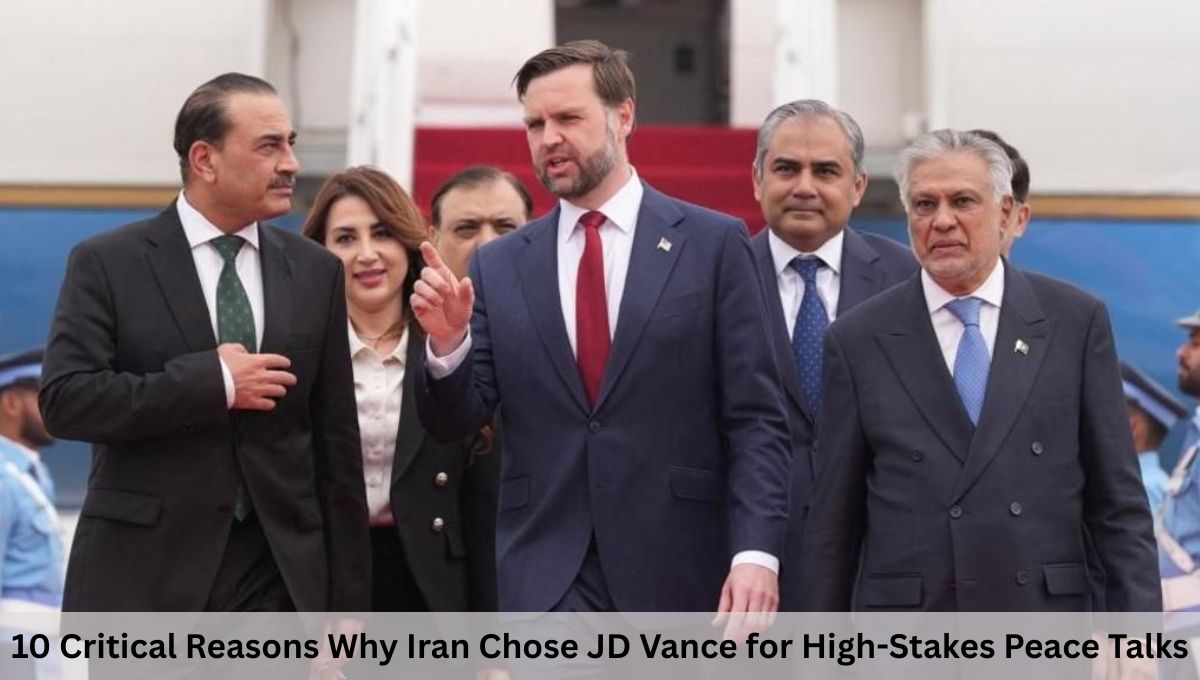
10 Critical Reasons Why Iran Chose JD Vance for High-Stakes Peace Talks in Islamabad. In a dramatic shift from war to diplomacy, JD Vance has arrived in Islamabad to lead the most consequential negotiations between the United States and Iran in decades.
The talks, unfolding under the shadow of a fragile ceasefire, are not just about ending a war—they are about redefining power dynamics across the Middle East and beyond.
What makes this moment even more intriguing is the growing belief that Iran itself preferred Vance as the lead American negotiator.
Reports suggest that elements within Tehran’s leadership quietly pushed for his involvement, seeing him as a more pragmatic and less confrontational figure compared to others in Donald Trump’s inner circle.
But why Vance? And what does his role mean for the future of this volatile conflict?
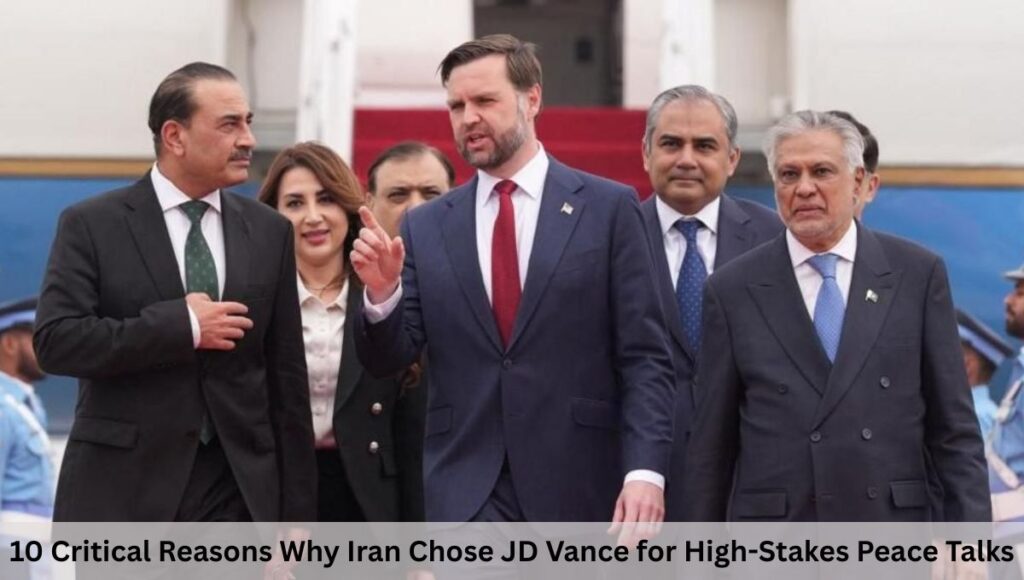
10 Critical Reasons Why Iran Chose JD Vance for High-Stakes Peace Talks
A Historic Diplomatic Moment
First High-Level Talks Since 1979
The Islamabad meeting marks the highest-level direct engagement between Washington and Tehran since the Iranian Revolution—a watershed moment that severed diplomatic ties between the two nations.
Now, more than four decades later, both sides are:
- Facing immense economic and political pressure
- Seeking a way out of a costly conflict
- Attempting to stabilize a fragile ceasefire
Vance’s presence elevates the talks beyond routine diplomacy, signaling urgency and seriousness.
Why Iran Preferred JD Vance
1. Seen as an Anti-War Voice
Within Tehran, Vance is widely viewed as one of the least hawkish figures in Trump’s administration.
His earlier skepticism toward military escalation reportedly resonated with Iranian officials.
This perception matters because:
- Negotiators often seek counterparts open to compromise
- Trust—even limited—is critical in diplomacy
- A perceived “peace-oriented” figure lowers tensions
2. A “Fresh Face” Compared to Other Negotiators
Iran reportedly harbors distrust toward other U.S. envoys such as Jared Kushner and Steve Witkoff, blaming them for the collapse of earlier negotiations.
In contrast, Vance:
- Has not been deeply involved in failed prior talks
- Carries less historical baggage
- Is seen as more neutral
3. Perceived Willingness to End the War
Iranian interlocutors believe Vance is more interested in concluding the conflict than prolonging it.
His past statements suggest a preference for diplomacy over extended military engagement.
This aligns with Tehran’s immediate priorities:
- Economic relief
- Stability
- Avoiding further destruction
4. Internal Divisions in the US Administration
Vance’s role also reflects internal dynamics within the Trump administration. While some officials advocated aggressive military action, Vance reportedly expressed caution.
This internal divergence:
- Signals potential flexibility in U.S. positions
- Creates openings for negotiation
- Encourages Iran to engage
5. Strategic Calculations by Tehran
Iran’s leadership is known for its calculated approach to negotiations. Choosing a counterpart perceived as pragmatic is a deliberate move.
By favoring Vance, Tehran aims to:
- Maximize chances of concessions
- Avoid hardline standoffs
- Keep diplomatic channels open
What Vance Brings to the Table
Political Authority
As Vice President, Vance carries significant political weight.
His presence indicates that:
- The U.S. is serious about negotiations
- Any agreement could have immediate backing from the White House
- Decisions made at the table carry real authority
Negotiation Flexibility
Unlike traditional diplomats, Vance operates at the intersection of politics and policy.
This allows him to:
- Adapt quickly to changing scenarios
- Communicate directly with the president
- Balance domestic and international pressures
A Bridge Between Factions
Vance’s dual identity—as both a loyal member of the administration and a former skeptic of the war—positions him uniquely.
He can:
- Appeal to anti-war voices
- Represent administration priorities
- Act as a bridge between competing perspectives
The Challenges Ahead
1. Limited Leverage
Despite his role, Vance enters talks with limited bargaining power.
Iran holds significant leverage, particularly through its influence over the Strait of Hormuz, a critical global oil route.
This gives Tehran:
- Economic influence
- Strategic advantage
- Negotiating power
2. Deep Trust Deficit
Decades of hostility mean trust is minimal.
Both sides:
- Question each other’s intentions
- Doubt commitments
- Prepare for worst-case scenarios
3. Conflicting Core Demands
At the heart of the talks are major disagreements:
- The U.S. demands limits on Iran’s nuclear program
- Iran insists on its right to uranium enrichment
- Sanctions relief remains a sticking point
The 10-Point vs 15-Point Plans
Competing Frameworks
The negotiations are centered around two competing proposals:
Iran’s 10-Point Plan
- Sanctions relief
- Compensation for war damages
- Recognition of nuclear rights
- Control over strategic assets
US 15-Point Framework
- No nuclear weapons development
- End to uranium enrichment
- Monitoring by international agencies
- Reduction of missile capabilities
Key Differences
The biggest divide lies in:
- Nuclear enrichment rights
- Sanctions removal
- Regional influence
These issues have historically derailed negotiations.
The Role of Islamabad
Why Pakistan?
The talks are being held in Islamabad, reflecting its emerging role as a mediator.
Pakistan offers:
- Neutral ground
- Diplomatic channels with both sides
- Strategic positioning in the region
A Fragile Diplomatic Stage
Despite its neutrality, Islamabad faces challenges:
- Regional tensions
- External pressures
- High expectations
Global Economic Stakes
Oil and Energy Markets
The conflict has already impacted global energy markets.
Control over the Strait of Hormuz affects:
- Oil prices
- Supply chains
- Economic stability
Inflation and Trade
Rising tensions have contributed to:
- Increased fuel costs
- Inflation worldwide
- Market volatility
A Political Gamble for JD Vance
Career-Defining Moment
For Vance, these talks represent a pivotal moment.
Success could:
- Elevate his global stature
- Strengthen his political future
- Position him for a potential 2028 presidential run
Failure, however, could:
- Damage credibility
- Tie him to a prolonged conflict
- Weaken his political standing
Balancing Act
Vance must navigate:
- Domestic political pressures
- International expectations
- Internal administration dynamics
“Good Cop, Bad Cop” Strategy?
Some analysts suggest the U.S. is employing a dual strategy:
- Trump maintains a hardline stance
- Vance presents a more conciliatory approach
This dynamic:
- Creates negotiation flexibility
- Applies pressure on Iran
- Keeps options open
Iran’s Negotiation Strategy
Relentless Bargaining
Iranian negotiators are known for their persistent style, often described as “market-style bargaining.”
This involves:
- Continuous negotiation
- Strategic delays
- Maximizing concessions
Leveraging Strengths
Iran enters talks with:
- Control over key assets
- Regional influence
- Resilient military capabilities
Uncertainty Around Outcomes
Best-Case Scenario
- Ceasefire extended
- Framework for long-term peace established
- Gradual easing of tensions
Worst-Case Scenario
- Talks collapse
- Ceasefire ends
- Conflict escalates
Conclusion
The arrival of JD Vance in Islamabad marks a turning point in one of the most complex geopolitical crises of recent times.
Seen by Iran as a potentially pragmatic negotiator, Vance now carries the burden of transforming a fragile ceasefire into lasting peace. The stakes could not be higher.
Beyond the immediate conflict, the outcome of these talks will shape global energy markets, international alliances, and the future of diplomacy in the Middle East.
Whether this moment becomes a breakthrough or a missed opportunity remains uncertain.
But one thing is clear:
the world is watching closely as diplomacy takes center stage in a conflict that has already reshaped the global order.
Also Read: Trump Says JD Vance ‘Most Likely’ MAGA Heir; Rubio May Join 2028 GOP Ticket
Also Read: Inside Tehran’s strategy: Why Iran picked JD Vance for crucial peace talks
Related Posts:
- 3 Explosive Conditions Iran Sets to End War with US…
- 7 Powerful Facts About Ayatollah Ali Khamenei’s…
- 10 Explosive Warnings as Donald Trump Calls Iran…
- 9 Explosive Claims as Trump Says US Winning Iran War

- 7 Explosive Signs Russia Is Quietly Backing Iran in…
- 10 Explosive Signals: Trump Rates Iran War “15/10”…