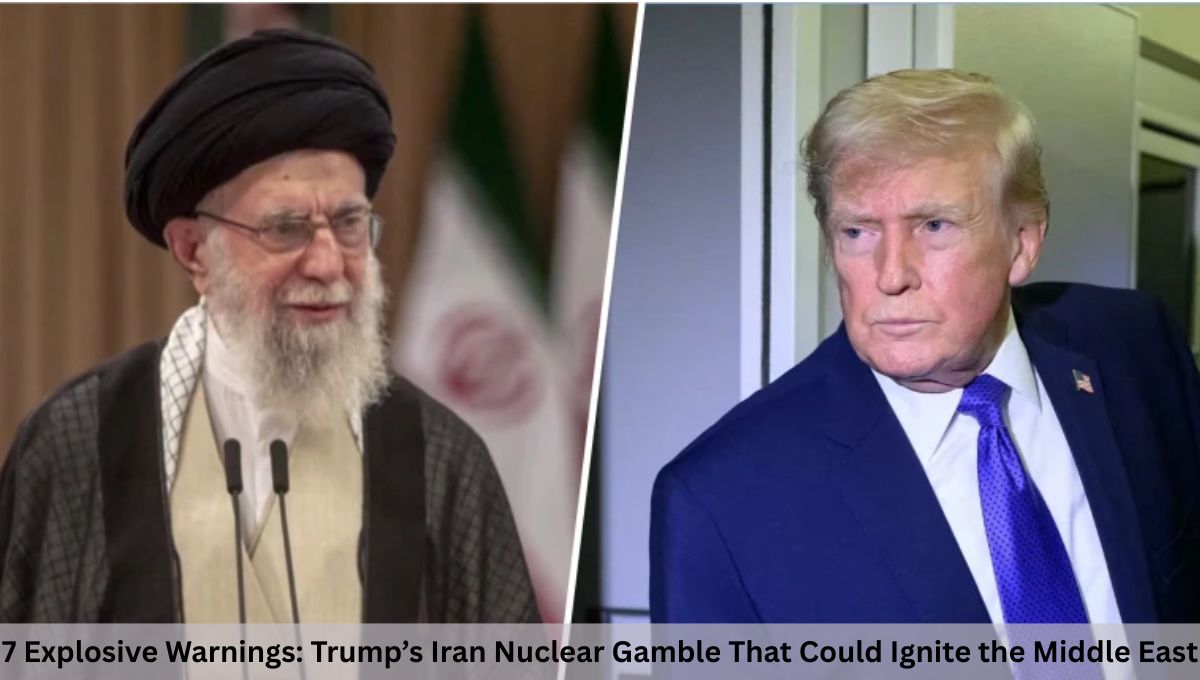
7 Explosive Warnings: Trump’s Iran Nuclear Gamble That Could Ignite the Middle East – while he preferred diplomacy. In a State of the Union address dominated by domestic priorities, U.S. President Donald Trump delivered one of his starkest warnings yet to Iran, laying out a public justification for possible military action while insisting that diplomacy remains his preferred route.
The speech came amid an extraordinary buildup of American military power in the Middle East, renewed nuclear negotiations in Geneva, and rising anxiety among global markets and foreign capitals.
Trump framed Iran as the world’s leading sponsor of terrorism and accused Tehran of reviving its nuclear program despite U.S. strikes last year that he claims “obliterated” key facilities.
He also warned that Iran is developing missiles that could eventually reach the U.S. mainland — a claim disputed by many experts but one that dramatically raises the stakes of the confrontation.
For a global audience, the implications are profound:
a renewed U.S.–Iran conflict would reverberate across energy markets, regional security architectures, and already-fragile diplomatic alignments from Europe to Asia.
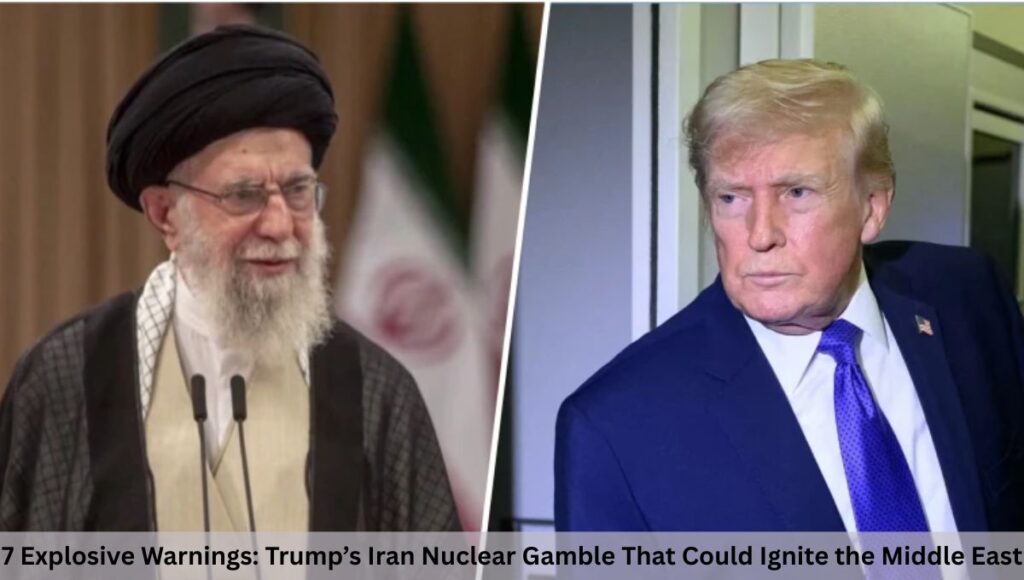
7 Explosive Warnings: Trump’s Iran Nuclear Gamble That Could Ignite the Middle East
The Core Message: No Nuclear Iran
Roughly 90 minutes into his nearly two-hour address, Trump turned to Iran. His message was unequivocal: the United States will never allow Iran to acquire a nuclear weapon.
He accused Tehran of restarting nuclear activities, rebuilding facilities damaged in last year’s U.S. strikes, and pursuing what he described as “sinister ambitions.”
According to Trump, Iranian leaders want a deal but have refused to utter what he called the “secret words” — an explicit pledge never to develop nuclear weapons.
Iran, for its part, continues to insist that its nuclear program is strictly for civilian energy production. International inspectors and Western intelligence agencies have offered mixed assessments over the years, fueling a long-running dispute that has survived multiple U.S. administrations.
Missile Claims and Strategic Reality
One of the most controversial elements of Trump’s speech was his claim that Iran is developing missiles capable of striking the United States.
While Iran does possess an extensive arsenal of short- and medium-range ballistic missiles, most public assessments place their maximum range far short of North America.
U.S. intelligence agencies have previously stated that Iran could theoretically develop an intercontinental ballistic missile over the next decade if it chose to do so.
However, there is no public evidence that such a program is currently operational. Still, the rhetoric matters.
By elevating the missile threat to the U.S. homeland, Trump is framing Iran not merely as a regional problem but as a direct global security challenge — a framing that could justify broader military action under U.S. defense doctrines.
Military Buildup in the Middle East
The State of the Union speech came against the backdrop of a significant U.S. military deployment across the Middle East.
Two aircraft carrier strike groups, advanced fighter jets, bombers, and naval assets are positioned within striking distance of Iran.
U.S. officials say the buildup is intended to deter Iranian aggression and strengthen Washington’s negotiating position.
Critics argue it increases the risk of miscalculation, particularly in a region crowded with proxy forces, militias, and rival state actors.
For allies in Europe and Asia, the military posture raises uncomfortable questions about supply chains, energy security, and the possibility of a wider regional war.
Diplomacy Under Pressure
Despite the aggressive tone, Trump repeatedly emphasized that diplomacy remains his preference.
U.S. envoys are engaged in indirect talks with Iranian officials in Geneva, seeking a new framework to replace earlier agreements abandoned during Trump’s first term.
Iranian officials say a deal is within reach, but only if Washington recognizes Iran’s right to enrich uranium for civilian purposes and lifts economic sanctions.
The United States, along with Israel, wants any agreement to also address Iran’s missile program and its support for armed groups across the region.
These demands highlight a fundamental gap:
Iran wants a narrow nuclear deal, while the U.S. seeks a broader regional security arrangement.
Domestic Politics and “Forever Wars”
Trump’s warning on Iran also intersects with U.S. domestic politics. His political base strongly supports an “America First” agenda and is deeply skeptical of prolonged foreign wars.
Polls consistently show that most Americans favor military action only in response to direct and imminent threats.
Democratic leaders have criticized the administration for a lack of transparency, warning that secretive military operations often lead to longer, costlier conflicts.
With midterm elections approaching, any escalation with Iran could reshape the political landscape in Washington.
Iran’s Internal Unrest and Human Rights Claims
Trump also cited Iran’s treatment of protesters during recent anti-government demonstrations, alleging that tens of thousands were killed in a brutal crackdown.
Independent estimates place the death toll far lower, and Iranian officials have categorically rejected Trump’s figures as fabricated.
Nonetheless, the issue of human rights provides an additional moral justification for pressure on Tehran, particularly among Western audiences sensitive to civil liberties and democratic values.
Regional Fallout: Israel, Gaza, and Proxies
The Iran issue cannot be separated from broader Middle East dynamics.
Trump highlighted what he described as progress in Gaza, crediting his administration with brokering ceasefires and securing the return of hostages held by Hamas.
Iran’s support for groups such as Hezbollah, Hamas, and the Houthis remains a central concern for Israel and Gulf Arab states.
Any U.S. strike on Iran would almost certainly trigger retaliation through these proxy networks, potentially igniting conflicts on multiple fronts.
Energy Markets and the Global Economy
Oil markets responded cautiously to Trump’s remarks, with prices edging higher amid fears of supply disruptions.
Iran sits astride critical shipping routes, including the Strait of Hormuz, through which a significant share of the world’s oil passes.
A prolonged conflict could push energy prices sharply higher, fueling inflation and economic uncertainty worldwide — from Europe’s industrial base to Asia’s manufacturing hubs and emerging markets dependent on affordable fuel.
International Reactions and Strategic Calculations
Global reactions to Trump’s speech have been mixed. U.S. allies broadly support preventing Iran from acquiring nuclear weapons but remain wary of unilateral military action.
Russia and China, notably absent from Trump’s address, are likely to view further escalation as an opportunity to expand their influence in the region.
For countries in the Global South, the confrontation underscores long-standing concerns about selective enforcement of international norms and the destabilizing effects of great-power rivalry.
The Shadow of Past Conflicts
Trump referenced past U.S. actions against Iran, including the killing of senior Iranian military figures and last year’s strikes on nuclear facilities.
Supporters see these actions as evidence of resolve; critics warn they set dangerous precedents and invite retaliation. History offers sobering lessons.
Conflicts launched with limited objectives often expand unpredictably, especially in regions with complex alliances and grievances.
What Comes Next?
The coming weeks will be decisive. Negotiations in Geneva could yield a diplomatic breakthrough — or collapse under mutual distrust. Trump has set informal deadlines and warned of “bad things” if talks fail.
For Iran, the choice is between economic relief through compromise or continued isolation under the shadow of military force.
For the United States, the challenge is balancing deterrence with diplomacy without sliding into another open-ended conflict.
Conclusion: A High-Stakes Gamble
Trump’s State of the Union address laid bare the administration’s thinking on Iran: a mix of coercive pressure, public warnings, and conditional diplomacy. By elevating the threat to the level of the U.S. homeland, Trump has raised the political and strategic costs of backing down.
For a global audience, the stakes extend far beyond Washington and Tehran. The outcome will shape Middle East stability, global energy markets, and the credibility of diplomacy in an era of renewed great-power competition. Whether Trump’s gamble leads to a deal, a strike, or another prolonged standoff remains uncertain.
What is clear is that the world is once again watching the U.S.–Iran relationship with apprehension — aware that miscalculation on either side could have consequences felt far beyond the region.
Also Read: 7 Explosive Signals as Iran Partially Shuts the Strait of Hormuz During U.S. Nuclear Talks
Also Read: Trump’s Iran Gamble: Is Washington Ready to Strike And What Lies Ahead?
Related Posts:
- 11 Explosive Warnings as Trump Vows to ‘Knock the…

- 10 Explosive Warnings as Donald Trump Calls Iran…
- Trump’s 2025 Gaza Peace Plan Signing and Historic…

- Trump's 3 Blunt Warnings to China and Russia Over…
- 5 Powerful Highlights as Trump Lands Second Nobel…

- 9 Explosive Claims as Trump Says US Winning Iran War