7 Explosive Reasons Greenland Keeps Resisting US Takeover after three attempts over 150 years. For more than 150 years, Greenland has loomed large in American strategic thinking. Long before President Donald Trump revived global shockwaves by openly discussing buying — or even seizing — the world’s largest island, US leaders quietly explored similar ambitions.
Thank you for reading this post, don't forget to subscribe!From post–Civil War expansionism to Cold War military strategy, the United States has attempted to acquire Greenland three separate times. Each effort failed.
Each was driven by the same calculation:
Greenland’s geography, resources, and military value make it one of the most strategically important territories on Earth.
Now, Trump’s renewed push has transformed what was once obscure diplomatic history into a defining geopolitical crisis — one that threatens NATO, transatlantic relations, and international law itself.
This is the full story of why the US wants Greenland, why it failed before, and why the consequences today would be far more explosive.
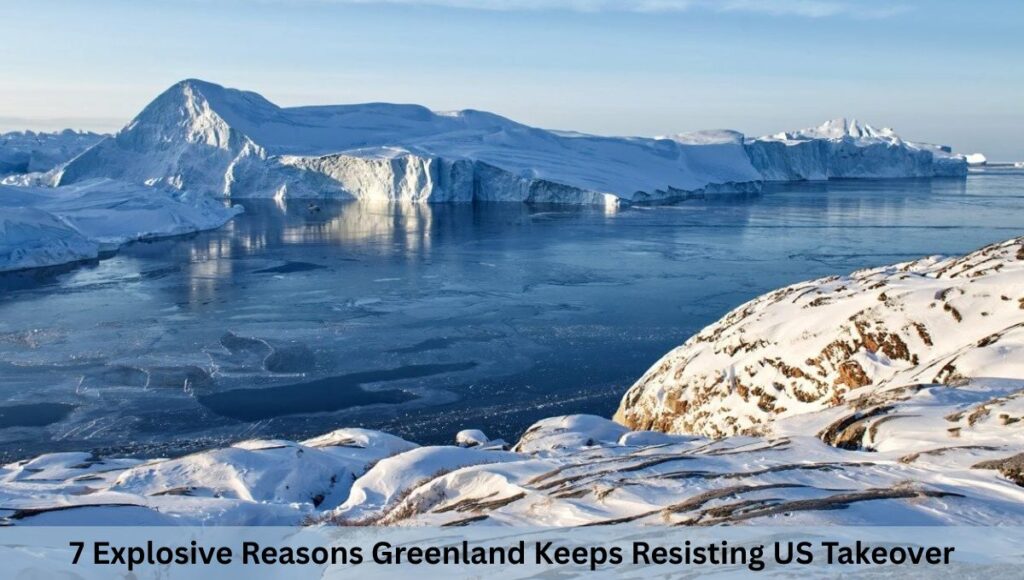
7 Explosive Reasons Greenland Keeps Resisting US Takeover
Why Greenland Matters More Than Ever
Greenland is not just ice and isolation. It sits at the crossroads of North America, Europe, and the Arctic, straddling vital sea lanes and air routes that are becoming increasingly important as climate change reshapes global trade and military planning.
Key Strategic Advantages
- Controls access to the GIUK Gap (Greenland–Iceland–UK), a critical naval choke point
- Hosts early-warning missile detection systems
- Overlooks emerging Arctic shipping routes
- Contains vast untapped rare earth minerals, oil, and gas
- Serves as a forward military buffer against Russia and China
This combination explains why American interest in Greenland never truly disappeared — it merely went dormant.
Attempt One: The Seward Era and Arctic Ambitions
Post–Civil War Expansionism
After the United States purchased Alaska from Russia in 1867, Secretary of State William H. Seward envisioned a broader Arctic expansion strategy. Greenland, rich in coal and strategically positioned, was discussed as a logical next step.
Seward believed Arctic territory would:
- Secure US dominance in northern trade routes
- Provide access to natural resources
- Expand American influence into polar regions
However, the proposal never became a formal offer.
Why It Failed
- Congress had little appetite for another icy acquisition
- Domestic priorities outweighed Arctic ambitions
- Greenland’s value was not yet fully understood
The idea faded — but not permanently.
Attempt Two: Taft’s Failed Land-Swap Gamble
A Diplomatic Experiment
In the early 20th century, during the presidency of William Howard Taft, American diplomats floated a complex land-exchange proposal. The plan involved transferring Greenland to the United States in exchange for territorial concessions elsewhere.
Denmark rejected the idea outright.
Why Denmark Said No
- Greenland was seen as integral to Danish sovereignty
- The deal lacked domestic political support
- Denmark feared setting a precedent for foreign pressure
The proposal collapsed quickly, reinforcing Copenhagen’s resolve.
Attempt Three: Truman’s $100 Million Offer
Cold War Calculus
The most serious attempt came in 1946, when President Harry Truman formally offered Denmark $100 million in gold to buy Greenland.
The rationale was explicit:
- Soviet missile threats were rising
- Greenland had proven critical during World War II
- The US already operated military infrastructure on the island
During the war, Greenland hosted a major US airfield that served as a refueling hub for Allied planes flying to Europe.
Denmark’s Response
Denmark again refused.
However, it allowed the US to retain military access — an arrangement that continues today through the Pituffik Space Base, America’s northernmost military installation.
The US Military Presence That Never Left
Pituffik Space Base (Formerly Thule Air Base)
Located in northwest Greenland, Pituffik is a cornerstone of US missile defense and space surveillance.
Its functions include:
- Early warning for intercontinental ballistic missiles
- Tracking satellites and space objects
- Monitoring Russian submarine movements
At its Cold War peak, more than 6,000 US troops were stationed across Greenland. Today, roughly 150 personnel remain — with the ability to scale rapidly.
Critically, this presence exists without US sovereignty over Greenland.
Trump Revives a Dormant Obsession
From Joke to Geopolitical Flashpoint
When Donald Trump first floated the idea of buying Greenland during his first term, it was widely dismissed as political theater. That changed dramatically in 2026.
Following a controversial US military operation that captured Venezuela’s President Nicolás Maduro, Trump openly stated that:
- Greenland is a “national security priority”
- Military force remains “an option”
- The US must control Greenland to counter China and Russia
The White House confirmed that Trump’s team has actively discussed acquiring Greenland, with diplomacy as the “first option” — but not the only one.
Why Trump Wants Greenland Now
1. Arctic Militarization
Russia and China have significantly increased Arctic activity. Missiles launched from Russia would pass over Greenland en route to the US.
2. Missile Defense and the “Golden Dome”
Trump’s proposed “Golden Dome” missile shield would require forward-deployed interceptors. Greenland offers unmatched positioning.
3. Rare Earth Minerals
Greenland holds critical minerals essential for:
- Electric vehicles
- Wind turbines
- Military hardware
- Advanced electronics
Reducing reliance on China is a core US objective.
4. New Shipping Routes
Melting ice is opening the Northwest Passage and Transpolar Sea Route, shortening Asia–Europe trade routes.
5. Legacy Politics
Trump has repeatedly signaled his desire for a tangible historical legacy, comparing himself to presidents who expanded US territory.
Greenlanders: ‘We Are Not for Sale’
Public Outrage and Fear
Across Greenland, Trump’s rhetoric has sparked anger, fear, and indignation.
“The people of Greenland do not want to become American. We are not for sale,”
— Mia Chemnitz, business owner, Nuuk
Polling consistently shows:
- Strong support for eventual independence from Denmark
- Overwhelming opposition to US ownership
Greenlanders fear being forced into a binary choice they reject:
Washington or Copenhagen.
Denmark Draws a Red Line
NATO at Stake
Danish Prime Minister Mette Frederiksen issued a stark warning:
Any US attempt to take Greenland by force would mean the end of NATO.
Denmark has emphasized:
- Greenland’s self-governance
- The right of its people to decide their future
- The illegality of forced annexation
European allies, including France, Germany, the UK, Italy, Poland, and Spain, issued a joint statement affirming:
“Greenland belongs to its people.”
Europe’s Dilemma
Support Without Power
While Europe has rallied rhetorically behind Greenland, the imbalance of military power is stark.
Privately, European officials acknowledge:
- Greenland cannot be defended militarily against the US
- Any confrontation would fracture NATO permanently
- Europe remains dependent on US security guarantees
This leaves diplomacy as the only viable path — one fraught with risk.
Why a Military Takeover Would Be Catastrophic
Experts agree that the US could seize Greenland militarily with ease.
But the consequences would be historic:
Global Fallout
- Collapse of NATO’s credibility
- End of transatlantic trust
- Precedent for great-power land grabs
- Severe damage to US global leadership
As former NATO Supreme Commander Admiral James Stavridis warned:
“This is the end of NATO we’re talking about.”
Can the US Actually Buy Greenland?
Even a peaceful purchase faces overwhelming obstacles:
- Greenland’s elected government opposes it
- Denmark refuses to sell
- US Congress would need to approve funding
- EU treaty complications would arise
- Costs could run into hundreds of billions of dollars
In short, Greenland is not legally, politically, or morally for sale.
What Greenlanders Actually Want
Greenland’s people are focused on:
- Climate change threatening traditional livelihoods
- Economic diversification
- Greater autonomy
- Respect from global powers
As one Inuit hunter put it:
“Replacing one occupier with another doesn’t solve our problems.”
Conclusion: A Strategic Obsession That Won’t Fade
The United States has tried three times to buy Greenland — and failed every time. Trump’s revival of this ambition has transformed a historical curiosity into a defining geopolitical test.
At stake are:
- The future of NATO
- The credibility of international law
- The rights of small nations
- The stability of the Arctic
Greenland’s message remains unchanged across generations:
Not for sale. Open for cooperation. Whether Washington ultimately listens may shape the global order for decades to come.
Also Read: 7 Explosive Reasons Denmark Warned Trump to Stop Threatening Greenland
Also Read: How Trump gets Greenland in 4 easy steps
Related Posts:
- 7 Critical Reasons Kharg Island Is Iran’s Oil “Crown…

- 3 Explosive Conditions Iran Sets to End War with US…

- 9 Stark Signals as US Deploys Aircraft to Greenland Base

- 12 Explosive Claims as Donald Trump Says Iran War…

- 10 Explosive Signals Trump Says Iran War Could End…

- 10 Explosive Signals as Trump Threatens New Strikes…