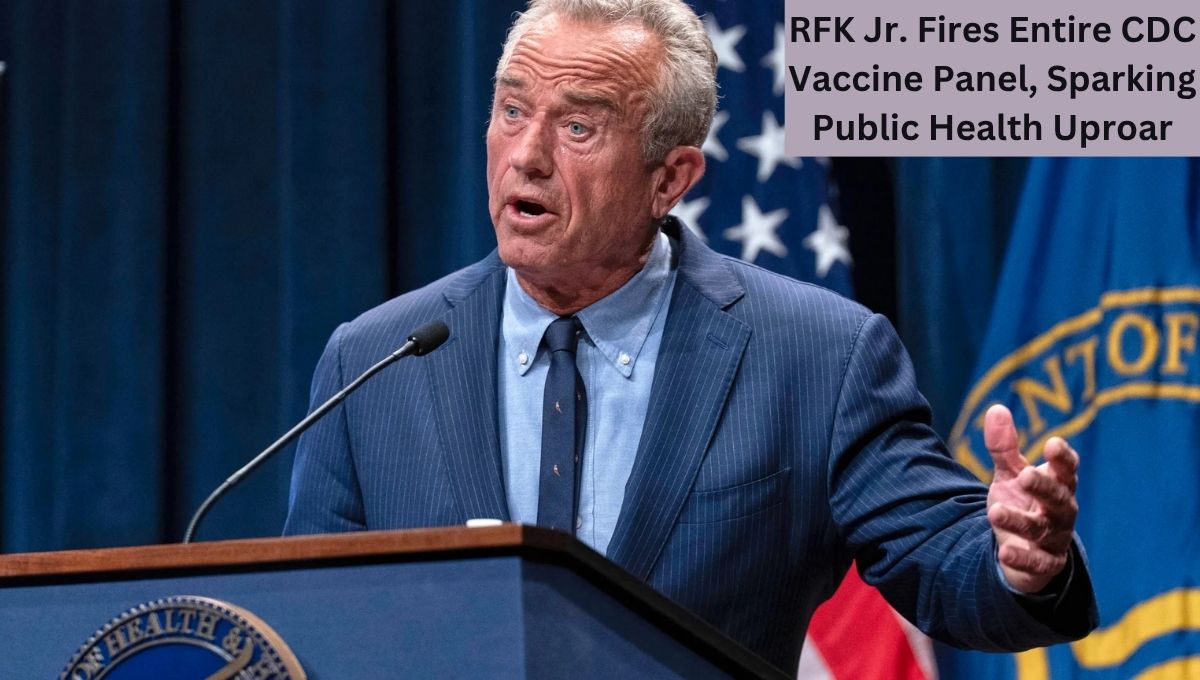
In a stunning and unprecedented move, RFK Jr. Fires Entire CDC Vaccine Panel, Sparking Public Health Uproar. U.S. Health and Human Services Secretary Robert F. Kennedy Jr. has fired all 17 members of the CDC’s Advisory Committee on Immunization Practices (ACIP).
Announced on June 9 through an op-ed in The Wall Street Journal and followed by an official press release, the move has ignited fierce debate about vaccine policy, transparency, and the future of public health in the United States.
This overhaul of the CDC vaccine advisory committee has been framed by Kennedy as a necessary step to restore public trust, but it’s already being condemned by top medical associations and former CDC officials.
As the country braces for an important ACIP meeting later this month, the firing of the entire panel raises serious concerns about how national vaccine guidance will be managed moving forward.
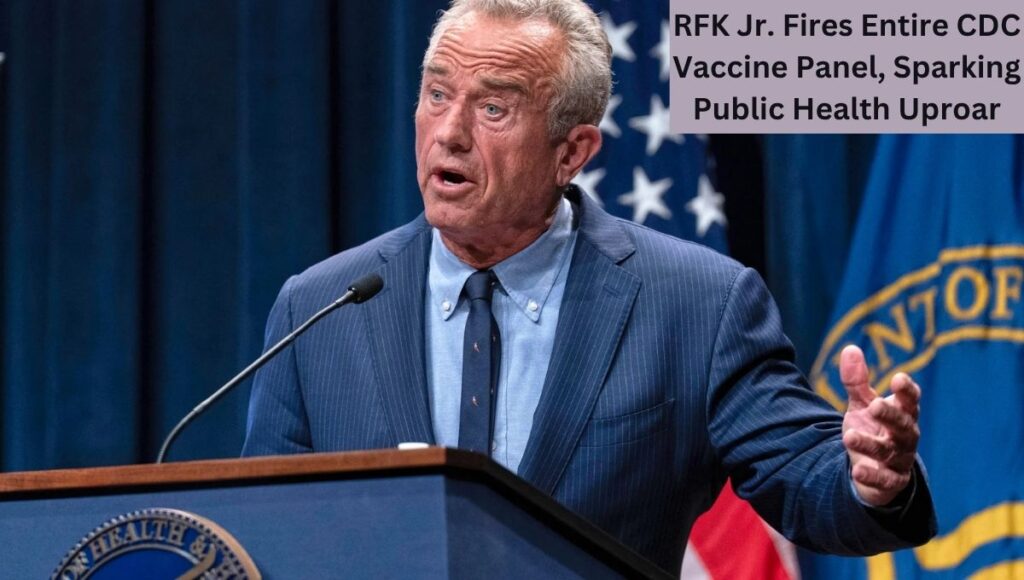
RFK Jr. Fires Entire CDC Vaccine Panel, Sparking Public Health Uproar
Why Did RFK Jr. Remove the Vaccine Panel?
RFK Jr. cited deep-rooted conflicts of interest as the primary reason behind the dismissal of the CDC’s vaccine advisory committee.
In his Wall Street Journal op-ed, he wrote that the ACIP had become “little more than a rubber stamp” for vaccine recommendations and was compromised by what he called “persistent conflicts of interest” with pharmaceutical companies.
“Most of ACIP’s members have received substantial funding from pharmaceutical companies,” Kennedy stated, adding that without a “clean sweep,” the Trump administration would not have been able to appoint a majority of new members until 2028.
He argued that only a full reset would enable true reform and transparency in the CDC’s vaccine decision-making process.
What Is ACIP and Why Does It Matter?
The Advisory Committee on Immunization Practices (ACIP) plays a central role in U.S. vaccine oversight. Comprised of independent experts in immunology, pediatrics, infectious disease, and epidemiology, the committee is responsible for:
- Recommending immunization schedules
- Advising on coverage for insurance and government programs
- Guiding the Vaccines for Children (VFC) program
While the FDA approves vaccines, ACIP’s guidance shapes how they are implemented across the country. Removing all members at once has disrupted this structure, leaving a critical gap in vaccine oversight just weeks before the next scheduled meeting.
Medical Community Reacts with Outrage
The mass dismissal has been met with outrage from major medical groups and public health advocates. Dr. Bruce Scott, President of the American Medical Association, called it a “dangerous move” that undermines the trust Americans place in vaccine science.
“Today’s action to remove the 17 sitting members of ACIP upends a transparent process that has saved countless lives,” Scott said in a statement. “With child vaccination rates already declining, this will only make matters worse.”
Dr. Susan Kressly, President of the American Academy of Pediatrics, warned that the firings “will cause more confusion and uncertainty for families,” especially in light of recent outbreaks of preventable diseases like measles.
COVID-19 Guidelines Changed Without Expert Input
Compounding the controversy, Kennedy recently changed federal guidance on COVID-19 vaccinations for healthy children and pregnant women without consulting ACIP. This marked a serious deviation from protocol and alarmed scientists who rely on evidence-based, peer-reviewed recommendations.
Kennedy justified the decision by saying, “We are prioritizing the restoration of public trust above any specific pro- or anti-vaccine agenda.” However, critics argue that bypassing expert opinion weakens public confidence, rather than strengthening it.
Political Fallout and Broken Promises
Lawmakers on both sides of the aisle have expressed concern over Kennedy’s actions. Senator Bill Cassidy (R-LA), a physician who supported Kennedy’s confirmation, noted that the move broke earlier promises not to alter ACIP’s structure.
“Now the fear is that the ACIP will be filled with people who know nothing about vaccines except suspicion,” Cassidy said on X (formerly Twitter). Senator Susan Collins (R-ME) called the blanket removal “excessive” and questioned the decision’s legitimacy.
Many in the medical and scientific communities fear the replacements will be ideologically driven rather than grounded in scientific expertise.
Who Will Replace the CDC Vaccine Committee?
As of now, RFK Jr. has not named replacements for the 17-member vaccine panel. The ACIP is still scheduled to meet June 25–27 in Atlanta, raising concerns about how the administration can properly vet new members in such a short timeframe.
Experts like Professor Dorit Reiss from UC Law San Francisco warn that rushed appointments “will not restore trust in vaccines, and are not designed to do so.” She stressed the importance of transparency and conflict-of-interest checks something unlikely to happen within two weeks.
Market and Industry Reactions
The pharmaceutical industry also responded sharply. Moderna and BioNTech shares dipped more than 1% in after-hours trading, while Pfizer experienced a slight drop. The Pharmaceutical Research and Manufacturers of America (PhRMA) issued a stern warning: “Upending the ACIP membership increases uncertainty and vaccine skepticism, undermining the health gains achieved through vaccination,” PhRMA said in a statement.
The Bigger Picture: A New Era of Vaccine Skepticism?
RFK Jr., a long-time critic of federal vaccine policy and promoter of medical freedom, is steering health policy into uncharted waters. His decision aligns with a broader distrust of institutions and echoes sentiments among segments of the population that are skeptical of pharmaceutical influence.
However, many public health officials warn that the consequences could be dire. Dr. Mike Osterholm of the Vaccine Integrity Project called it “one of the darkest days in modern public health.”
“This decision demonstrates a complete lack of caring about the health and safety of every American,” added Dr. Richard Besser, former acting director of the CDC.
Conclusion: A High-Stakes Gamble for Public Trust
Robert F. Kennedy Jr.’s removal of the entire CDC vaccine advisory committee is not just a bold bureaucratic shake-up it’s a fundamental shift in how U.S. vaccine policy is shaped. Whether this move will lead to greater transparency and public trust or further fracture the nation’s fragile public health infrastructure remains to be seen.
As the new panel is expected to convene in just two weeks, all eyes are on Atlanta and the HHS as the nation watches this historic and potentially hazardous experiment unfold.
Also Read: Vaccine, public health advocates warn of fallout from ACIP meeting
Related Posts:
- CDC Director Susan Monarez was fired just weeks…
- 11 Powerful Shifts in New US Dietary Guidelines That…

- CDC Atlanta Shooting: Officer Killed, Vaccine Motive…

- 5 Major Takeaways from the US Supreme Court's…

- 7 Heartbreaking Facts About Venezuela's Earthquake Disaster

- 7 Powerful Facts About Ayatollah Ali Khamenei’s…