
In an interesting move, Trump Moves to Broker Putin-Zelensky Peace Talks After White House Meeting. The Ukraine war entered a new chapter this week as US President Donald Trump announced that he had personally begun arranging a possible face-to-face meeting between Russian President Vladimir Putin and Ukrainian President Volodymyr Zelensky.
The move came after Trump hosted Zelensky and key European leaders in Washington, signaling fresh momentum toward negotiations despite sharp differences on how peace might ultimately be achieved. Below is a comprehensive look at the top developments, reactions, and implications surrounding the talks.

Trump Moves to Broker Putin-Zelensky Peace Talks After White House Meeting
A Second Oval Office Meeting Sets the Stage
During their second Oval Office encounter this year, Trump and Zelensky kept the atmosphere calm, determined to avoid a repeat of the acrimonious February meeting that had left both sides frustrated.
Trump complimented Zelensky’s attire, while the Ukrainian leader struck a softer tone, repeatedly thanking his host.
Observers noted that Zelensky spoke cautiously at the start, possibly to avoid clashing with Trump’s vision for a Ukraine peace deal.
Still, the joint press conference alongside European leaders revealed lingering disagreements, particularly over whether a ceasefire should precede any permanent peace agreement.
Trump Calls Putin Mid-Meeting
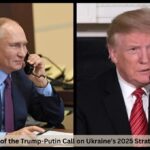
In a striking and unexpected moment, Trump interrupted the White House discussions with Zelensky and European leaders to place a direct phone call to Putin.
German newspaper Bild first reported the interruption, describing it as emblematic of Trump’s unpredictable style.
According to European diplomats, the call was originally scheduled for after consultations with allies.
Instead, Trump spoke to Putin immediately, announcing afterward that he had “begun arrangements” for a Putin-Zelensky summit at a still-undetermined location.
Also Read: Trump broke off his meetings with Europe’s leaders to call his friend in the Kremlin… why?
Security Guarantees at the Core of Talks
Zelensky emphasized that security guarantees remain the single most important issue for Ukraine.
Speaking at a press briefing, he said details would be formalized “within the next 10 days,” potentially including a $90 billion defense deal with Washington for advanced weapons systems.
The Ukrainian president also revealed that the US could purchase domestically produced Ukrainian drones, bolstering Kyiv’s defense industry.
While no binding agreement has been reached, Zelensky said progress was possible within days.
Trump echoed the point, suggesting that European nations would lead on providing guarantees, coordinated with Washington.
According to Trump, Putin had privately agreed in Alaska to accept such Western-backed guarantees for Ukraine’s security a potentially significant shift.
Zelensky Open to Direct Talks With Putin
Despite Moscow’s long-standing resistance, Zelensky said he was ready to meet Putin directly if the Russian president agreed. He further indicated that Trump could join as a third party in a trilateral setting.
“Ukraine will never stop on the way to peace,” Zelensky said. But he added that no date had been set for such talks, leaving doubts about whether Putin would ultimately follow through.
Macron Pushes Sanctions, Europeans Stay Guarded
French President Emmanuel Macron reiterated that Europe is prepared to increase sanctions against Russia if Putin obstructs progress.
He credited Trump for pursuing an agreement but emphasized that Europe would not hesitate to escalate pressure if Moscow backtracked.
Meanwhile, German Chancellor Friedrich Merz diverged from Trump’s approach, stressing that a ceasefire must come before deeper negotiations or territorial discussions.
Merz also warned against forcing Ukraine into territorial concessions to satisfy Moscow.
Finnish President Questions Putin’s Trustworthiness
Finnish President Alexander Stubb, also present at the talks, struck a skeptical tone. “Putin is rarely to be trusted,” he told reporters. “Now it remains to be seen whether he has the courage to come to this type of meeting, or is once again playing for time.”
His comments underscored the unease among US allies about Trump’s fast-paced diplomacy and the possibility of Russia using negotiations to consolidate gains without real concessions.
The Sensitive Question of Territory
One of the most controversial issues hovering over the White House talks was the possibility of territorial exchanges.
Trump acknowledged that any peace deal would require “discussing the possible exchanges of territory, taking into consideration the current line of contact.”
Reports suggest Putin has pushed for Ukraine to cede parts of the eastern Donbas region, still partly controlled by Kyiv, in exchange for freezing the frontline elsewhere.
Trump has also floated the idea of Ukraine giving up Crimea and dropping its NATO ambitions.
Zelensky, however, appeared firm in rejecting such demands. He reportedly presented Trump with a detailed map, showing that Russia had managed to occupy less than 1% of Ukraine’s territory in the past 1,000 days, a fact that reportedly shifted Trump’s mood.
Optics of a “Warm” Meeting
Unlike in February, when Trump and Vice President JD Vance berated Zelensky for insufficient gratitude, this week’s meeting was described by both leaders as “warm” and productive.
Trump even praised Zelensky’s jacket an olive branch given earlier criticism from right-wing commentators of his wartime attire.
For Zelensky, projecting optimism was a deliberate strategy. By appearing cooperative, he aimed to buy more time for Ukraine, securing continued Western backing without yielding ground prematurely.
Trump’s Confidence vs. European Caution
Trump struck an optimistic note after the meetings, saying:
“In a week or two weeks, we’re going to know whether we’re going to solve this or whether this horrible fighting continues.”
But European leaders were less convinced. Macron pushed for a four-way European framework, while Merz insisted on a truce before substantive talks.
NATO chief Mark Rutte praised Trump’s push for dialogue but avoided endorsing territorial compromises.
Reactions in Ukraine and Beyond
In Kyiv, Zelensky’s team framed the Washington visit as a success, noting that the US and Europe appear committed to discussing concrete security guarantees within days.
Ukrainian officials stressed that their president had not conceded territory nor abandoned NATO aspirations.
Moscow, meanwhile, has not officially confirmed Putin’s willingness to meet Zelensky. However, Russian sources told AFP that Putin told Trump he was “ready” for such a summit.
Whether that readiness translates into real negotiations remains uncertain.
What’s Next for the Peace Process?
For now, the situation remains fluid. Trump says he will push for a three-way summit with himself, Putin, and Zelensky “as soon as possible.”
Zelensky has signaled openness, while Europeans continue pressing for an immediate ceasefire.
Still, the White House talks left major questions unresolved:
- Will Ukraine be pressured into territorial concessions?
- Can Putin be trusted to honor any commitments?
- Will European leaders accept Trump’s fast-track diplomacy?
- How soon will concrete security guarantees be delivered?
Despite the uncertainties, both Trump and Zelensky left Washington projecting confidence. For Ukraine, the meeting achieved at least one goal: time.
For Russia, the interruption to call Putin mid-meeting suggested Moscow, too, had gained breathing space.
Conclusion: The Status Quo, With Shifts in Motion
The Alaska Summit last week and the White House meetings this week did not produce a breakthrough, but they did not trigger catastrophe either. Instead, they preserved the status quo while opening doors to future negotiations.
For Trump, the high-profile diplomacy showcased his central role as a potential dealmaker. For Zelensky, it kept Ukraine’s allies engaged while avoiding concessions. For Europe, it was a reminder that Trump’s instincts may not always align with theirs, but his involvement remains pivotal.
As one senior European diplomat summarized:
“Peace may not be close, but for the first time in months, it feels like we are talking about how it could happen.”
Also Read: Trump Hints at Imminent Putin Meeting Amid Ukraine Peace Push
Related Posts:
- 5 Powerful Highlights as Trump Lands Second Nobel…

- Trump’s 2025 Gaza Peace Plan Signing and Historic…

- 7 Shocking Reasons FIFA’s Peace Prize for Trump…

- Trump–Zelensky Meeting 2025: Stylish Yet Strategic…

- Impacts of the Trump-Putin Call on Ukraine’s 2025 Strategy
- Trump’s 2025 Nobel Peace Prize Snub: Politics Over…
