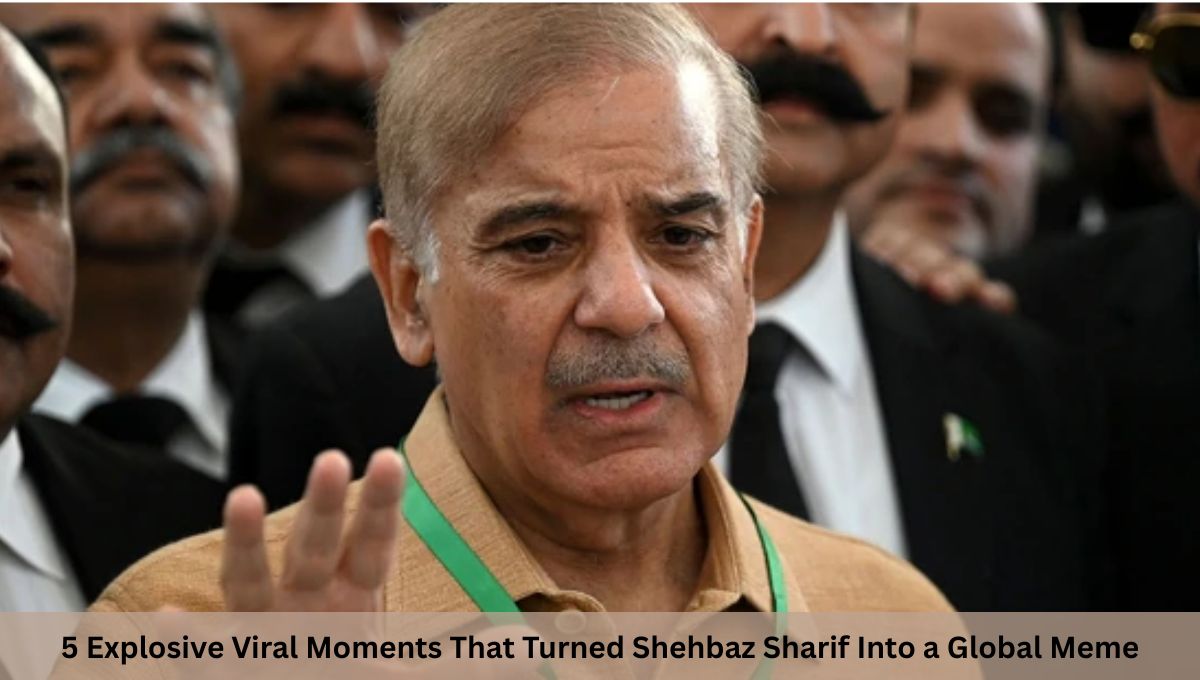
5 Explosive Viral Moments That Turned Shehbaz Sharif Into a Global Meme of ridicule.In 2025, Pakistan Prime Minister Shehbaz Sharif found himself navigating an unexpected battleground—social media. In an era where every diplomatic gesture is recorded, clipped, and instantly dissected, Sharif’s public appearances repeatedly went viral, often for reasons far removed from policy or diplomacy.
From an alleged gatecrashing of a closed-door meeting between Russian President Vladimir Putin and Turkish President Recep Tayyip Erdogan to awkward handshakes and headset mishaps, Sharif’s moments were turned into memes at lightning speed.
While some clips were later clarified or disputed, the damage in the court of online opinion was already done. This hybrid account brings together the most talked-about viral moments involving Shehbaz Sharif—mixing meme culture with diplomatic context—to understand why these incidents resonated so widely and what they say about Pakistan’s global image.
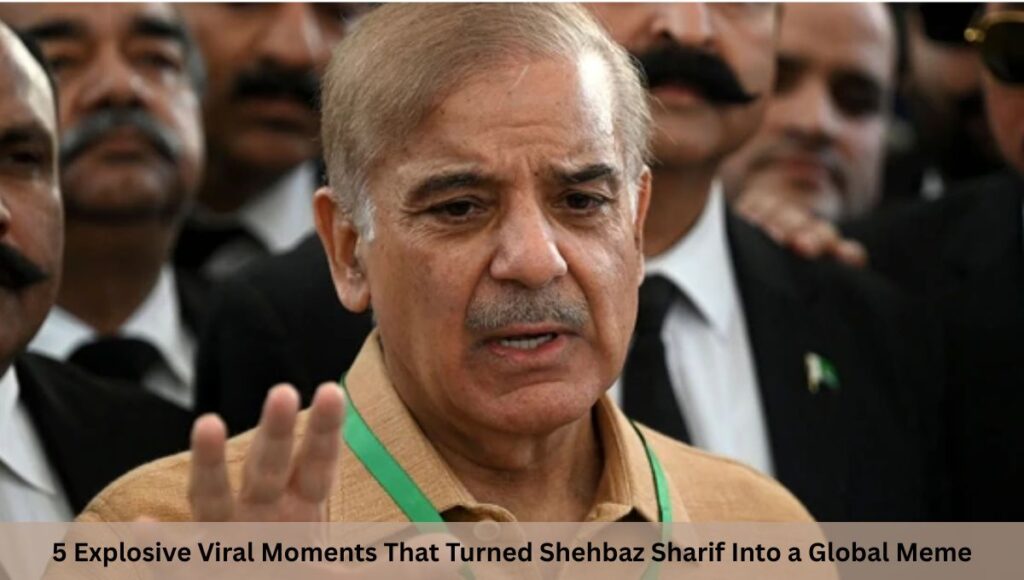
5 Explosive Viral Moments That Turned Shehbaz Sharif Into a Global Meme
1. The Putin–Erdogan Meeting Controversy in Turkmenistan
The Viral Clip That Sparked a Storm
The most explosive moment came from Ashgabat, Turkmenistan, during the International Peace and Trust Forum marking 30 years of the country’s permanent neutrality.
A video circulating on social media appeared to show Shehbaz Sharif walking into what was described as a closed-door meeting between Vladimir Putin and Recep Tayyip Erdogan.
According to early reports, Sharif had waited nearly 40 minutes for a scheduled bilateral meeting with Putin. The viral clip suggested that an impatient Sharif then entered the ongoing Putin–Erdogan discussion, stayed for about 10 minutes, and left abruptly.
Clarifications Came Later, Memes Came First
RT India, which initially amplified the clip, later deleted its post, stating that the incident may have been misrepresented. However, by then, the internet had already made up its mind. Memes, jokes, and sarcastic comments flooded social platforms.
Comments ranged from mocking Sharif’s patience to questioning Pakistan’s diplomatic standing. Even after clarifications emerged, the episode remained the defining viral image of Sharif’s year.
2. The Awkward Handshake With Vladimir Putin
A Few Seconds That Went Viral
At the Shanghai Cooperation Organisation (SCO) Summit earlier in the year, another clip put Sharif under the social media microscope. The Pakistani prime minister was seen rushing toward Putin for a handshake that appeared hurried and awkward.
While such moments are common at crowded diplomatic events, the clip’s optics proved irresistible for meme creators.
Symbolism and Perception
Online commentators framed the handshake as symbolic of Pakistan’s perceived desperation for international attention. Whether fair or not, the narrative stuck, showing how quickly brief visual moments can be turned into broader political commentary.
3. The Headset Fumble That Refused to Go Away
A Minor Technical Issue, A Major Meme
Another viral clip showed Sharif struggling with his translation headset during a meeting with Putin. As the headset slipped repeatedly from his ears, Sharif attempted to adjust it, visibly flustered.
What should have been a forgettable technical glitch quickly turned into a meme template across platforms.
Why the Clip Resonated
In the hyper-visual age of diplomacy, even mundane moments can be amplified. For critics, the clip reinforced perceptions of awkwardness; for supporters, it was harmless and overblown. Either way, it kept Sharif trending.
4. Praising Donald Trump: Flattery or Faux Pas?
‘Man of Peace’ Comment Triggers Backlash
At a peace summit in Egypt, Shehbaz Sharif’s glowing praise of former US President Donald Trump ignited another online controversy. Calling Trump a “man of peace” and a “great president,” Sharif lauded his leadership in unusually effusive terms.
Social Media Reaction
Critics accused Sharif of excessive flattery, arguing that it undermined Pakistan’s independent foreign policy image. Memes quickly followed, contrasting Sharif’s praise with Trump’s controversial global record.
The episode highlighted how political rhetoric, when clipped out of context, can fuel online outrage.
5. ‘Ignored by Xi?’ The SCO Summit Moment
A Video That Sparked Speculation
Another SCO Summit clip appeared to show Chinese President Xi Jinping walking past Sharif without acknowledging him. The video was shared with captions suggesting deliberate snubbing.
Perception vs Reality
Diplomatic schedules are often tightly choreographed, and such moments are rarely intentional. Still, the clip fed into a broader online narrative portraying Pakistan’s prime minister as sidelined on the global stage.
Why Shehbaz Sharif Keeps Going Viral
The Social Media Amplification Effect
Shehbaz Sharif’s viral moments underline a broader reality: modern diplomacy now unfolds under constant digital surveillance. Every pause, glance, or gesture can be turned into a headline or a joke.
Domestic Politics and Online Audiences
Many of the most viral reactions originated from outside Pakistan, particularly India, where searches for Shehbaz Sharif spiked sharply during these incidents. Domestic political rivalries further amplified the content.
Impact on Pakistan’s Global Image
While none of these moments altered diplomatic outcomes, they did shape public perception. For supporters, the trolling reflects online cynicism rather than diplomatic failure.
For critics, the clips symbolise a lack of gravitas at the top. In either case, the viral episodes demonstrate how leadership today is judged not only by policy but by optics.
Conclusion: Diplomacy in the Age of Virality
Shehbaz Sharif’s viral moments in 2025 reveal the uneasy intersection of global diplomacy and social media culture. Some incidents were misinterpreted, others overblown, but all highlight how unforgiving the digital spotlight has become.
As world leaders continue to operate in an era where every second is recorded, Sharif’s experience serves as a reminder:
in modern politics, perception can travel faster than clarification—and memes often arrive before facts.
Related Posts:
- Awkward and Hilarious Moments at Gaza Peace Summit 2025

- 5 Major Takeaways from the US Supreme Court's…

- China Hosts SCO Summit 2025 and Military Parade as…
- Trump Stole the Show at 2025 Gaza Peace Summit in Egypt
- 7 Powerful Measures: Trump Sanctions Russian Oil…

- 7 Heartbreaking Facts About Venezuela's Earthquake Disaster