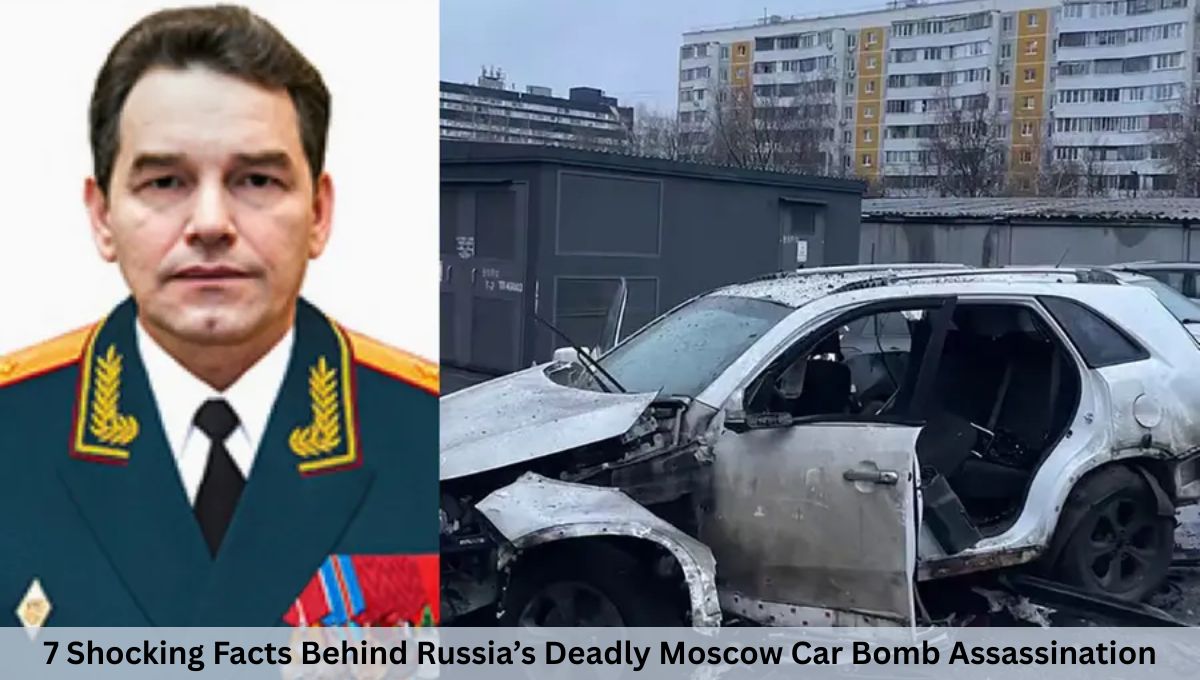
7 Shocking Facts Behind Russia’s Deadly Moscow Car Bomb Assassination of Lt Gen Fanil Sarvarov. A senior Russian military officer has been killed in a car bomb attack in Moscow, marking the latest high-profile assassination of a top-ranking figure since Russia launched its full-scale invasion of Ukraine in 2022.
The killing has once again exposed serious vulnerabilities in Russia’s internal security apparatus and underscored the growing reach of covert operations linked to the war. Lieutenant General Fanil Sarvarov, head of the Russian Armed Forces’ Operational Training Directorate, died after an explosive device detonated beneath his vehicle on Monday morning in southern Moscow, according to Russia’s Investigative Committee.
Officials have confirmed that Ukrainian intelligence services are among the key suspects being examined in the case. The attack adds to a growing list of senior Russian military officers, pro-Kremlin figures, and nationalist ideologues killed in targeted attacks inside Russia over the past three years.
7 Shocking Facts Behind Russia’s Deadly Moscow Car Bomb Assassination
What Happened: The Moscow Car Bomb Attack
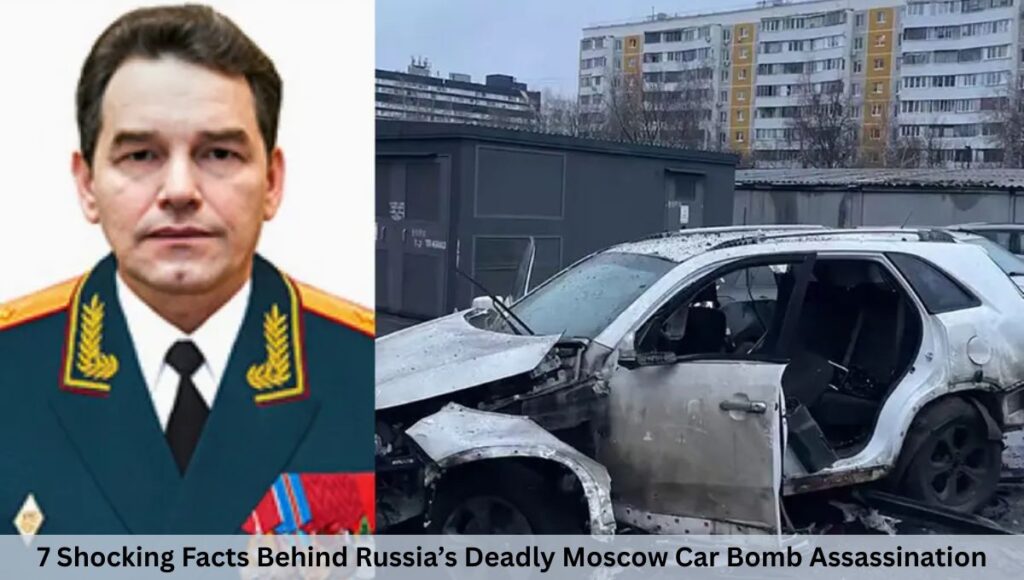
According to investigators, the explosive device was installed underneath Sarvarov’s car and detonated as the vehicle was in use early Monday morning.
Russian state media reported that the blast occurred around 7 a.m. Moscow time in a residential parking area on Yasenevaya Street, a middle-class neighborhood in the south of the capital.
Video footage released by Russian media showed a heavily damaged white vehicle surrounded by emergency responders and forensic teams. Sarvarov was rushed to hospital but later died from his injuries.
Russia’s Investigative Committee opened a criminal case under Article 105 of the Russian Criminal Code, covering murder committed in a socially dangerous manner, as well as Article 222.1, relating to the illegal trafficking of explosives.
Ukraine Intelligence Role Suspected
Investigative Committee spokesperson Svetlana Petrenko confirmed that multiple motives are being examined, including the possible involvement of Ukrainian special services.
“Investigators are pursuing numerous lines of enquiry regarding the murder. One of these is that the crime was orchestrated by Ukrainian intelligence services,” Petrenko said.
Ukraine has not officially claimed responsibility for Sarvarov’s killing. However, Kyiv has acknowledged involvement in several previous assassinations of senior Russian military figures, whom it accuses of orchestrating war crimes in Ukraine.
Since the war began, Ukrainian intelligence agencies are believed to have carried out a clandestine campaign targeting Russian officers both inside Russia and in Russian-controlled territories.
Who Was Lt. Gen. Fanil Sarvarov?
Fanil Sarvarov, 56, was one of the most senior figures in Russia’s military training and operational planning structure.
Born on March 11, 1969, in Gremyachinsk in Russia’s Perm region, Sarvarov had a long and influential military career spanning several decades.
Military Career Highlights
- Participated in the Ossetian-Ingush conflict
- Fought in both Chechen wars during the 1990s
- Played a role in planning and executing Russia’s 2015–16 military intervention in Syria, backing the Assad regime
- Appointed head of the Operational Training Directorate in 2016
- Oversaw combat readiness and training during Russia’s war in Ukraine
Russian state agency TASS reported that Sarvarov had led the training department for nine years, making him a key figure in shaping Russia’s battlefield preparedness.
Kremlin Reaction and Putin Briefed
The Kremlin confirmed that President Vladimir Putin was “immediately informed” of Sarvarov’s death through special security channels.
While Putin has not yet publicly commented on this latest killing, previous assassinations of senior officers have drawn sharp criticism from the Russian president toward his own security services.
Following the December 2024 assassination of General Igor Kirillov, Putin described the attack as a “major blunder” and said Russia’s intelligence and security agencies must learn from their failures.
Sarvarov’s killing is likely to intensify scrutiny of Russia’s domestic counterintelligence capabilities at a time when Moscow claims to be tightening internal security.
A Pattern of Targeted Assassinations
Sarvarov’s death is part of a broader pattern of targeted killings that have shaken Russia since the start of the Ukraine war.
Senior Russian Officers Killed in Recent Years
Igor Kirillov (December 2024)
- Head of Russia’s nuclear, biological, and chemical protection forces
- Killed by a bomb concealed in an electric scooter outside his Moscow apartment
- Ukraine’s Security Service (SBU) claimed responsibility
- His assistant also died in the attack
Yaroslav Moskalik (April 2025)
- Deputy head of the General Staff’s main operational department
- Killed by a car bomb near Moscow
- A suspect was quickly arrested
Valery Trankovsky (November 2024)
- Russian naval captain accused by Ukraine of war crimes
- Killed in a car bomb attack
These assassinations have targeted individuals directly linked to military operations against Ukraine, reinforcing Kyiv’s claim that such figures are legitimate wartime targets.
Other High-Profile Killings Linked to the War
Beyond military officers, several prominent pro-Kremlin figures have also been killed in attacks blamed on Ukrainian intelligence or anti-war operatives.
Notable Cases
- Darya Dugina (August 2022): Daughter of ultranationalist ideologue Alexander Dugin, killed in a car bomb near Moscow
- Vladlen Tatarsky (April 2023): Pro-war military blogger killed in a cafe bombing in St. Petersburg
- Armen Sarkisyan (February 2025): Founder of a pro-Russian militia group, killed in a central Moscow bombing
Ukraine has described some of these figures as facilitators or propagandists for Russia’s war effort.
Security Failures Inside Russia
The repeated success of assassinations inside Moscow has raised serious questions about the effectiveness of Russia’s security services, including the FSB and other intelligence agencies.
Despite heightened security measures, attackers have managed to:
- Plant explosives under vehicles
- Smuggle bomb components into residential areas
- Target high-ranking individuals living in supposedly secure neighborhoods
Russian lawmakers have openly expressed outrage. Andrey Kolesnik, a member of the Duma’s defense committee, called for harsh retaliation.
“We need to identify and eliminate the entire chain of those who carried out the operation… as is done with terrorists,” he said.
Impact on Russia-Ukraine Peace Talks
Sarvarov’s killing comes at a sensitive diplomatic moment. Russian and Ukrainian officials, alongside US intermediaries, have been engaged in discussions in Florida aimed at ending the nearly four-year war.
While Kremlin officials have described talks as “constructive,” Ukrainian President Volodymyr Zelenskyy has warned that military pressure will continue until Russia halts its invasion.
It remains unclear whether the assassination will derail negotiations, but analysts say it underscores how deeply the conflict has penetrated Russian territory.
Ukraine’s Strategy: Deterrence and Disruption
Ukrainian officials have long argued that targeting senior Russian commanders serves both military and psychological objectives.
President Zelenskyy previously hinted that Russian generals should “know where their bomb shelters are,” suggesting that the campaign of assassinations is designed to:
- Disrupt command structures
- Lower morale among Russian officers
- Demonstrate Ukraine’s intelligence reach
Western officials have expressed mixed reactions. Some US figures, including former officials linked to Donald Trump, have warned that such killings could violate the norms of warfare, while others see them as part of modern hybrid conflict.
What Comes Next
As investigators continue to examine the Moscow car bomb attack, Sarvarov’s death is likely to fuel:
- Calls for tougher internal security measures
- Retaliatory rhetoric from Russian officials
- Continued covert operations on both sides
For ordinary Russians, the killing reinforces the sense that the war in Ukraine is no longer distant — it has arrived in Moscow’s streets, parking lots, and residential neighborhoods.
Conclusion
The assassination of Lieutenant General Fanil Sarvarov marks another grim milestone in the Russia-Ukraine war, highlighting how the conflict has evolved into a shadow war of intelligence operations, targeted killings, and psychological pressure.
As Moscow blames Ukrainian intelligence and Kyiv remains silent, one reality is becoming increasingly clear: senior Russian military figures are no longer safe, even in the heart of the capital.
With peace talks fragile and violence escalating behind the scenes, Sarvarov’s killing underscores the dangerous trajectory of a war that continues to redefine the boundaries of modern conflict.
Also Read: Ukraine Eliminates Russian FSB Agents After SBU Officer Assassinated in Kyiv
Also Read: High-Profile Russians Assassinated Since Start of Ukraine War