Netanyahu Reverses Courseas Israeli Right-Wing Leaders Blast Netanyahu Over Gaza Aid Resumption Amid Mounting Famine Crisis. In a controversial move that has ignited political fire across Israel, Prime Minister Benjamin Netanyahu has ordered the resumption of humanitarian aid to the Gaza Strip, triggering fierce backlash from right-wing leaders, members of his Likud party, and hostage families. The decision, which bypassed a cabinet vote, comes amid mounting U.S. pressure, dire warnings from the military, and a looming famine in Gaza.
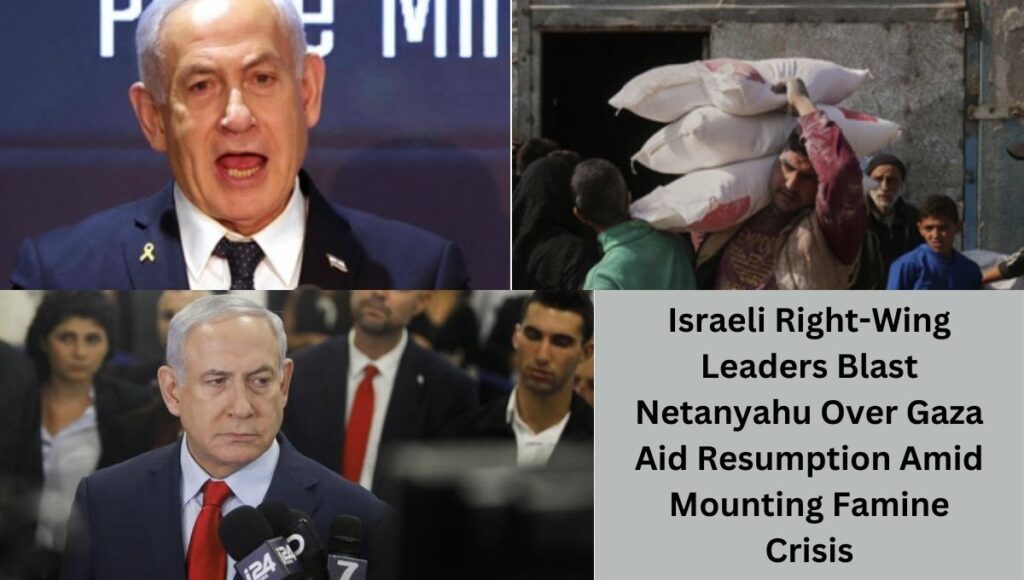
Israeli Right-Wing Leaders Blast Netanyahu Over Gaza Aid Resumption Amid Mounting Famine Crisis
Amid International Pressure, Netanyahu Reverses Course
On Sunday evening, Netanyahu’s office announced the resumption of limited humanitarian aid to all areas of Gaza, breaking a months-long blockade.
The decision follows growing international scrutiny and internal military advisories, warning of a humanitarian catastrophe that could derail Israel’s ongoing military campaign against Hamas.
According to the Prime Minister’s Office, the aid decision is based on Israeli military recommendations, designed to allow the IDF to expand its ground offensive without triggering a complete Gaza famine crisis.
“At the recommendation of the IDF and due to the operational need to enable the expansion of intense fighting to defeat Hamas, Israel will allow a basic amount of food,” the PMO stated.
Right-Wing Leaders Slam Netanyahu’s Gaza Aid Move
The backlash from Netanyahu’s right-wing coalition partners was swift and scathing. National Security Minister Itamar Ben Gvir called the decision “a grave mistake,” accusing the prime minister of giving “oxygen” to Hamas.
Ben Gvir, head of the far-right Otzma Yehudit party, demanded a formal cabinet vote, which was denied, and posted on X: “Mr. Prime Minister, our hostages have no humanitarian [aid]!”
Similarly, Heritage Minister Amichay Eliyahu labeled the move a betrayal: “Letting humanitarian aid in now directly harms the war effort and delays the hostages’ release.”
Even members of Netanyahu’s own Likud party joined the chorus of criticism. MK Avichai Boaron warned that the move repeats failed strategies of the past, while MK Moshe Saada said the policy was “immoral” and risks strengthening Hamas indirectly.
Smotrich Silent as Political Crisis Brews
Finance Minister Bezalel Smotrich, who previously vowed to resign if aid reached Hamas, has so far remained silent. His inaction is sparking speculation about whether he will follow through on past threats or attempt to preserve the coalition in light of growing instability.
Gaza Humanitarian Foundation Faces Scrutiny
The resumed aid is intended as a “bridging mechanism” until the Gaza Humanitarian Foundation (GHF), backed by the U.S. and Israel, becomes fully operational by month’s end.
GHF Executive Director Jake Wood stated: “We are building a secure, transparent system to deliver aid directly and effectively without diversion.”
However, several humanitarian organizations have voiced concern that the GHF model violates neutral aid principles, may fuel further Palestinian displacement, and fails to serve vulnerable populations effectively.
Worsening Conditions in Gaza and Escalating Military Offensive
Netanyahu’s decision comes as the IDF launches a new phase of its ground offensive under Operation Gideon’s Chariots, with five divisions now operating in northern and southern Gaza.
According to IDF Spokesman Brig. Gen. Effie Defrin, “We are now focusing on the offensive effort in the Gaza Strip until the defeat of Hamas.”
The Gaza Health Ministry reports over 53,000 Palestinians killed since October 2023, including 130 in a single night following the latest wave of Israeli strikes. Civilian casualties continue to rise, and critical infrastructure including the Indonesian Hospital has been targeted or forced to shut down due to ongoing sieges and fuel shortages.
Famine Looms as Fuel and Food Run Dry
With UN and NGO food reserves exhausted and fuel shortages crippling emergency services, the humanitarian situation in Gaza is rapidly deteriorating.
The Palestinian Civil Emergency Service warned that 75% of ambulances are out of service, with the remaining fleet likely to cease operations within 72 hours.
Aid officials and military advisors alike warned Netanyahu that Gaza was on the brink of famine, a reality that finally pushed the Israeli government to greenlight resumed aid flows despite fierce internal resistance.
Hostage Families Demand Action as Qatar Talks Stall
Meanwhile, negotiations in Qatar remain deadlocked. Hamas is demanding a full Israeli withdrawal, a permanent ceasefire, and the release of Palestinian prisoners, while Israel insists on temporary truces tied to hostage releases.
Hostage families have intensified their pressure on Netanyahu. Einav Zangauker, mother of captive Matan Zangauker, accused the prime minister of using the war for political survival: “Bring our children back already! All 58 of them.”
The Tikva Forum, representing many hostage families, called the aid decision a “gift to Hamas”, demanding right-wing ministers like Ben Gvir and Smotrich oppose it outright.
Conclusion: A Precarious Balancing Act
As Netanyahu tries to balance military strategy, humanitarian necessity, and coalition politics, Israel finds itself at a crossroads. The decision to resume humanitarian aid may help stave off a Gaza famine, but it has also exposed deep divisions within Israel’s government and society.
With no breakthrough in hostage negotiations and the military offensive escalating, the path ahead remains fraught. Netanyahu’s leadership faces intense scrutiny from both the international community and his own political base as the humanitarian disaster in Gaza worsens.
Also Read: Trump Acknowledges Gaza Famine Crisis, Proposes U.S. Control of the Strip Amid Global Outcry
Related Posts:
- Israel–Hamas Ceasefire Under Strain: 4 More Hostage…

- Hostage Crisis Escalates: Hamas Offers Red Cross…

- 5 Key Dimensions of U.S.–Israel Relations Amid…

- Trump’s 20-Point Gaza Peace Plan Gains Urgent Global…

- 5 Key Developments as Israel Confirms Hamas Handed…

- 7 Powerful Facts About Ayatollah Ali Khamenei’s…