In a high-stakes diplomatic move, Pakistan Brings Kashmir and Water Dispute to the Forefront at UN. Pakistan raised the Kashmir issue and its concerns over the Indus Waters Treaty during a United Nations Security Council (UNSC) session on Tuesday. The development comes at a critical moment when Pakistan holds the rotating presidency of the UNSC for July. Pakistan’s Deputy Prime Minister and Foreign Minister Mohammad Ishaq Dar, who is currently in New York, used his address at the open high-level debate to spotlight long-standing tensions with India.
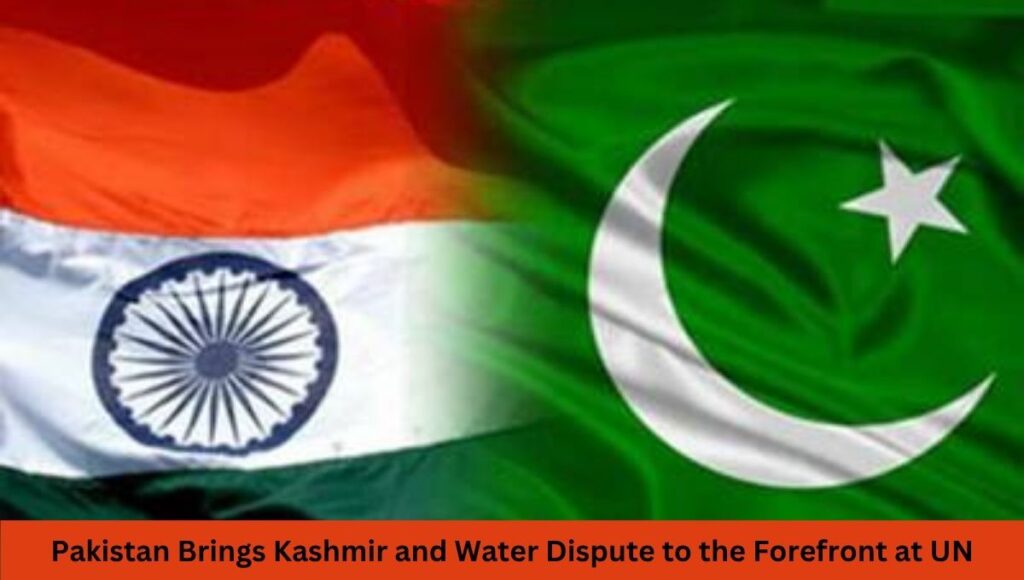
Pakistan Brings Kashmir and Water Dispute to the Forefront at UN
Kashmir Issue Reignited on the Global Stage
Dar reiterated Pakistan’s stance that Jammu and Kashmir remains an internationally recognised disputed territory, and that the matter remains unresolved on the UN Security Council’s agenda.
“No cosmetic measures can serve as a substitute for the fundamental and inalienable right of self-determination of the Kashmiris as guaranteed by the relevant Security Council resolutions,” Dar said.
His remarks reignited global attention on India’s 2019 revocation of Article 370, which stripped Jammu and Kashmir of its special status, a move that Pakistan has consistently opposed.
Pakistan Slams India’s Move to Suspend Indus Waters Treaty
Alongside Kashmir, Dar drew attention to India’s suspension of the Indus Waters Treaty (IWT), a 65-year-old agreement considered a cornerstone of India-Pakistan diplomacy.
India had reportedly put the treaty into abeyance following the Pahalgam terror attacks in April.
Dar called this move “illegal and unilateral,” accusing India of attempting to withhold water from over 240 million Pakistanis who rely on it for their livelihoods.
“It is most unfortunate and regrettable that India has chosen to illegally and unilaterally hold this treaty in abeyance on baseless grounds,” he stated.
The Indus Waters Treaty, signed in 1960, has survived wars and conflicts, and its disruption is seen as a major escalation in India-Pakistan tensions.
India Hits Back at UNSC: ‘Fanaticism and Terrorism’
India responded strongly to Dar’s speech. India’s Ambassador R. Ravindra described Pakistan as “steeped in fanaticism and terrorism” and dismissed Islamabad’s comments as disingenuous.
“It ill behoves a member of the Council to offer homilies while indulging in practices that are unacceptable to the international community,” he asserted.
Ravindra went on to contrast India as a “matured democracy” and “pluralistic society,” in sharp contrast to what he described as Pakistan’s serial borrowing and terror-linked foreign policy.
Pakistan Pushes UN-OIC Cooperation; India Raises Concerns
While holding the UNSC presidency, Pakistan is also attempting to raise the Organisation of Islamic Cooperation (OIC) profile at the United Nations.
One of Islamabad’s initiatives includes promoting closer ties between the UN and the OIC, which has 57 member states across Asia, Africa, and the Middle East.
The OIC has frequently criticised India’s policies in Jammu and Kashmir, particularly since the abrogation of Article 370.
India has voiced strong reservations about the UN giving the OIC a more prominent role, citing its biased stance.
UNSC Adopts Pakistan-Sponsored Resolution on Peaceful Dispute Settlement
In a significant diplomatic win for Islamabad, the UN Security Council adopted Resolution 2788 (2025), sponsored by Pakistan, which promotes the peaceful settlement of international disputes through mechanisms such as mediation, negotiation, and enquiry, as outlined in Article 33 of the UN Charter.
The resolution emphasizes the importance of regional and sub-regional organizations in conflict resolution and calls for stronger collaboration with the United Nations.
“Peace is a choice,” said UN Secretary-General Antonio Guterres, endorsing the resolution’s vision. “The world expects the Security Council to help countries make that choice.”
The resolution was unanimously adopted, signaling broad support for mechanisms to prevent conflicts from escalating into war.
It was passed during a session chaired by Dar himself, marking a symbolic success for Pakistan during its UNSC presidency.
Trump’s Name Resurfaces in Pakistan’s Diplomatic Agenda
Adding to the diplomatic theatrics, Dar is reportedly heading to Washington to meet U.S. Secretary of State Marco Rubio, in what Pakistani media are calling a “thank-you” visit to Donald Trump for helping ease tensions during the India-Pakistan ceasefire two months ago.
Dar had previously nominated Trump for a Nobel Peace Prize, citing his “extraordinary role in restoring calm in South Asia.”
While the real agenda of the trip remains under wraps, diplomatic sources speculate that Kashmir and broader India-Pakistan tensions will dominate discussions.
“Pakistan is not done thanking Trump yet,” one report noted, hinting that Islamabad may be leveraging Trump’s perceived interest in South Asia for diplomatic gains.
India has previously rejected Trump’s offers to mediate in the Kashmir conflict, maintaining that it is a bilateral issue.
Military Channels and U.S. Engagement
Before Dar’s planned visit, Pakistan’s Army Chief Asim Munir met Donald Trump, raising eyebrows in New Delhi. India officially protested the unilateral meeting, which excluded civilian leaders.
The meeting reportedly focused on counter-terrorism cooperation and regional stability, with Pakistan now aiming to bolster military and trade ties with the U.S. during this critical juncture.
Conclusion: A Month of High-Stakes Diplomacy
Pakistan’s UNSC presidency has quickly become a platform to internationalize the Kashmir issue and the Indus Waters Treaty dispute, while also pushing its foreign policy priorities through multilateral frameworks.
While India remains firm in rejecting any external interference in what it considers internal matters, Pakistan is leveraging every international avenue available, including the UNSC, OIC, and U.S. diplomacy, to advance its position.
As July unfolds, all eyes will remain on how India counters Pakistan’s strategic maneuvers, both within the United Nations and in broader global diplomacy.
Also Read: Rising Tensions Between India and Pakistan: Strikes, Denials, and Escalation in Kashmir
Also Read: India and Pakistan just brought their Kashmir dogfight to Washington — Here’s what’s at stake
Related Posts:
- Pakistan Foreign Minister Ishaq Dar’s Historic Visit…
- Afghanistan–Pakistan War 2025: Inside the 48-Hour Ceasefire

- US Thanks Pakistan for Counterterrorism Cooperation…
- 5 Major Takeaways from the US Supreme Court's…

- 7 Heartbreaking Facts About Venezuela's Earthquake Disaster

- Pakistan’s Ishaq Dar in Dhaka: Bangladesh Visit…