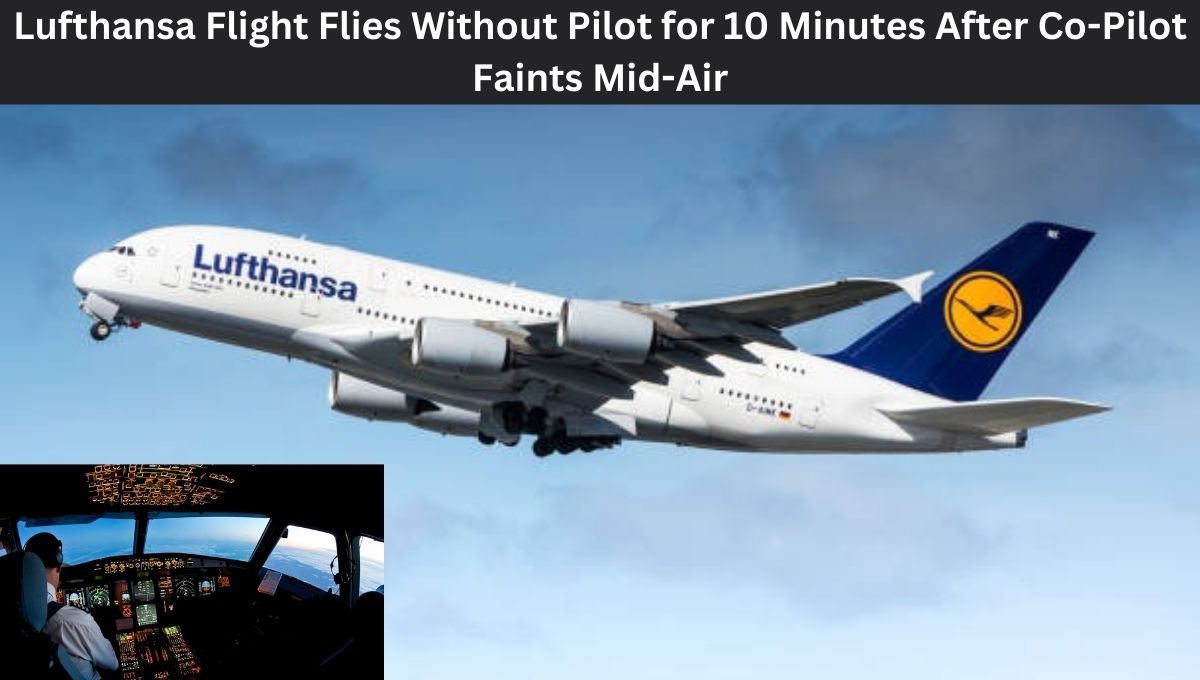
In a shocking aviation incident, Lufthansa Flight Flies Without Pilot for 10 Minutes After Co-Pilot Faints Mid-Air. A Lufthansa Airbus A321 flying from Frankfurt, Germany to Seville, Spain, flew without a conscious pilot for nearly 10 minutes on February 17, 2024. The event came to light through an official investigation report released by Spain’s Civil Aviation Accident and Incident Investigation Commission (CIAIAC).
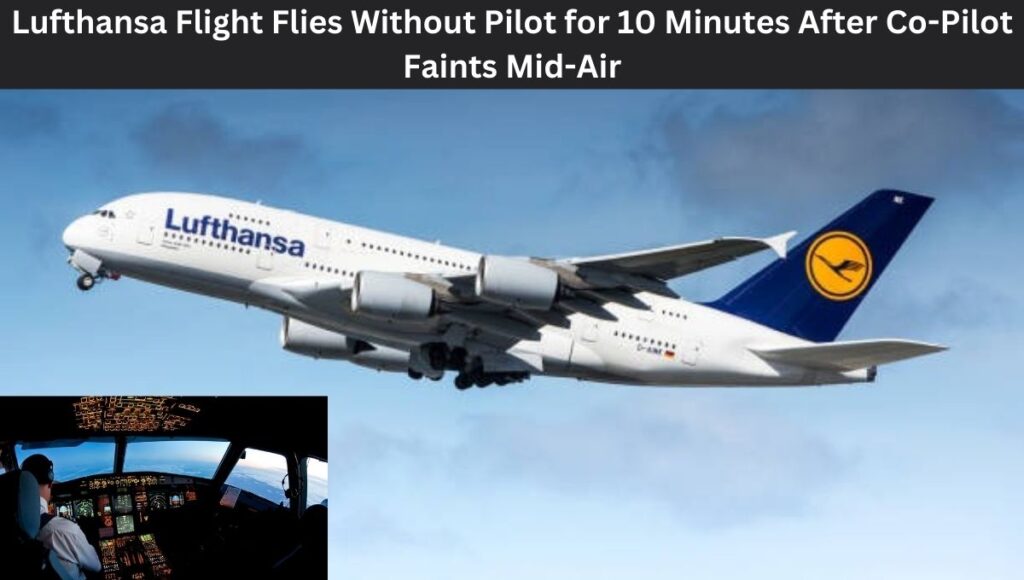
Lufthansa Flight Flies Without Pilot for 10 Minutes After Co-Pilot Faints Mid-Air
A Mid-Air Scare: Lufthansa Flight Flies Without a Pilot for 10 Minutes
After the co-pilot fainted while alone in the cockpit, a Lufthansa flight flew for 10 minutes without a pilot. The incident involved 199 passengers and six crew members, all unaware at the time that the aircraft was briefly without active human control in the cockpit.
Thankfully, the plane’s autopilot system-maintained course and stability, avoiding what could have been a catastrophic disaster. Using an emergency code, the captain re-entered and the flight was diverted to Madrid where the co-pilot was taken to a hospital.
The Incident: Co-Pilot Faints While Alone in the Cockpit
According to multiple reports, including one by German news agency dpa, the co-pilot suddenly lost consciousness while the captain was on a brief restroom break.
With the captain temporarily out and the co-pilot incapacitated, the aircraft continued flying without an active pilot in control.
Autopilot was engaged at the time, a critical factor that ensured the Lufthansa flight remained stable. However, investigators noted that the unconscious co-pilot appeared to make involuntary movements, briefly interacting with the aircraft controls unintentionally.
Captain Locked Out of Cockpit
The situation escalated when the captain attempted to return to the cockpit. Standard aviation procedure allows the door to be unlocked via a keypad code. The captain tried the normal code five times, but received no response.
Flight attendants also attempted to reach the co-pilot via intercom, fearing a medical emergency. With no reply and time ticking, the captain was forced to initiate the emergency override procedure, which allows the door to open automatically after a delay.
Just moments before the override took effect, the co-pilot regained partial consciousness and opened the cockpit door manually. When the captain re-entered, he found the co-pilot pale, sweating, and clearly in medical distress.
Emergency Landing in Madrid
Realizing the severity of the situation, the captain made a swift decision to divert the aircraft to Madrid, where medical help could be administered immediately.
A doctor who was on board, assisted by cabin crew, provided initial medical care until the flight landed safely.
Once on the ground, the co-pilot was rushed to a hospital for further evaluation. Subsequent medical examinations revealed the co-pilot had experienced a neurological seizure, triggered by a condition previously undetected in medical screenings.
Investigative Findings: A Hidden Health Condition
The CIAIAC’s final report concluded that the co-pilot suffered from “sudden and severe incapacitation” caused by a neurological condition.
Experts noted that such medical issues are difficult to detect during routine pilot health screenings, especially if symptoms have not previously presented.
This revelation has raised concerns within the aviation community, with calls for the European Union Aviation Safety Agency (EASA) to consider reviewing cockpit protocols, particularly scenarios involving single-pilot occupancy.
The Role of Autopilot and Cockpit Security Protocols
While this Lufthansa incident had a safe outcome, it has renewed focus on the critical role of autopilot systems and the strict security measures surrounding cockpit access.
The Airbus A321 continued flying on autopilot for the entire 10-minute window, a testament to the reliability of modern aviation technology.
However, the delay in cockpit re-entry, despite multiple code entries and emergency protocols, highlights potential risks when one pilot is alone.
Aviation experts say this event underscores why two pilots are always required in the cockpit not just for operational management, but as a safety redundancy in emergencies.
Lufthansa’s Response
Lufthansa confirmed awareness of the CIAIAC report and stated that its own flight safety department also conducted an internal investigation. However, the airline has not released its findings to the public, citing the sensitivity of the matter.
In a brief statement, Lufthansa said, “We ask for your understanding that we will not comment beyond the investigation report.”
A Reminder of Aviation’s Fragile Balance
This incident serves as a powerful reminder of the fragility of aviation safety, and the importance of every protocol in place. It also highlights the unseen pressures pilots face, and the potential dangers posed by undetected medical issues.
Despite the severity of the situation, the coordinated response by the crew, the integrity of the aircraft’s systems, and the professionalism of the captain ensured a safe outcome for over 200 souls on board.
As the aviation industry reviews this incident, passenger safety remains the top priority, with lessons from this event likely to shape future flight deck policies and health monitoring protocols.
Conclusion
The February 17 Lufthansa flight scare is not just a story of a pilot fainting mid-flight it’s a real-life example of why redundancy, preparation, and vigilance are essential in aviation.
Thanks to autopilot, crew coordination, and fast decision-making, a potential tragedy was avoided.
As authorities continue to assess the implications of this event, passengers can take some comfort in knowing that even in rare, unpredictable situations, modern aviation systems and trained professionals are prepared to respond.
Also Read: Trump Lifts 52-Year Ban on Supersonic Flights and Launches Sweeping Drone, Flying Car Orders
Also Read: Why Will Lufthansa’s New 787 Dreamliners Fly With Empty Business Class Cabins?