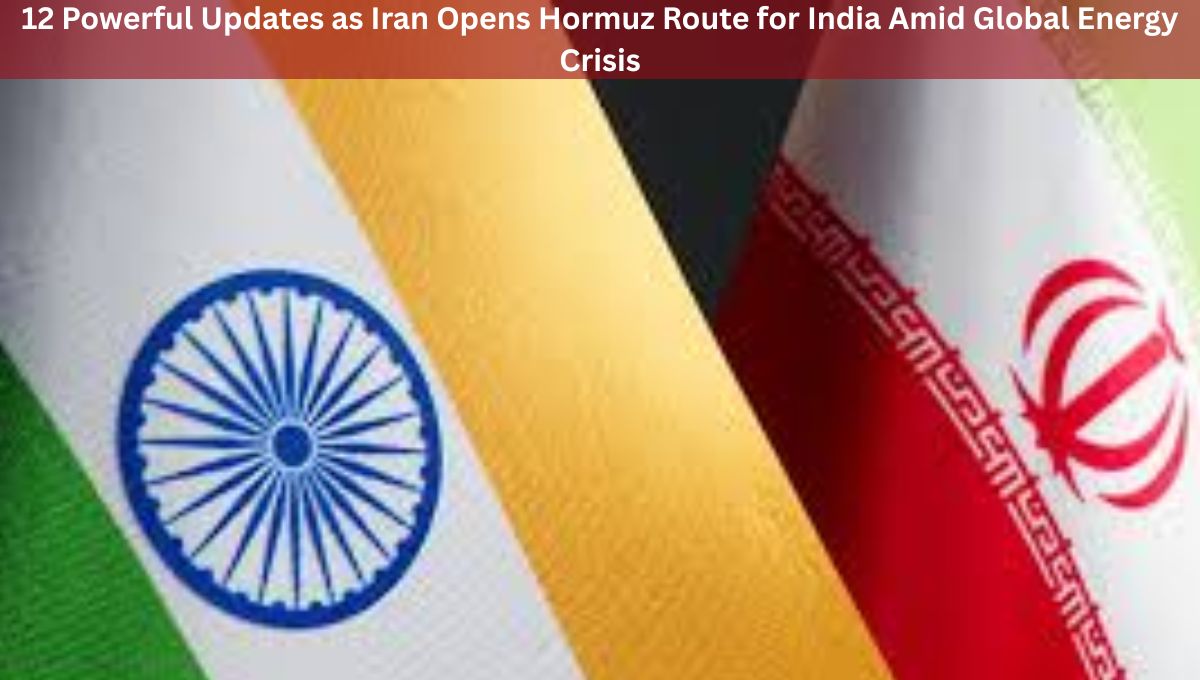
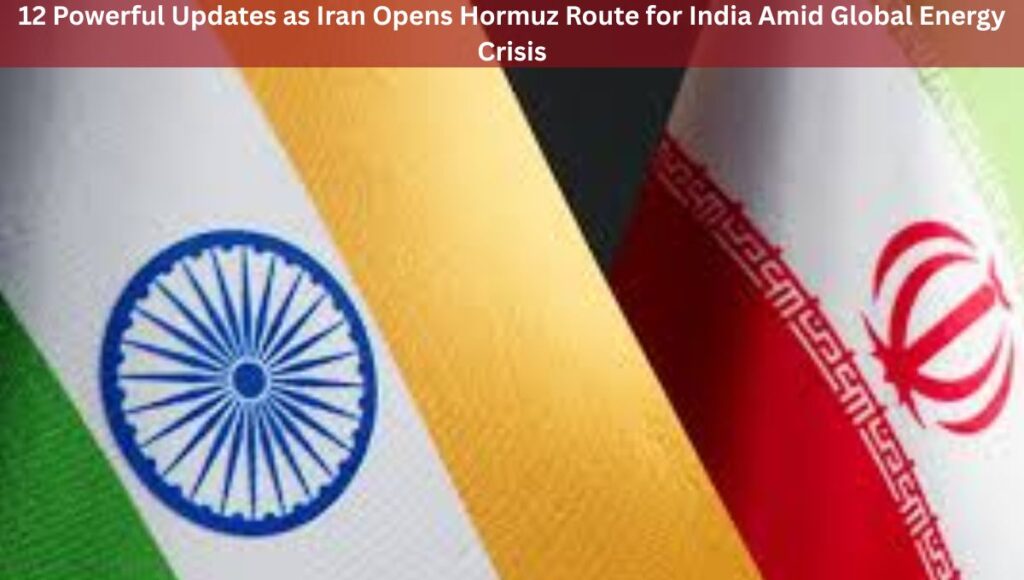
12 Powerful Updates as Iran Opens Hormuz Route for India Amid Global Energy Crisis — A strategic shift in a global flashpoint. In a major geopolitical development with far-reaching implications, Iran has announced that it is allowing vessels from select “friendly nations,” including India, to pass through the strategically vital Strait of Hormuz.
Thank you for reading this post, don't forget to subscribe!This move comes amid escalating tensions in the Middle East, where ongoing military conflict has already disrupted global energy supplies, shaken financial markets, and triggered widespread uncertainty.
The decision by Iran signals a calibrated strategy — not a full reopening of the waterway, but a controlled access system that distinguishes between allies and adversaries. For countries like India, heavily dependent on energy imports from the Gulf, this development offers cautious relief.
For the rest of the world, it underscores the fragility of global supply chains in times of conflict.
12 Powerful Updates as Iran Opens Hormuz Route for India Amid Global Energy Crisis
12 Powerful Developments Shaping the Hormuz Crisis
1. Iran Opens Hormuz Route for India and Allies
Iranian Foreign Minister Abbas Araghchi confirmed that vessels from friendly countries are being granted safe passage through the Strait of Hormuz.
These countries include:
- India
- China
- Russia
- Iraq
- Pakistan
Iran emphasized that this access is conditional and requires prior coordination with its authorities.
This selective opening marks a significant shift from earlier restrictions that had nearly halted maritime traffic.
2. Strait of Hormuz: The World’s Most Critical Energy Chokepoint
Strait of Hormuz is one of the most vital waterways in global trade.
Key facts:
- Handles nearly 20% of global oil and LNG supply
- Connects the Persian Gulf to global markets
- Supports energy exports from major producers
Even minor disruptions here can trigger massive global economic consequences — as seen in the current crisis.
3. “Open for Friends, Closed for Enemies” Policy
Iran has drawn a clear geopolitical line:
- Allowed: Friendly or neutral countries
- Restricted: Nations involved in the conflict
According to Araghchi, ships linked to adversaries — including those supporting military actions against Iran — will not be permitted passage.
This effectively transforms the strait into a controlled geopolitical corridor.
4. UN Urges Immediate Reopening
António Guterres has called for the immediate reopening of the strait.
He warned that:
- Oil, gas, and fertilizer flows are severely disrupted
- The global planting season is at risk
- Civilian suffering is increasing
His message was clear:
ending the war is the only way to stabilize the situation.
5. Shipping Traffic Collapses by 95%
The scale of disruption is unprecedented.
Before the conflict:
- ~120 ships passed daily
After escalation:
- Only a handful of vessels transit per day
- Traffic dropped by over 95%
Thousands of ships are now waiting near the strait for clearance, creating a massive maritime bottleneck.
6. India’s Energy Security Gets Temporary Relief
India is among the biggest beneficiaries of Iran’s decision.
Why this matters:
- India imports a large share of crude oil and LNG via Hormuz
- Supply disruptions had triggered LPG shortages
- Rising fuel costs were impacting consumers and industries
With limited passage now allowed, Indian vessels have resumed transit, easing immediate pressure.
7. Global Oil Prices Surge Amid Uncertainty
The partial closure of Hormuz has triggered a sharp spike in energy prices.
Market impact:
- Crude oil prices surged beyond $100 per barrel
- LNG prices climbed sharply
- Fuel costs increased globally
The volatility reflects how sensitive global markets are to disruptions in this region.
8. Iran’s “Toll System” Raises Global Concerns
Reports suggest Iran may be introducing a transit fee system for vessels.
Key points:
- Charges reportedly up to $2 million per passage
- Payments linked to safe transit guarantees
- Could formalize into law
If implemented, this would fundamentally alter international maritime norms and provoke strong global opposition.
9. Strict Coordination Required for Passage
Iran has made it clear that even friendly nations must:
- Submit vessel documentation
- Obtain clearance codes
- Follow designated navigation routes
- Accept escort through the strait
This controlled process ensures Iran maintains full oversight of maritime movement.
10. Military Control of the Strait Intensifies
Iran’s Islamic Revolutionary Guard Corps (IRGC) is actively managing transit operations.
Their role includes:
- Screening vessels
- Monitoring cargo
- Providing armed escort
This militarization of a global trade route highlights the high-risk environment currently prevailing in the region.
11. Humanitarian and Economic Fallout Expands
The disruption is not limited to oil markets.
Global consequences include:
- Rising food prices due to fertilizer shortages
- Supply chain disruptions across industries
- Increased cost of living worldwide
Developing nations are particularly vulnerable to these cascading effects.
12. Diplomatic Pressure Mounts for Resolution
Multiple global actors are pushing for de-escalation.
Efforts include:
- Calls for ceasefire
- Mediation offers from regional powers
- Backchannel communications
However, deep mistrust and ongoing military operations continue to hinder progress.
Why the Strait of Hormuz Matters More Than Ever
The strategic importance of the Strait cannot be overstated.
It serves as:
- A lifeline for global energy supply
- A critical artery for international trade
- A geopolitical leverage point for regional powers
Any disruption here sends shockwaves across economies, governments, and societies worldwide.
India’s Strategic Position in the Crisis
India’s inclusion among “friendly nations” highlights its diplomatic balancing act.
India’s priorities:
- Ensuring uninterrupted energy supply
- Maintaining neutral geopolitical stance
- Avoiding direct involvement in the conflict
This positioning has helped India secure limited access while others face restrictions.
The Emerging “Controlled Corridor” Model
Iran’s approach effectively creates a new system:
- Selective access based on political alignment
- Mandatory coordination with authorities
- Potential financial charges
This model could redefine how strategic waterways are managed during conflicts.
Risks of Escalation: A Fragile Situation
Despite partial reopening, risks remain high:
- Miscalculations could trigger wider conflict
- Naval confrontations remain possible
- Shipping remains vulnerable to attacks
The region continues to operate under extreme tension.
Global Market Reaction: Volatility Continues
Financial markets have shown sharp swings:
- Initial panic over closure
- Temporary relief after selective reopening
- Continued uncertainty driving volatility
Investors remain cautious amid unpredictable developments.
Energy Security: A Global Concern
The crisis has exposed vulnerabilities in global energy systems.
Key lessons:
- Overdependence on narrow chokepoints is risky
- Diversification of supply routes is critical
- Strategic reserves play a vital role
Countries are now reassessing their long-term energy strategies.
The Role of International Law and Maritime Norms
The situation raises serious legal questions:
- Can a country impose tolls on an international strait?
- What are the limits of sovereignty in global waterways?
- How should international bodies respond?
These questions could shape future maritime governance.
Voices from the Ground: Industry Impact
Industries worldwide are feeling the pressure:
- Airlines face rising fuel costs
- Shipping companies deal with delays and risks
- Manufacturers struggle with supply disruptions
The economic ripple effect continues to expand.
The Bigger Picture: Geopolitics Redefined
This crisis is not just about a waterway — it is about power, influence, and global order.
Key dynamics:
- Regional rivalries intensifying
- Global powers competing for influence
- Economic warfare through energy control
The Strait of Hormuz has become the focal point of these tensions.
Conclusion: A Temporary Relief, Not a Solution
Iran’s decision to allow passage for India and other friendly nations offers short-term relief but does not resolve the underlying crisis.
The Strait of Hormuz remains:
- Partially restricted
- Heavily militarized
- Politically controlled
As the conflict continues, the world faces a critical question:
Will diplomacy prevail and restore stability, or will escalating tensions push the region — and the global economy — into deeper crisis?
For now, the reopening for select nations is a strategic pause, not a permanent solution.
Also Read: 7 Crucial Moves as Iran Opens Hormuz to Japan Amid Global Oil Crisis
Also Read: Iran opens Strait of Hormuz for India: What it means and why India-Iran ties run deep
Related Posts:
- 7 Critical Ways Iran’s Yuan Oil Plan Could Shake the…
- 7 Powerful Reasons the U.S. Is Letting Countries Buy…
- 10 Powerful Revelations from the Trump–Putin Call on…

- 7 Explosive Reasons Oil Prices Are Surging as Trump…
- 10 Explosive Signals as Trump Threatens New Strikes…
- 7 Critical Impacts of the Strait of Hormuz Crisis as…