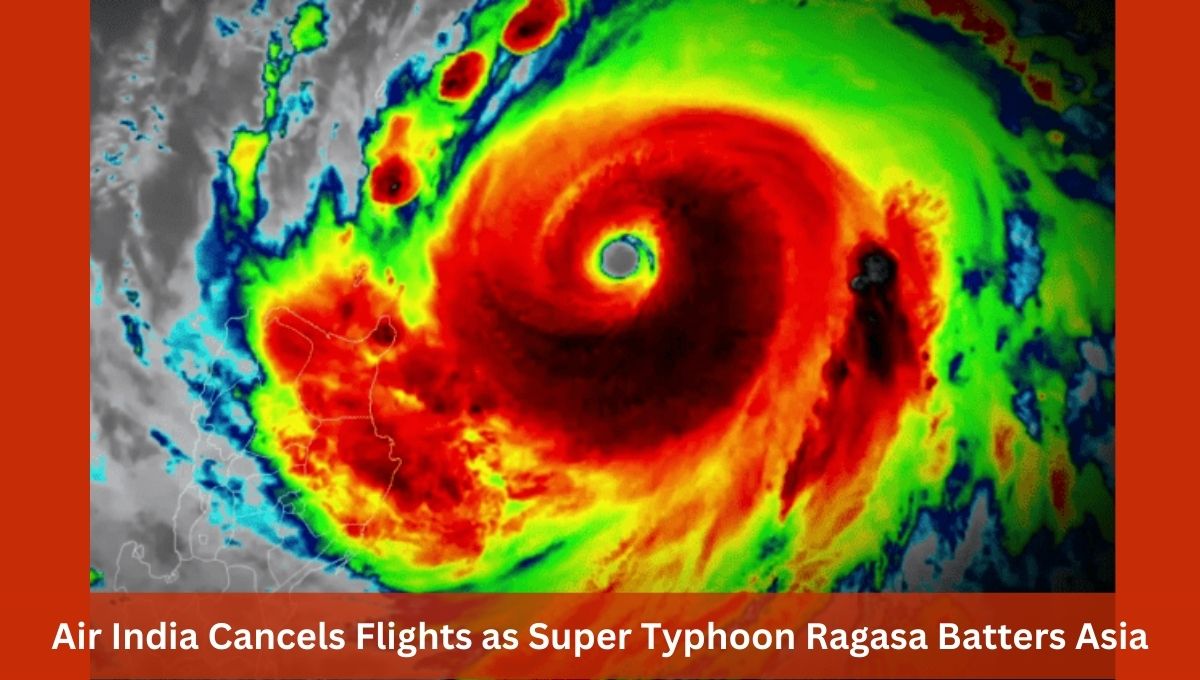
Prioritizing passenger safety, Air India Cancels Flights as Super Typhoon Ragasa Batters Asia. Super Typhoon Ragasa, the strongest storm of the year so far, has caused massive disruption across Asia, leading to dozens of deaths, hundreds missing, and widespread destruction. Among the ripple effects of the extreme weather, Air India announced the cancellation of two international flights between Delhi and Hong Kong, prioritizing passenger safety amid dangerous conditions.
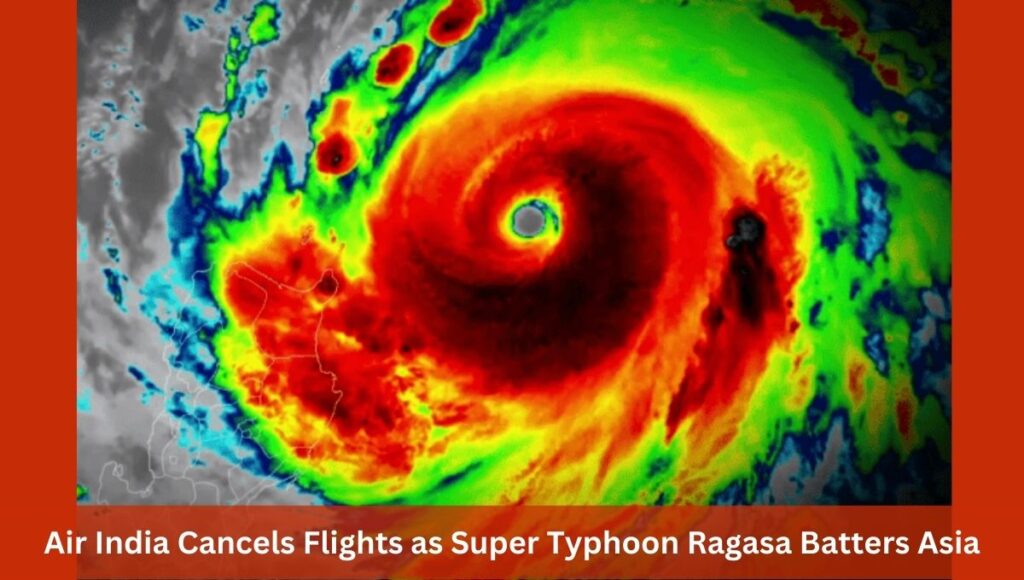
Air India Cancels Flights as Super Typhoon Ragasa Batters Asia
Air India Cancels Hong Kong Operations
Air India issued an official statement on Tuesday confirming that:
- Flight AI314 (Delhi–Hong Kong, 23 Sept) was cancelled.
- Flight AI315 (Hong Kong–Delhi, 24 Sept) was also cancelled.
“Flight AI314 (Delhi-Hong Kong, 23 Sept) and AI315 (Hong Kong-Delhi, 24 Sept) stand cancelled due to the adverse weather forecast from Typhoon Ragasa in Hong Kong,” Air India said.
The airline reassured passengers that full refunds and one-time complimentary rescheduling in the same class are being offered. A helpline was issued: 011-69329333 / 011-69329999.
“We regret the inconvenience caused by this situation beyond our control. Passengers are being offered full refunds or a one-time complimentary rescheduling in the same class. Operations to and from Hong Kong will resume once conditions permit safe flying,” the airline added.
This disruption follows Hong Kong International Airport’s announcement of a 36-hour suspension of passenger flights, from 8 pm (1200 GMT) September 23 to 8 am September 25, as cited by Qantas Airways and Reuters.
Ragasa’s Trail of Destruction
Taiwan: Barrier Lake Burst Leaves 14 Dead, 124 Missing
Taiwan has borne the brunt of Ragasa’s power. In Hualien County, a barrier lake formed by landslides burst on Tuesday afternoon, unleashing a devastating flood into Guangfu township.
- 14 people confirmed dead
- 124 reported missing
- 34 injured
The torrent swept away bridges, homes, and cars. Survivors described the flood as a “tsunami” that hit without warning.
Military forces deployed 340 troops to aid rescue efforts, with helicopters and armored vehicles used to reach stranded residents.
President William Lai Ching-te called for vigilance:
“All government ministries and the military have been mobilised to help with the emergency response and disaster cleanup. Everyone must remain vigilant.”
Hong Kong: Highest Typhoon Warning Raised
Hong Kong issued its highest T10 typhoon warning on Wednesday. Forecasters warned Ragasa could rival the destructive typhoons Hato (2017) and Mangkhut (2018).
- Sustained winds: 112–153 km/h (70–95 mph)
- Gusts exceeding: 184 km/h (114 mph)
- Waves higher than lampposts battered promenades.
Hong Kong Free Press reported that 700+ flights were grounded. Cathay Pacific alone cancelled more than 500 flights.
The government advised businesses to shut and residents to stockpile food and essentials. Officials warned of landslides, flooding, and power outages.
Also Read: Typhoon Ragasa Kills 14 in Taiwan, Batters Southern China and Hong Kong Before Weakening
China: Guangdong Evacuates 1 Million
In mainland China, authorities in Guangdong province evacuated over 1 million residents. Shenzhen’s airport halted all flights starting Tuesday night.
China’s National Meteorological Centre forecast Ragasa to make landfall between Shenzhen city and Xuwen county on Wednesday, with warnings of storm surges up to five metres.
Officials dubbed Ragasa the “King of Storms”, signaling its potential for catastrophic impact.
Philippines: Early Protests and Evacuations
Before striking Taiwan and Hong Kong, Ragasa lashed the northern Philippines, killing at least three people and displacing thousands.
- 8,200 evacuated in Cagayan province.
- 1,220 fled to shelters in Apayao.
- Government offices and schools shut across Luzon, including Manila.
The storm coincided with public protests over alleged corruption in flood control projects, fueling public anger at inadequate infrastructure as communities faced severe flooding.
Climate Change and Rising Typhoon Intensity
Scientists have repeatedly warned that climate change is intensifying tropical storms, making them wetter, stronger, and more destructive. Ragasa, the 14th major weather disturbance of the year in the Philippines alone, underscores these warnings.
A UN climate report stresses: “A warming world is expected to make typhoons and hurricanes more intense, with higher wind speeds, heavier rainfall, and greater flood risks.”
Ragasa’s sheer scale — with a storm radius of 320 km (200 miles) and peak gusts up to 295 km/h (183 mph) — highlights the growing dangers coastal regions face.
Air India’s Expansion Plans Amid Crisis
Despite the temporary disruption, Air India Group is pushing forward with ambitious expansion plans. The airline announced that it will commence operations from Navi Mumbai International Airport (NMIA), operated by Adani Airport Holdings Ltd.
- Phase 1: Air India Express to operate 20 daily departures (40 ATMs), connecting 15 Indian cities.
- By mid-2026: Scale up to 55 daily departures (110 ATMs), including 5 daily international flights.
- By Winter 2026: Expand further to 60 daily departures (120 ATMs).
The expansion underscores Air India’s role in strengthening India’s aviation growth trajectory, with the country projected to become the world’s third-largest air passenger market by 2030.
Regional Preparedness and Ongoing Challenges
The Ragasa crisis highlights the vulnerability of Asia’s key hubs — Hong Kong, Taiwan, Shenzhen, and Manila — to extreme climate events. While evacuations, flight suspensions, and emergency responses are underway, experts warn that urban planning and infrastructure resilience must improve.
From Air India’s grounded flights to millions displaced across Asia, Ragasa’s impact will ripple for weeks in disrupted travel, economic losses, and humanitarian needs.
Conclusion
Super Typhoon Ragasa has left a deadly trail across Asia, killing dozens, displacing millions, and crippling air travel. With Air India cancelling crucial flights to Hong Kong, travelers are reminded of the fragility of global connectivity in the face of climate-driven disasters. As Taiwan mourns its dead, Hong Kong braces for recovery, and China prepares for landfall, Ragasa stands as a grim reminder of the urgent need for resilience and climate action.