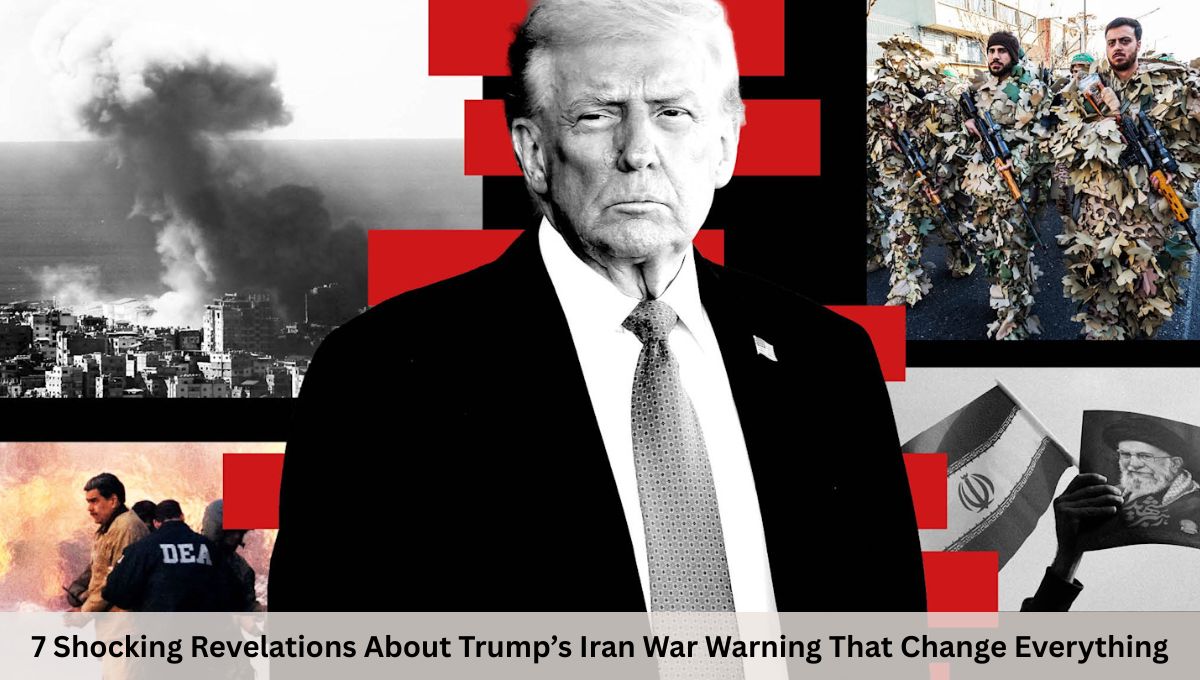
7 Shocking Revelations About Trump’s Iran War Warning That Change Everything — was it foreseen? The ongoing conflict between the United States, Israel, and Iran has rapidly escalated into one of the most dangerous geopolitical crises in recent years.
At the center of the controversy is a critical question:
was this escalation predictable—and if so, were warnings ignored?
Recent reports suggest that President Donald Trump was explicitly warned before launching strikes on Iran that retaliation against U.S. Gulf allies was a likely outcome. Yet, the President has repeatedly claimed that Iran’s response came as a complete surprise.
This contradiction has sparked intense debate across political, military, and global economic circles.
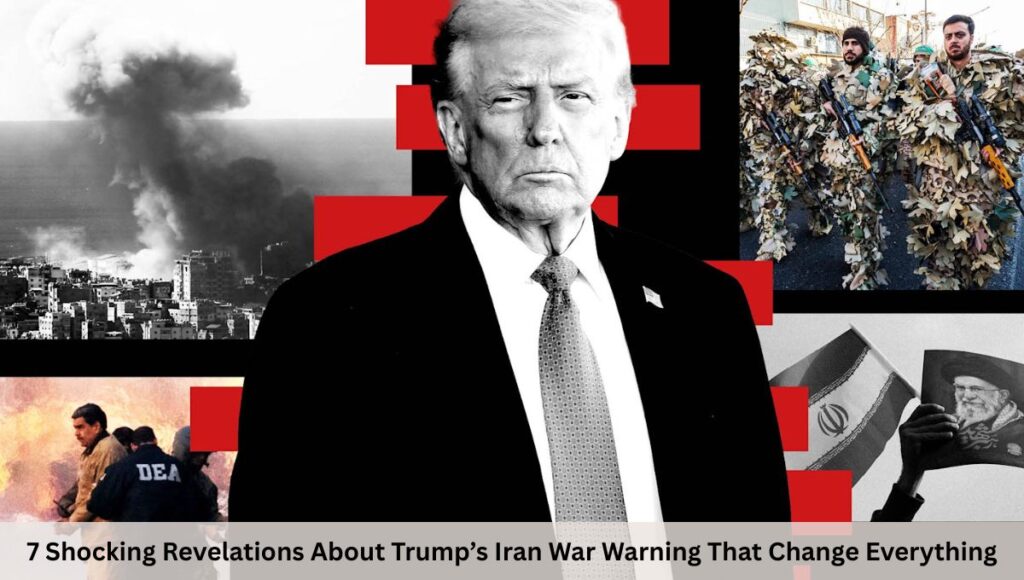
7 Shocking Revelations About Trump’s Iran War Warning That Change Everything
Pre-War Intelligence: What Was Known Before the Strikes
Warnings from Intelligence Agencies
According to multiple sources familiar with U.S. intelligence briefings, pre-war assessments clearly outlined a range of possible Iranian responses.
While retaliation was not labeled as “certain,” it was firmly identified as a credible and likely scenario.
Key intelligence insights included:
- Iran could target U.S. military bases in the region
- Gulf nations hosting U.S. assets could be attacked
- Civilian and energy infrastructure might become targets
- The Strait of Hormuz could be disrupted or closed
These assessments were reportedly shared with top decision-makers prior to the February 28 military operation.
The Risk of Regional Escalation
One of the most significant warnings was the possibility of a wider regional war.
Analysts cautioned that if Iran perceived Gulf states as supporting U.S. operations, it would likely retaliate against them.
This risk was not theoretical—it reflected long-standing Iranian military doctrine emphasizing asymmetric retaliation and regional pressure tactics.
Trump’s Public Statements vs Intelligence Reports
Claims of Surprise
Despite these warnings, President Trump publicly stated multiple times that Iran’s retaliation was unexpected:
- He claimed “nobody expected” Iran to strike neighboring countries
- He described the attacks as “shocking”
- He insisted that even top experts did not foresee such escalation
These statements have now come under scrutiny given the reported intelligence briefings.
Contradictions Raise Questions
The discrepancy between intelligence assessments and public statements raises several critical questions:
- Were intelligence warnings downplayed or ignored?
- Was there a communication gap within the administration?
- Or were political considerations influencing public messaging?
These questions are now central to the broader debate about the decision-making process behind the war.
Iran’s Retaliation: Scope and Impact
Attacks Across the Gulf Region
In the weeks following the initial strikes, Iran launched a series of coordinated attacks across multiple countries, including:
- Qatar
- Saudi Arabia
- United Arab Emirates
- Bahrain
- Kuwait
Targets included:
- U.S. military installations
- Energy facilities
- Airports and logistics hubs
- Civilian infrastructure
These strikes demonstrated Iran’s regional reach and operational capability, even after sustained bombardment.
Expansion Beyond Military Targets
Notably, Iran’s response was not limited to military objectives.
Civilian infrastructure—including hotels and energy facilities—was also affected, signaling a broader strategy aimed at economic disruption and psychological pressure.
The Strait of Hormuz Crisis
A Strategic Chokepoint
The Strait of Hormuz is one of the most critical maritime routes in the world, handling approximately 20% of global oil supply.
Intelligence sources indicate that U.S. officials were warned that Iran might attempt to disrupt or close this vital waterway.
Economic Fallout
That warning has now materialized:
- Shipping through the strait has been severely reduced
- Oil prices have surged globally
- Energy markets have become highly volatile
- Inflation concerns are rising worldwide
The disruption has triggered fears of a broader global economic slowdown.
Global Response and Lack of Coalition Support
Allies Hesitate to Intervene
One of the most striking developments has been the reluctance of U.S. allies to assist in reopening the Strait of Hormuz.
Countries including:
- Germany
- Spain
- Italy
- Japan
- Australia
have indicated they have no immediate plans to send naval support.
Reasons Behind the Reluctance
Several factors explain this hesitation:
- Lack of United Nations or NATO mandate
- Concerns about escalating the conflict further
- Limited consultation prior to the initial strikes
- Domestic political constraints
This lack of coordinated response highlights growing fractures in international alignment.
Military Developments: A War with No Clear End
Ongoing Attacks
The conflict continues to intensify:
- Iran has launched missiles targeting Israel
- Drone and rocket attacks have hit U.S. assets in Iraq
- Israeli forces continue strikes on Iranian infrastructure
- Hezbollah-linked sites have also been targeted
The situation remains highly volatile with no immediate resolution in sight.
Casualties and Human Impact
The war has already resulted in:
- At least 2,000 deaths
- Significant civilian casualties
- Widespread infrastructure damage
The humanitarian consequences continue to grow as the conflict expands.
Debate Over War Justification
Was There an Imminent Threat?
Another major point of contention is whether the war was justified by an imminent threat.
Some lawmakers have stated that:
- Briefings did not indicate urgent danger
- Claims about Iran’s nuclear timeline were not fully supported by intelligence
- The decision to strike may have been based on broader strategic considerations
Competing Narratives
The administration has cited several reasons for the strikes:
- Preventing Iran from acquiring nuclear weapons
- Neutralizing missile threats
- Protecting U.S. forces in the region
However, critics argue that these claims lack consistent intelligence backing.
Energy Markets and Global Economic Risks
Oil Price Surge
The conflict has had immediate economic consequences:
- Oil prices rose sharply following disruptions
- Markets remain highly sensitive to developments
- Supply uncertainty is driving volatility
Risk of Stagflation
Economists warn of a potential stagflation scenario, where:
- Inflation rises due to energy costs
- Economic growth slows due to uncertainty
Central banks are now facing difficult policy decisions as global risks increase.
Expert Analysis: Was This Predictable?
Consensus Among Analysts
Many regional and international experts agree on one point:
Iran’s retaliation was widely anticipated.
Diplomatic sources and analysts had long warned that:
- Iran would not respond passively to attacks
- Regional allies of the U.S. could become targets
- Escalation into a broader conflict was highly likely
Strategic Miscalculation?
If these warnings were indeed clear, the situation raises the possibility of a strategic miscalculation.
Potential factors include:
- Underestimating Iran’s willingness to escalate
- Overestimating deterrence capabilities
- Misjudging regional political dynamics
Geopolitical Implications
Shift in Regional Dynamics
The conflict is reshaping the Middle East:
- Gulf nations are reassessing their security strategies
- Iran is demonstrating resilience despite military pressure
- Non-state actors may become more active
Global Power Tensions
The crisis also has broader implications:
- Increased tensions among major global powers
- Greater competition over energy routes
- Potential long-term shifts in alliances
Conclusion: A Crisis with Lasting Consequences
The emerging narrative suggests that the current crisis was not entirely unforeseen.
Intelligence assessments, expert warnings, and diplomatic insights all pointed to the possibility of Iranian retaliation and regional escalation.
Yet, the gap between those warnings and public statements has become a central issue in understanding how the conflict unfolded.
As the war continues, its consequences are already being felt across:
- Global energy markets
- International alliances
- Regional stability
Whether this situation represents a failure of intelligence interpretation, political decision-making, or strategic planning remains an open question.
What is clear, however, is that the world is now dealing with the far-reaching impact of a conflict that may have been predicted—but not prevented.
Also Read: 9 Shocking Ways AI Helped Shape the US–Iran War
Also Read: Trump says nobody expected Iran’s Gulf attacks. Experts had warned him beforehand
Related Posts:
- 11 Explosive Warnings as Trump Vows to ‘Knock the…

- 12 Explosive Claims as Donald Trump Says Iran War…
- 10 Explosive Warnings as Donald Trump Calls Iran…
- 10 Explosive Signals: Trump Rates Iran War “15/10”…
- 10 Explosive Signals Trump Says Iran War Could End…
- 3 Explosive Conditions Iran Sets to End War with US…