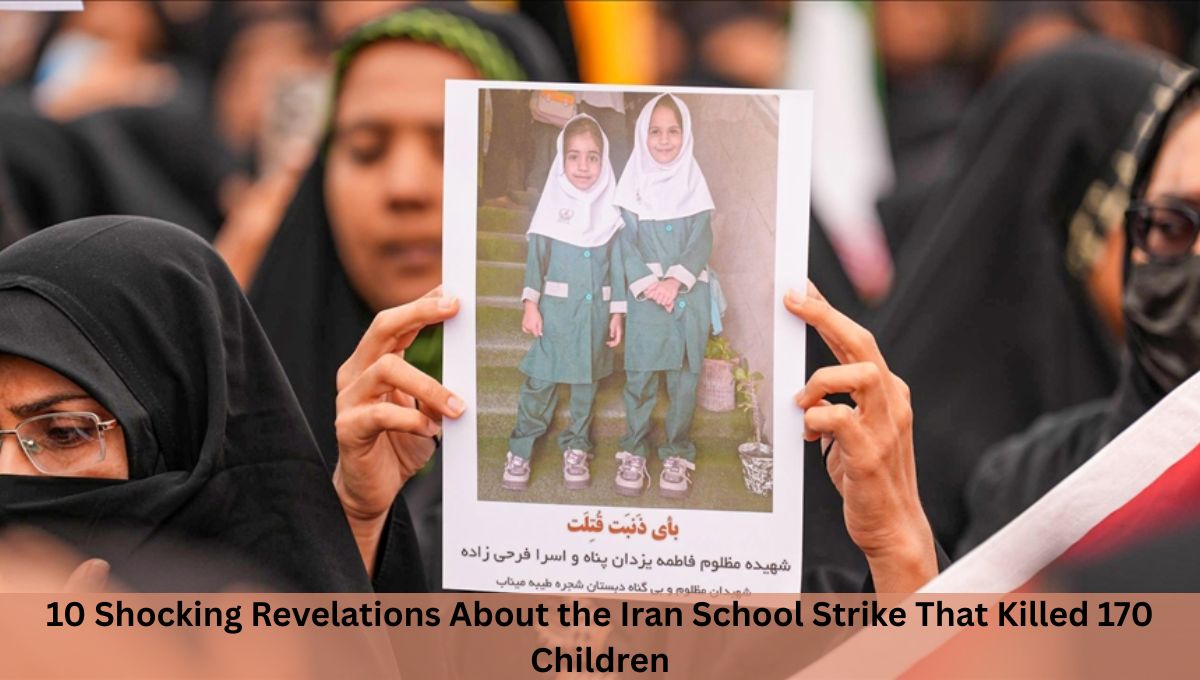
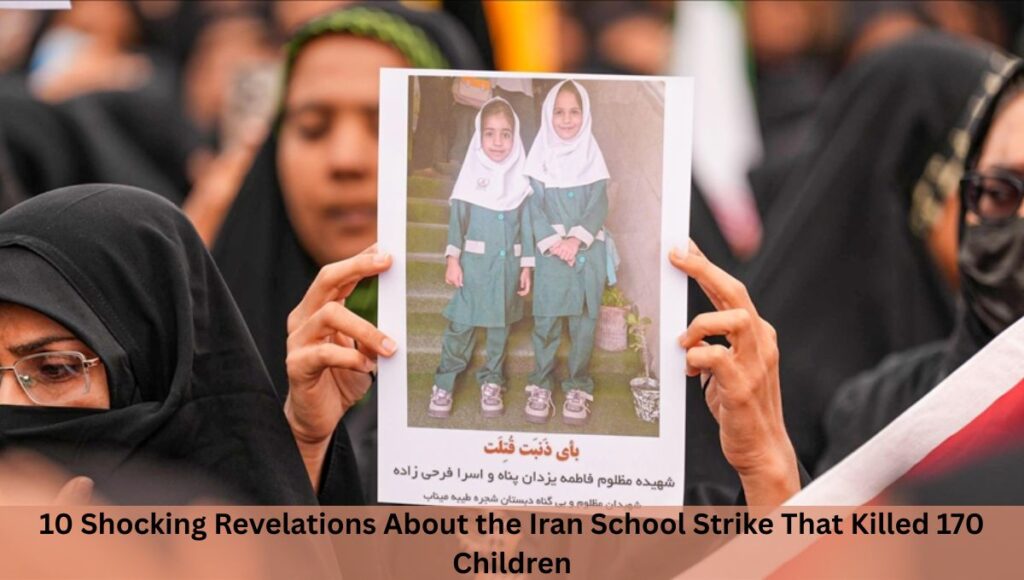
10 Shocking Revelations About the Iran School Strike That Killed 170 Children and raised global concerns. The ongoing conflict between the United States, Israel, and Iran has produced one of the most controversial and tragic incidents of the war so far — a missile strike that destroyed a girls’ school in southern Iran.
Thank you for reading this post, don't forget to subscribe!The attack, which took place on February 28 in the city of Minab in Iran’s Hormozgan province, killed more than 170 people, most of them schoolchildren between the ages of 7 and 12. The incident quickly sparked global outrage and accusations of war crimes, with Iran blaming the United States and Israel for the strike.
Now, preliminary investigations by US officials and independent analysts suggest that the tragedy may have been caused by outdated intelligence used during the targeting process.
The incident has become one of the defining moments of the war, raising urgent questions about the accuracy of modern warfare technology, the protection of civilians, and the long-term consequences of escalating military conflict in the Middle East.
10 Shocking Revelations About the Iran School Strike That Killed 170 Children
What Happened in the Iran School Strike?
The missile strike hit the Shajareh Tayyebeh girls’ elementary school in the Iranian city of Minab during the first hours of the US-Israeli military campaign against Iran.
The attack occurred at approximately 10:45 a.m. local time, a time when students were inside classrooms and teachers were conducting lessons.
The explosion destroyed the two-storey school building and caused the roof to collapse on the students and teachers inside.
According to Iranian officials and state media:
- At least 168 children were killed
- 14 teachers and staff members also died
- Dozens of others were seriously injured
Footage from the scene showed rescue teams digging through rubble while families searched desperately for survivors.
Images broadcast on Iranian television later showed small coffins draped with Iranian flags during mass funerals for the victims.
Why Minab Was a Strategic Target
Minab lies in Hormozgan province, a region that overlooks the Strait of Hormuz — one of the most strategically important waterways in the world.
Roughly 20 percent of global oil shipments pass through the Strait of Hormuz, making it a crucial chokepoint for global energy markets.
The city is also home to facilities linked to Iran’s Islamic Revolutionary Guard Corps (IRGC), including naval installations used to monitor shipping routes in the Persian Gulf.
According to satellite imagery and intelligence reports, the girls’ school was located next to a compound used by the IRGC navy.
The proximity between the school and the military base appears to have played a critical role in the targeting mistake.
Preliminary Investigation Points to US Responsibility
Early in the aftermath of the strike, both the United States and Israel denied responsibility.
However, several investigations conducted by journalists, analysts, and US officials have increasingly pointed toward the United States military as the likely source of the missile.
Reports from multiple news organizations indicate that the missile used in the attack was probably a US-made Tomahawk cruise missile.
These weapons are precision-guided missiles commonly launched from US Navy ships and submarines.
Experts say Iran does not possess Tomahawk missiles, making it unlikely that Tehran was responsible for the strike.
Preliminary findings from a US military investigation suggest that American forces were targeting a nearby Iranian military facility when the missile mistakenly hit the school.
The Role of Outdated Intelligence
One of the most significant revelations from the investigation involves the use of outdated intelligence data.
According to officials familiar with the inquiry, the US Central Command relied on targeting coordinates generated using intelligence provided by the Defense Intelligence Agency.
However, that data appears to have been based on old information about the site.
Satellite images from 2013 show that the school building was once part of an IRGC compound used for military purposes. But changes occurred in the following years.
By 2016:
- The school had been separated from the base by a fence
- A new entrance had been constructed specifically for the school
- The facility was clearly functioning as a civilian educational building
More recent satellite imagery from 2025 showed students regularly using the courtyard for recreational activities.
Investigators believe that these updates were not reflected in the targeting database used by US military planners.
Evidence From Missile Debris
Additional evidence suggesting US involvement has emerged from fragments of missile components reportedly recovered at the scene.
Photographs released by Iranian state media show pieces of metal believed to be from a Tomahawk cruise missile.
Several analysts who reviewed the images said the fragments appear consistent with parts used in US-manufactured Tomahawk missiles.
Some of the debris reportedly included markings from companies involved in producing components for the weapon system.
Experts identified:
- Actuator motors used to control missile fins
- Satellite communication components
- Parts from the missile’s jet engine
Although investigators cannot confirm with certainty that the fragments came directly from the school strike, analysts say the evidence strongly suggests a Tomahawk missile was involved.
Conflicting Statements From the White House
The political response to the tragedy has been complicated by conflicting statements from US officials.
US President Donald Trump initially suggested that Iran itself may have been responsible for the strike.
He argued that Iranian weapons systems are less accurate and could have accidentally hit the school.
However, Trump later said he did not have enough information to determine what happened and that an investigation was underway.
Defense officials have repeatedly emphasized that the United States does not deliberately target civilian sites such as schools or hospitals.
Pentagon officials say the investigation will examine every step of the targeting process to determine how the error occurred.
Iran Accuses the US of War Crimes
Iranian leaders have strongly condemned the attack and accused the United States of committing a war crime.
Iran’s Foreign Ministry described the strike as a “barbaric” act and called for international accountability.
Iranian officials have also taken the issue to the United Nations, demanding an investigation by the Security Council.
In statements posted on social media, Iranian leaders described the victims as “innocent children” and vowed that the attack would not go unanswered.
The incident has also become a major propaganda tool for Iran, with state media highlighting images of the victims and criticizing US military operations in the region.
Growing Political Pressure in the United States
The strike has also sparked controversy within the United States. Nearly all Democratic senators signed a letter demanding a full investigation into the attack.
Lawmakers have asked several questions, including:
- Whether US forces conducted the strike
- What intelligence was used to select the target
- What measures were taken to protect civilians
Some senators have also raised concerns about the use of artificial intelligence in modern warfare.
Advanced targeting systems are increasingly used by the US military to analyze large volumes of intelligence data and identify potential targets.
Critics warn that heavy reliance on automated systems could increase the risk of errors if the underlying data is outdated or incorrect.
Could Artificial Intelligence Have Played a Role?
Another emerging question in the investigation is whether artificial intelligence tools contributed to the targeting mistake.
Modern military operations increasingly rely on AI-powered systems to process satellite imagery, surveillance data, and intelligence reports.
These systems help analysts identify potential military targets more quickly. However, experts warn that AI systems are only as accurate as the data they receive.
If the targeting database still identified the building as a military facility, an AI-assisted system might have recommended it as a valid target.
Investigators are now examining whether automated targeting tools played a role in the strike.
Historical Precedents for Targeting Errors
While the Minab school strike has shocked many observers, it is not the first time a military targeting error has caused large numbers of civilian casualties.
Several similar incidents have occurred during past conflicts.
Chinese Embassy Bombing – 1999
During the NATO bombing campaign in Yugoslavia, US aircraft mistakenly bombed the Chinese embassy in Belgrade after misidentifying the building as a military target.
The attack killed three Chinese journalists and triggered a major diplomatic crisis.
Amiriyah Bunker Strike – 1991
During the Gulf War, US aircraft bombed a bunker in Baghdad believed to be a military command center.
However, the facility was being used by civilians as a shelter. More than 400 people were killed in the strike.
My Lai Massacre – 1968
One of the most infamous incidents in US military history occurred during the Vietnam War, when American soldiers killed hundreds of civilians in the village of My Lai.
The massacre sparked global outrage and significantly increased anti-war sentiment.
The Human Cost of Modern Warfare
The Minab school tragedy highlights the devastating human cost of modern military conflict.
Despite advances in precision-guided weapons and intelligence systems, civilian casualties remain a persistent risk.
International humanitarian law requires militaries to take extensive precautions to avoid harming civilians.
These rules include verifying targets and avoiding attacks if civilian harm is likely to outweigh military advantage.
Critics argue that the scale and speed of the US-Israeli bombing campaign may have increased the likelihood of errors.
Global Reaction to the Strike
The attack has sparked strong reactions across the world. Human rights organizations have called for an independent international investigation.
Several governments have expressed concern about the growing number of civilian casualties in the conflict.
The incident has also intensified debates about the legality of the broader military campaign against Iran.
Some analysts warn that such incidents could increase anti-American sentiment across the Middle East.
The Investigation Could Take Months
US officials say the investigation into the strike could take months to complete.
The inquiry will involve interviews with military planners, intelligence analysts, and commanders involved in the operation.
Investigators will also examine:
- Satellite imagery
- targeting databases
- communications records
- operational logs
The goal is to determine exactly how the targeting mistake occurred and whether new procedures are needed to prevent similar incidents in the future.
A Defining Moment in the War
As the conflict between the United States, Israel, and Iran continues, the Minab school strike has become one of its most defining and controversial moments.
For many observers, the tragedy illustrates the dangers of modern high-tech warfare and the devastating consequences when intelligence systems fail.
The final findings of the investigation may determine whether the strike was a tragic accident or the result of deeper systemic problems in military targeting processes.
Either way, the loss of so many young lives has left a lasting scar on the conflict and raised difficult questions about the future of warfare in an increasingly complex and volatile world.
Also Read: Who bombed the Iranian girls’ school, killing more than 170? What we know