

7 Powerful New Developments in the White House Shooting Case that sparked a federal terrorism probe and sweeping immigration actions by President Trump. On a cold November afternoon, just blocks from the White House, a sudden burst of gunfire shattered a routine National Guard patrol and sent shockwaves through Washington.
By the end of the day, one young soldier was dead, another was fighting for his life, and the nation found itself drawn into a political storm that now stretches from the streets of D.C. to the halls of the White House, the immigration system, and America’s long entanglement in Afghanistan.
The shooter—identified as Rahmanullah Lakanwal, a 29-year-old Afghan national and former member of a CIA-backed paramilitary unit—had traveled more than 2,500 miles across the country before opening fire on two uniformed National Guard troops stationed near Farragut Square on November 27.
The attack has since triggered a sweeping federal terrorism investigation, a massive policy response from President Donald Trump, and a fierce political debate over immigration, national security, and the use of the National Guard inside U.S. cities.
This in-depth report breaks down the seven most powerful and consequential developments emerging from the case—and what they mean for the country moving forward.
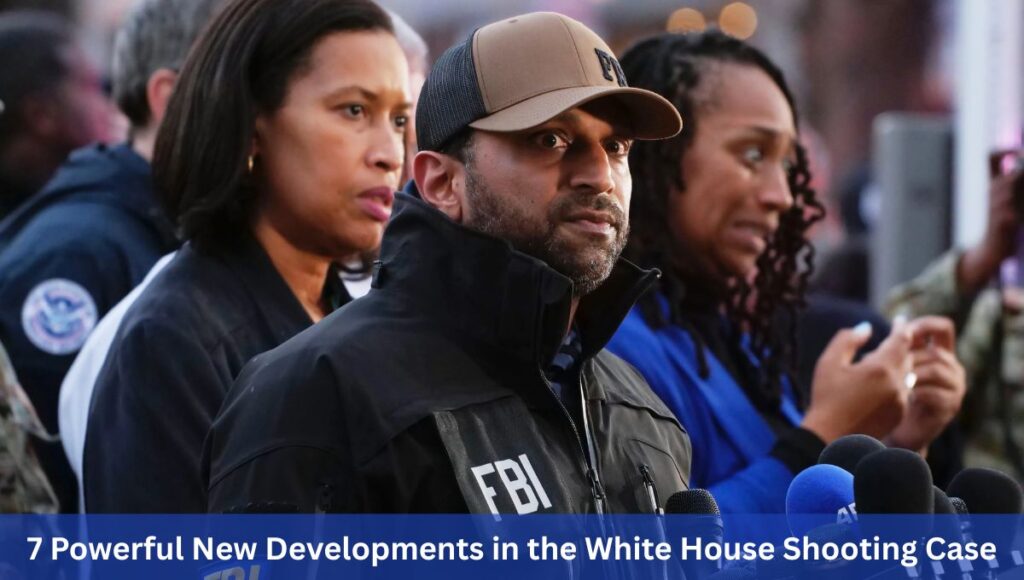
7 Powerful New Developments in the White House Shooting Case
1. A Deadly Shooting Near the White House Sparks National Outrage
Just after 14:00 EST on November 27, two West Virginia National Guard members—20-year-old Sarah Beckstrom and 24-year-old Andrew Wolfe—were conducting a routine high-visibility patrol near Farragut Square, a busy downtown hub less than half a mile from the White House.
The deployment of National Guard troops to Washington, D.C., had been controversial from the beginning. President Trump ordered more than 2,000 Guard members into the city in August, saying crime was spiraling and federal action was required. Many officials warned that using military personnel for urban policing carried serious risks. On November 27, those warnings came hauntingly true.
A Sudden Ambush
Investigators say the suspect approached the troops “around the corner” before opening fire at close range with a .357 Smith & Wesson revolver. Surveillance video confirmed that there was no verbal exchange or warning beforehand—only a sudden, violent ambush.
Beckstrom was struck multiple times. She was rushed to the hospital but died of her injuries the next morning. Wolfe was critically wounded and remains in intensive care.
The Suspect Is Subdued
At least one other National Guard member returned fire, striking the suspect. Troops then tackled him to the ground and held him until police arrived. It was only after he was disarmed and handcuffed that his identity—and his unexpected military background—began to unravel the wider story.
President Trump announced Beckstrom’s death personally, calling her a “patriot” and promising the “harshest possible justice” for her killer.
2. The Attack Was “Ambush-Style”—and Possibly Terror-Motivated
Officials who reviewed the footage and early investigative findings say the nature of the attack raises disturbing questions.
Multiple federal and city officials described the attack as:
- “Ambush-style”
- “Brazen and targeted”
- “Possibly pre-meditated”
- And President Trump publicly labeled it “an act of terror”
A 2,500-Mile Journey With Intent?
Federal investigators revealed that Lakanwal drove more than 2,500 miles from Washington state to D.C. in the days before the shooting. That alone has heightened concerns about motive and planning.
While authorities have not identified a clear ideological motive, the FBI has launched a full-scale international terrorism investigation, citing:
- His military background
- His asylum application history
- His travels
- And the deliberate nature of the attack
As of now, investigators say the motive remains unclear—a statement that leaves room for both national security implications and domestic concerns.
3. The Suspect: An Afghan Evacuee and Former U.S. Partner Force Member
Perhaps the most politically explosive aspect of the case involves the suspect’s background.
Afghan, 29, Entered the U.S. in 2021
Lakanwal arrived in the United States through Operation Allies Welcome, the federal resettlement program designed to evacuate Afghans who worked alongside U.S. forces during the war. He was part of a large, elite group evacuated at the Kabul airport during the collapse of the Afghan government in August 2021.
Served in CIA-Backed Afghan Paramilitary Units
U.S. officials confirmed he served in the so-called “Zero Units”—elite paramilitary teams created, trained, and funded by the CIA. These units conducted high-risk operations against Taliban and ISIS fighters and were considered among the most loyal U.S. partner forces.
Officials described him as a GPS tracker specialist, not a frontline assault operative, but still part of a high-intensity covert combat environment. Former colleagues described him as “sporty and jolly,” making his transformation into a suspected shooter particularly bewildering.
Asylum Approved Under Trump Administration
Lakanwal applied for asylum in 2024 and was approved in early 2025, several months into President Trump’s second term. He lived in Washington state with his wife and five children, working various temporary jobs.
This combination—Afghan nationality, U.S.-trained combat background, and recent immigration processing under Trump—has placed the case at the center of a heated political fight.
4. Legal Action: Murder Charge Expected as FBI Launches Terror Probe
Lakanwal was initially charged with:
- Three counts of assault with intent to kill while armed
- Firearm possession during a violent crime
After Beckstrom’s death, prosecutors announced they would upgrade charges to first-degree murder.
Federal Terrorism Investigation
The FBI, Department of Homeland Security, and federal prosecutors have opened a full terrorism inquiry. The investigation includes:
- Reviewing his travel history
- Forensic analysis of digital devices
- Interviews with former Afghan unit colleagues
- Cross-checking any potential foreign contacts
For now, authorities say they are not ruling out political, ideological, or personal motivations.
5. Trump’s Response: Terror Labels, Immigration Crackdown, and 500 More Troops
President Trump’s reaction was swift, emotional, and far-reaching.
a. Declaring the Shooting an Act of Terror
Within hours, Trump delivered a televised statement, calling the attack:
- “Evil”
- “Heinous”
- “A crime against humanity”
- “An act of hatred”
By labeling it an act of terror, he signaled a sweeping federal response—and justified several new policy steps he announced immediately afterward.
b. Sweeping Immigration Actions
In one of the most consequential immigration decisions of his presidency, Trump ordered:
1. Immediate re-examination of all Green Cards from “countries of concern”
These include:
- Afghanistan
- Cuba
- Haiti
- Iran
- Somalia
- Venezuela
The review is expected to affect tens of thousands of current U.S. residents.
2. Suspension of all Afghan immigration requests
This includes:
- Asylum applications
- Visa requests
- Humanitarian parole cases
3. A broader crackdown on immigrants already in the U.S.
Trump pledged to remove anyone who “does not love this country.”
Stephen Miller, one of Trump’s key immigration advisors, added that the administration would:
“Review every person brought here over the last four years.”
This statement suggests a potentially huge administrative sweep affecting Afghan evacuees and other refugee-producing regions.
c. Ordering 500 More National Guard Troops into D.C.
Despite ongoing legal challenges to using the military for domestic patrols, Trump ordered an additional 500 troops into the city.
He argued the attack proved the necessity of the deployment, saying Washington was “under siege” and required “overwhelming federal security.”
6. Political Fallout: Intensifying Debate Over Immigration, National Guard Use, and Security
The shooting immediately triggered an explosive confrontation between the Trump administration, Democrats, civil liberties groups, and former national security officials.
A. Misuse of the National Guard?
Democrats questioned whether the Guard should have been placed on city streets to perform quasi-policing duties.
Security experts said:
- The Guard lacked proper force protection
- Their visibility made them high-value targets
- Urban patrols are not their trained mission
One retired general said the attack was “a foreseeable risk.”
B. Immigration Vetting Under Scrutiny
Trump’s decision to freeze Afghan immigration and re-examine Green Cards prompted intense disagreement.
Critics argue:
- The suspect was not a recent border crosser
- He came through U.S.-created channels
- He was a U.S.-trained partner force member, not a random evacuee
Civil liberties groups fear this single incident could be used to justify mass immigration actions unrelated to the case.
C. A Federal Judge Already Ruled Trump’s Deployment “Illegal”
Three weeks before the attack, a federal judge ruled the D.C. Guard deployment violated the Posse Comitatus Act, which restricts military involvement in domestic law enforcement.
The judge paused enforcement of the ruling pending appeal—meaning the Guard remained on the streets when the shooting happened. Now, critics argue the deployment is both illegal and dangerous.
D. Fears About Rising Anti-Immigrant Sentiment
Afghan community leaders say they fear the incident will ignite a wave of suspicion and hostility toward refugees who risked their lives to help U.S. forces. With Trump promising to review every Afghan admitted since 2021, many evacuees are living under new fear and uncertainty.
7. Security Situation in Washington: Heightened Alert and Unanswered Questions
Since the attack, Washington, D.C., has remained under heightened security. More National Guard troops have been deployed, police presence has increased across key federal zones, and investigators are urgently trying to determine:
- Why did Lakanwal target the troops?
- Was the attack ideologically motivated?
- Did he have accomplices?
- Was there a triggering event?
- Was his long trip across the country planned or impulsive?
Officials say it may take weeks before a clear motive emerges.
Another Debate Rekindled
The shooting has reopened two long-running national debates:
- Should the National Guard be used as law enforcement?
- How should America evaluate, screen, and integrate former partner force members from conflict zones?
As one analyst put it, “This incident is where foreign policy, immigration, domestic security, and politics come crashing together.”
Conclusion: A Case That Will Shape Politics and Policy for Months
The deadly shooting near the White House is no longer just a criminal investigation. It has become a flashpoint with profound national implications.
It touches America’s legacy in Afghanistan.
It shakes confidence in immigration vetting.
It raises alarms about domestic militarization.
And it intensifies political tensions in a country already divided.
With one National Guard member dead, another fighting for his life, and a federal terrorism investigation underway, the fallout from this attack is only beginning. The coming weeks will reveal whether the suspect acted alone, what motivated him, and how the Trump administration’s sweeping policy responses reshape security and immigration nationwide.
One thing is certain:
This shooting will remain at the center of American political debate for a long time.
Related Posts:
- 5 Major Takeaways from the US Supreme Court's…
- 7 Heartbreaking Facts About Venezuela's Earthquake Disaster
- 9 Devastating Impacts of America’s Historic Winter…
- 11 Explosive Revelations From Ted Cruz’s Leaked…

- 7 Powerful Insights into Zohran Mamdani’s Historic…

- 5 Key Developments as Israel Confirms Hamas Handed…
