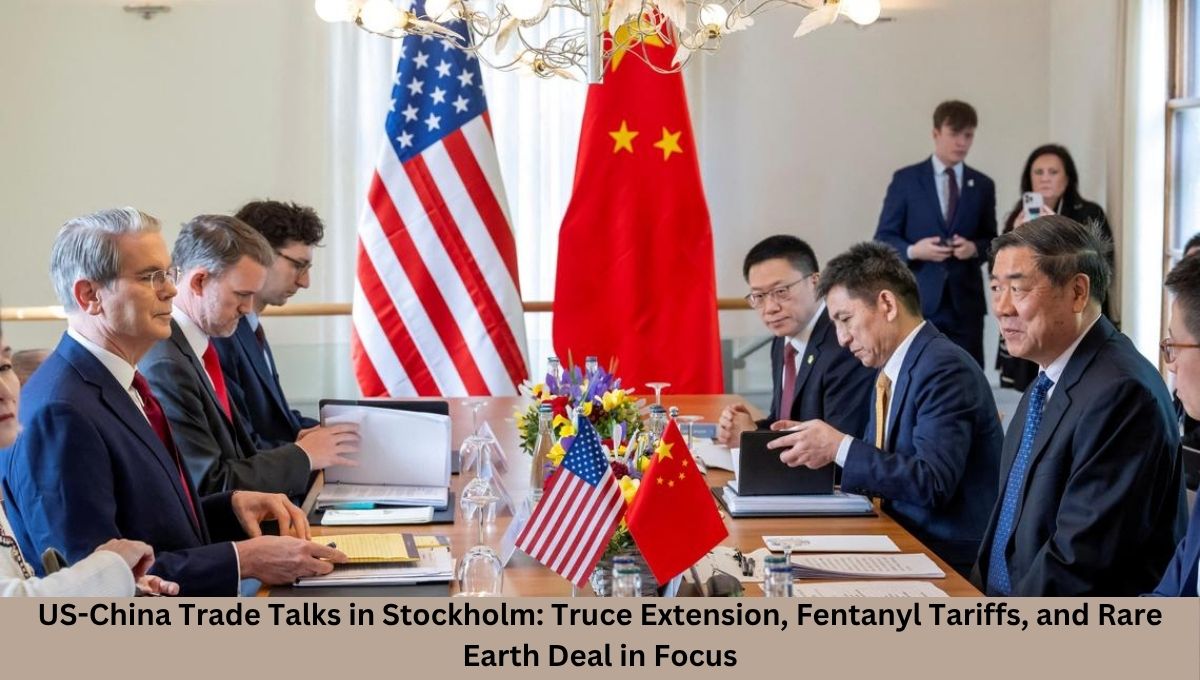
High-level US-China Trade Talks in Stockholm: Truce Extension, Fentanyl Tariffs, and Rare Earth Deal in Focus. Talks between US and Chinese officials began today in Stockholm, as the August 12 tariff truce deadline looms. This round of negotiations marks the third high-level dialogue in under three months and could pave the way for a fall summit between President Donald Trump and Chinese President Xi Jinping.
US-China Trade Talks in Stockholm: Truce Extension, Fentanyl Tariffs, and Rare Earth Deal in Focus
Why Stockholm? A Strategic Neutral Ground
The choice of Stockholm stems from quiet diplomacy during the recent G20 summit in South Africa.
Swedish Finance Minister Elisabeth Svantesson confirmed that both US and Chinese negotiators agreed on Sweden as a neutral location for advancing discussions.
“We’re hopeful this round will offer some breakthroughs, or at least preserve the calm we’ve achieved,” said US Treasury Secretary Scott Bessent.
Truce Extension on the Horizon
According to the South China Morning Post, insiders suggest a three-month extension of the current tariff pause is highly likely.
The existing truce, due to expire August 12, temporarily halted months of aggressive tit-for-tat tariffs.
“Trade is in a very good place with China,” Bessent said, noting that the talks are progressing constructively.
Key Agenda Items: Fentanyl, Technology, and Energy
Negotiators are focusing on three key issues:
- Fentanyl-linked Tariffs: Trump’s 20% tariff on Chinese imports cites fentanyl trafficking concerns.
- Oil Imports: China continues to purchase oil from Russia and Iran despite US sanctions.
- Tech Export Controls: Semiconductors, rare-earth elements, and AI chip restrictions are hot-button issues.
Fentanyl Crisis at the Heart of Trade Tensions
The Trump administration insists the fentanyl-related tariffs remain until China takes stronger steps to control precursor exports.
Though Beijing recently tightened regulations on two key chemicals, Washington wants more action.
China, however, denies culpability for the US opioid crisis. Chinese scholar Sun Chenghao stated, “Cooperation is possible, but only if the US stops politicizing the issue.”
According to the Eurasia Group, progress here could be key. “That then lowers tariffs on the US side, which then opens the door for China to lower tariffs,” said Sean Stein of the US-China Business Council.
China’s Strategic Responses and Concessions
Beijing has shown signs of goodwill: lifting an antitrust probe into DuPont and increasing rare-earth mineral exports.
China also dialed back retaliatory tariffs, although it still imposes 10–15% on US imports introduced in February.
Simultaneously, China’s energy imports from the US have nearly stopped, with state-run firms seeking alternative suppliers.
Oil Imports From Sanctioned States: A Sticking Point
China continues to buy crude oil from Russia and Iran both under severe US sanctions. “China won’t play along,” said Lv Xiang of the Chinese Academy of Social Sciences, signaling the likelihood of an impasse on this issue.
Still, Bessent suggested Washington is open to dialogue. Analysts believe Beijing could link oil trade talks to broader security or Taiwan-related concessions an unlikely tradeoff for the Trump administration.
Tech and AI Export Controls Take Center Stage
Technology controls remain deeply contentious. The Financial Times recently revealed the US temporarily paused AI chip export restrictions to keep talks from collapsing.
China wants rollback on the US’s layered 55% tariffs on high-tech goods. In return, Washington seeks guarantees that sensitive exports won’t bolster China’s military ambitions.
Rare Earth Minerals: China’s Trade Leverage
China holds the majority of the world’s rare-earth mineral reserves vital for clean energy and defense industries.
Earlier negotiations in Geneva and London focused narrowly on reopening rare-earth trade channels.
Scott Kennedy of CSIS said, “Geneva and London were just damage control. Stockholm might finally confront the root causes of US-China economic rivalry.”
Manufacturing Overcapacity on the Table
The US delegation has voiced concern over China’s industrial overproduction blamed for distorting global trade.
Washington is urging Beijing to curb excess production and promote domestic consumption.
Chinese Premier Li Qiang recently acknowledged the problem during EU talks: “We see this problem too.”
Trump’s String of Trade Victories Piles Pressure on China
The Stockholm negotiations follow Trump’s recent trade wins:
- A $600 billion EU investment deal with 15% tariffs on EU goods.
- A $550 billion Japanese investment pact with reduced tariffs.
- A UK deal slashing tariffs to just 10%—the lowest among US trading partners.
With major agreements already in place, analysts say Beijing is under pressure to finalize a favorable deal before new sectoral tariffs take effect on semiconductors, pharmaceuticals, and heavy equipment.
Trump-Xi Summit in Sight
A successful round in Stockholm could set the stage for a Trump-Xi meeting later this year, possibly in South Korea. Xi extended an invitation last month, but no official date has been confirmed.
Wendy Cutler of the Asia Society said, “The Stockholm meeting will be important in starting to set the stage for a fall meeting between Trump and Xi.”
Sun Chenghao believes a summit could provide political cover for a lasting deal. “Xi could offer to fulfill earlier farm import promises in exchange for reduced fentanyl-related tariffs,” he said.
What If the Truce Fails?
If no extension is agreed upon, tariffs could spike back to over 100%, essentially triggering a trade embargo.
Such a scenario could devastate global supply chains and rattle markets already struggling with inflation and geopolitical instability.
According to Gabriel Wildau of Teneo, “It’s possible Trump cancels the 20% fentanyl tariff, but expect only a limited agreement.”
He added that China hawks in the administration may prefer a narrow win to avoid giving away strategic leverage.
Conclusion: A Crucial Test in Stockholm
While a grand bargain remains elusive, Stockholm offers a vital opportunity to stabilize US-China relations. With global economic stakes and political optics on the line, even a modest truce extension would be significant. What unfolds in Stockholm could define the trajectory of US-China trade for the rest of 2025 and possibly beyond.
Also Read: US-China Trade Talks Yield Fragile Framework Agreement: Markets Watch Cautiously
Also Read: What next for US, China after talks end with no trade deal?