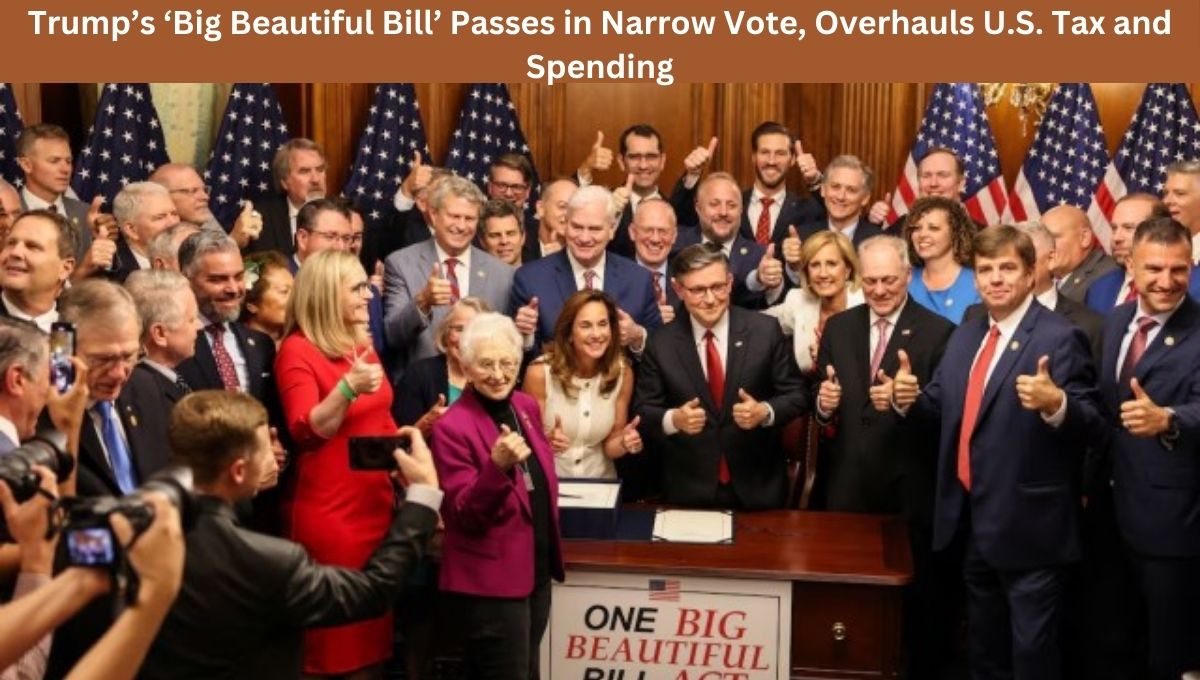
In a dramatic legislative victory, Trump’s ‘Big Beautiful Bill’ Passes in Narrow Vote, Overhauls U.S. Tax and Spending. President Donald Trump’s sweeping $4.5 trillion tax and spending plan, dubbed the “One Big Beautiful Bill,” narrowly passed the U.S. House of Representatives by a 218–214 vote on Thursday. The bill, already approved in the Senate by a 50–50 deadlock broken by Vice President JD Vance, now heads to the White House for Trump’s signature at a scheduled July 4 ceremony at 5 p.m. EDT.
“This is going to be a rocket ship for America,” Trump declared. “The biggest bill ever signed of its kind.” Despite fierce Democratic opposition and internal Republican dissent, the bill marks a monumental shift in American economic policy, making Trump’s 2017 tax cuts permanent, expanding border security, and cutting Medicaid and food assistance programs. It also raises the national debt ceiling by $5 trillion to prevent default.
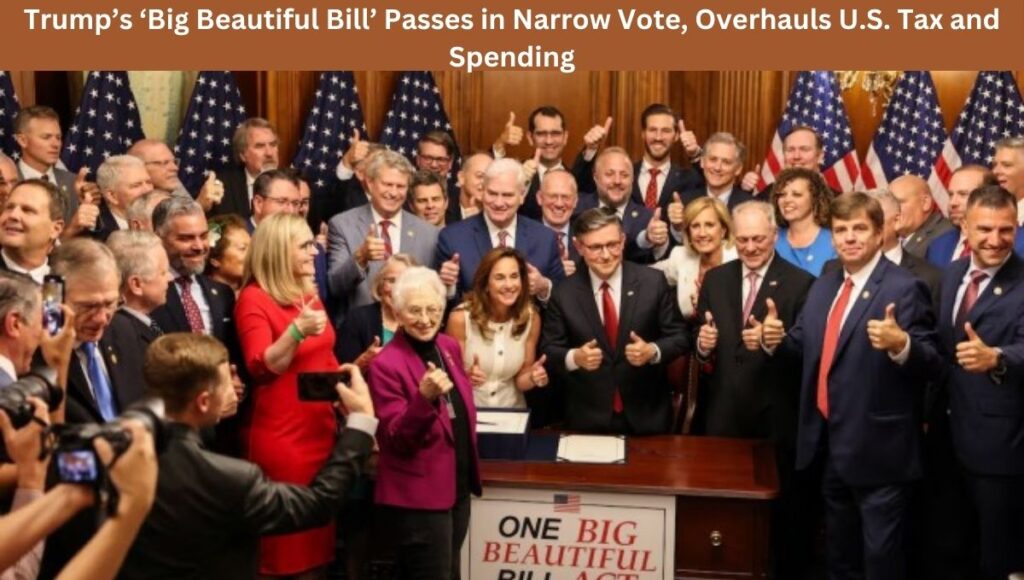
Trump’s ‘Big Beautiful Bill’ Passes in Narrow Vote, Overhauls U.S. Tax and Spending
What’s Inside Trump’s Big Beautiful Bill?
The One Big Beautiful Bill is an 869-page legislative package that reflects Trump’s second-term agenda. It combines deep tax cuts, military expansion, and immigration enforcement funding with steep reductions in healthcare and social welfare programs.
Key Provisions Include:
- Permanent extension of 2017 tax cuts
- $150 billion for military expansion
- $150 billion for immigration enforcement
- $46 billion for border wall construction
- 10,000 new ICE hires with $10K bonuses
- $1.1 trillion in spending cuts, mainly from Medicaid and SNAP
- Elimination of clean energy and EV subsidies
- New deductions for tipped income, overtime pay, and senior benefits
According to the Congressional Budget Office (CBO), the bill will add $3.3 to $3.4 trillion to the national debt over 10 years and could result in up to 17 million Americans losing health insurance.
Tax Cuts for All But Benefits Aren’t Equal
Trump and GOP leaders have marketed the bill as “jet fuel for the economy” that lowers taxes across the board. But a deeper analysis reveals uneven benefits across income levels:
Low-Income Households (<$50,000 AGI):
- Tax cuts: $150–$630
- Child Tax Credit increased to $2,200
- Standard deduction raised to $15,750 (single) / $31,500 (joint)
- Offset by Medicaid cuts, leaving up to 12 million uninsured
- SNAP recipients must work 80 hours/month
Middle-Income Households ($50,000–$200,000):
- Tax cuts of $1,000 to $3,000
- Overtime and tips now deductible (up to $25,000)
- SALT deduction raised to $40,000 through 2029
- Deductions expire in 2028, phasing out benefits
High-Income Households ($217,000+):
- Up to $21,000 in tax cuts for top 5%
- Estate tax exemption raised to $15 million (single)
- Pass-through deduction (QBI) increased to 23%
- Top 1% receive an average $12,500 tax cut
The Tax Policy Center warns that while 85% of households will see benefits in 2026, only 70% will retain those benefits by 2030.
How the Bill Passed: GOP Pressure and Democratic Resistance
The vote came after months of internal Republican debates, late-night sessions, and direct pressure from Trump. Speaker Mike Johnson led the GOP effort to keep the party united.
“We’ve waited long enough,” Johnson said. “With this One Big Beautiful Bill, we are going to make this country stronger, safer, and more prosperous.” But not everyone was convinced.
Reps. Thomas Massie (KY) and Brian Fitzpatrick (PA) voted against the bill, citing fears over the national debt and Medicaid impacts. Massie warned the bill could fuel inflation and raise interest rates.
Hakeem Jeffries Delivers Historic Speech Against the Bill
Democratic House Minority Leader Hakeem Jeffries delayed the final vote with a record-breaking 8-hour, 46-minute speech, slamming the bill as “a disgusting abomination.”
“This one big, ugly bill hurts everyday Americans and rewards billionaires,” Jeffries said. “We’re not here to bend the knee to any wannabe king.”
The speech, delivered overnight, echoed Democratic frustrations that the bill would redistribute wealth upward while gutting essential programs for working families.
What’s Funded: Border, Military, and Tax Cuts
Immigration Enforcement – $150B:
- $46B for border wall expansion
- $45B for new detention facilities with 100,000 beds
- 10,000 ICE hires, each with a $10,000 signing bonus
- Expands Trump’s “Remain in Mexico” asylum policy
Military Expansion – $150B:
- Funding for Trump’s “gold dome” missile defense
- Modernization of nuclear triad and cyber capabilities
Tax Relief – $4.5T Over 10 Years:
- Permanent 2017 tax cuts
- New tax breaks for seniors, gig workers, parents
- Deductions for auto loans, tips, and overtime
What’s Cut: Healthcare, Food Assistance, Green Energy
Medicaid:
- Largest cuts since the 1960s
- Work requirements imposed
- Enrollment restrictions on low-income adults
- Federal funding limits to states
SNAP (Food Stamps):
- Mandatory 80-hour work rule
- Millions risk losing access to food assistance
Green Energy:
- Subsidies for solar, wind, and EVs repealed
- Electric vehicle tax credits eliminated
Rural Healthcare:
- Despite a $50B set-aside, rural hospitals may shut down due to Medicaid loss
Senator Lisa Murkowski (R-AK), despite voting for the bill, later criticized its effects on vulnerable Alaskans and called the process “frantic and awful.”
Political Fallout: Democrats Plan to Campaign Against the Bill
With the 2026 midterms on the horizon, Democrats are poised to use the bill as a political weapon, highlighting its cuts to healthcare and food aid.
“A dangerous checklist of extreme Republican priorities,” said former Speaker Nancy Pelosi.
Rep. Deborah Ross (D-NC) echoed the sentiment:
“Shame on those who voted to hurt so many in service of so few.” Polls reflect public discomfort. A Quinnipiac University poll found that only 29% of Americans support the bill, while 55% oppose it.
Economic Warnings: Credit Downgrade, Investor Anxiety
The bill’s fiscal implications have already sent shockwaves through financial markets. Ratings agency Moody’s downgraded U.S. debt in May, citing ballooning deficits.
Global investors fear that the added debt could:
- Push up interest rates
- Undermine Treasury bond confidence
- Trigger long-term inflation risks
Analysts warn that the bill effectively transfers wealth from younger to older Americans, with future generations footing the bill through national debt.
Trump’s July 4 Celebration and a Defining Legacy
The signing ceremony is scheduled for July 4 at the White House, a symbolic date to mark Trump’s legislative victory. The event is expected to be lavish and celebratory, with Trump planning to showcase the bill as a cornerstone of his second-term agenda.
“The USA is the HOTTEST country in the world by far!” Trump wrote on Truth Social.
“Promises made, promises kept,” Vice President JD Vance added.
With the passage of the One Big Beautiful Bill, Trump has locked in key parts of his MAGA agenda ensuring they will shape the economic and political landscape for years to come.
Conclusion: A New Era of Trump-Era Economics
The One Big Beautiful Bill represents one of the most consequential legislative shifts in decades. While Republicans celebrate it as a boost for growth and national security, critics warn it will hurt the nation’s most vulnerable and burden future generations with massive debt.
As America watches the fireworks this Independence Day, the real explosion may be political with 2026 midterms looming and the nation divided over the cost and consequences of Trump’s vision for America.
Also Read: Elon Musk Slams Trump’s ‘Big Beautiful Bill’ as “Utterly Insane and Destructive”
Also Read: Senate sets record for longest vote-a-rama as Trump’s ‘big, beautiful bill’ teeters