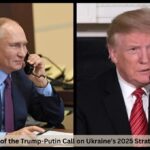
7 Urgent Truths Behind Trump’s Controversial Ukraine Peace Plan as European allies and Kyiv warn it heavily favors Russia. The geopolitical world is bracing for a decisive week. As the United States pushes Ukraine to respond to a controversial 28-point peace plan spearheaded by President Donald Trump, deep fractures have emerged—not only between Washington and Kyiv, but within the American political establishment and across key European capitals.
The stakes could not be higher. The plan requires territorial concessions to Russia, caps on Ukraine’s military, and pledges against NATO membership—terms many Ukrainian officials privately say look dangerously close to a Russian draft. Yet US Secretary of State Marco Rubio insists the proposal was “authored by the United States.”
And in Moscow, President Vladimir Putin has publicly signaled the plan could serve as the basis of a final settlement—while openly threatening new offensives if Ukraine rejects it. As Geneva prepares to host high-stakes talks, the question looms: Is Trump’s peace proposal a path to ending the war—or a blueprint that reshapes European security on Russia’s terms?

7 Urgent Truths Behind Trump’s Controversial Ukraine Peace Plan
Washington Insists: “The US Authored the Plan”
A firestorm erupted after senior Republican senator Mike Rounds claimed that Secretary of State Marco Rubio privately told lawmakers the plan originated from the Russian side. Rounds described the leaked document as a “Russian wish list,” arguing it did not reflect US policy.
Rubio rapidly walked back that characterization.
Rubio’s Public Reversal
On social media, Rubio declared:
“The peace proposal was authored by the US. It is based on input from the Russian side. But it is also based on previous and ongoing input from Ukraine.”
The State Department reinforced this message, calling reports that the document was Russian-sourced “blatantly false.”
But the damage was done: confusion burst into the open, and the credibility of America’s diplomatic messaging took a hit at a critical moment.
What the 28-Point Peace Plan Actually Contains
Though not officially published, the Trump Ukraine peace plan has leaked widely across Europe, giving allies a clear sense of its most contentious components.
Key Ukrainian Concessions
The plan reportedly demands that Ukraine:
- Withdraw forces from parts of eastern Donetsk that Kyiv currently controls
- Accept de facto Russian control of Donetsk, Luhansk, and Crimea
- Freeze the front line in Kherson and Zaporizhzhia along current Russian-held positions
- Limit its military to 600,000 personnel
- Drop its long-standing push for NATO membership
European fighter jets would be stationed in Poland as part of security assurances, but no robust enforcement mechanism has been described.
What Russia Gets
Russia would gain:
- A freeze-in-place territorial settlement
- Troop withdrawal of Ukrainian forces from contested areas
- Pathways toward the lifting of sanctions
- Potential reintegration into the G7
These provisions immediately triggered alarm across Europe.
European Allies Push Back Hard
At the G20 summit in South Africa, leaders from Canada, Finland, France, Ireland, Italy, Japan, the Netherlands, Spain, the UK, Germany, Norway, and senior EU officials issued a rare joint statement clearly rebuking parts of the US plan.
European Security Concerns
Their concerns focused on:
- Changing borders by force, which they insist is unacceptable
- Military caps on Ukraine, which could leave the country vulnerable
- Concessions to Russia without NATO or EU input
- Provisions that may rearrange European security without European consent
French President Emmanuel Macron put it bluntly:
“The plan cannot simply be an American proposal. It must guarantee security for all Europeans.”
German Chancellor Friedrich Merz went further, saying Europe is “still quite a long way from a good outcome for everyone.”
The clear message: Europe will not rubber-stamp a settlement that locks in Russian territorial gains.
Zelenskyy Warns of a “Very Difficult Choice”
In Kyiv, the mood is tense. President Volodymyr Zelenskyy made an unusually somber national address, saying Ukraine now faces a choice between “losing dignity” or risking the loss of a vital ally—the United States.
Kyiv’s Dilemma
Zelenskyy’s concerns stem from:
- The plan’s territorial concessions
- The military cap
- The abandonment of NATO membership
- US pressure to respond by November 27
- Putin’s implicit threats of further offensives
He has not rejected the plan outright, but insists Ukraine will fight to maintain its sovereignty, dignity, and freedom.
Putin Welcomes the Plan—But Issues a Dark Warning
In Moscow, President Vladimir Putin praised the plan as a potential foundation for a settlement—an unusual endorsement of a US proposal. He acknowledged the US had asked Russia to “show flexibility,” and said Moscow agreed despite “complex issues.”
Then he warned:
“If Kyiv does not want to discuss President Trump’s proposal, the events of Kupiansk will be repeated in other key sectors of the front.”
Translation from Diplomatic Terms
Putin effectively told Ukraine:
- Accept the deal, or
- Prepare for Russia to seize more territory
Given recent Russian gains around Bakhmut, Avdiivka, and Zaporizhzhia, Ukraine views the threat as credible.
Trump’s Position: “Fight His Little Heart Out”
Speaking from the White House, Trump said Zelenskyy could “fight his little heart out” if he refuses the plan, but added that the proposal was not his “final offer.”
He reiterated:
- The war “should have ended a long time ago”
- The conflict would never have started if he’d been president in 2022
- The US is determined to end the war quickly
Trump’s remarks underscore the pressure Kyiv faces.
Confusion Inside Washington
The contradicting statements between Marco Rubio, Mike Rounds, and the State Department have created uncertainty about who truly authored the plan—and whose interests it reflects.
The Key Players
- Marco Rubio — insists the plan is American
- Mike Rounds — claims Rubio told senators it was Russian-sourced
- Steve Witkoff — Trump’s informal diplomatic envoy, recipient of the draft
- Tommy Pigott — State Department communications lead, denies Russian authorship
The mixed messaging has raised alarms among European diplomats who fear internal US disarray is shaping the contours of a high-risk peace initiative.
Geneva Becomes the Center of Global Diplomacy
High-level delegations from:
- The US
- Ukraine
- The UK
- France
- Germany
will convene in Geneva to refine the peace plan.
Ukraine’s Negotiating Team
Zelenskyy appointed:
- Andriy Yermak (Head of Presidential Office) — to lead negotiations
- Rustem Umerov — national security council secretary
Their mandate is clear: defend Ukraine’s national interests and prevent a future Russian invasion.
Although the decree mentions participation from Russian representatives, Moscow has not confirmed attendance.
Russia Continues Battlefield Advances
Even as diplomats talk, Russia is pressing its advantage on the ground.
Recent developments include:
- Capture of Zvanivka in the Donetsk region
- Major drone and missile attacks across Ukraine
- Intensifying pressure in the Pokrovsk axis
- Tactical gains in the Zaporizhzhia corridor
- Strikes on Ukrainian energy infrastructure
- A new winter campaign taking shape
Ukraine’s air force shot down 89 of 104 drones launched overnight, most Iranian-designed.
War continues as negotiations proceed—giving Moscow leverage.
Europe Scrambles to Align Its Response
European leaders, caught off guard by Washington’s plan, are trying to maintain unity with the US while signaling clear red lines.
Nordic-Baltic Statement
Leaders of Estonia, Latvia, Lithuania, Denmark, Finland, Sweden, Norway, and Iceland declared:
“Solutions that respect Ukraine’s sovereignty have our full support. We will continue to arm Ukraine.”
European Council Moves Quickly
President António Costa has called a special EU meeting on Ukraine to prevent fragmentation of Europe’s position before the Geneva talks.
Can a Peace Plan Succeed Without Ukraine’s Full Consent?
This question now dominates diplomatic circles.
Germany’s Friedrich Merz stressed:
“Wars cannot be ended by major powers over the heads of the countries affected.”
This statement strikes at the heart of the European critique:
Any deal that forces Ukraine to comply risks becoming an unstable peace that collapses under pressure.
The Diplomatic Dilemma
To end the war, negotiators must reconcile:
- Ukraine’s sovereignty
- Russia’s demands
- European security
- Trump’s deadline
- US political divisions
No solution satisfies all parties.
Why This Plan Matters for Global Security
This is not just about Ukraine. The peace plan—if pushed through—could set global precedents:
- Major powers can force territorial concessions on smaller states
- Borders can be altered by invasion
- Security guarantees may come with troop caps
- Russia could regain its global economic foothold
- NATO expansion could be halted
Europe fears this agreement could rewrite the post-Cold War security order.
What Happens Next?
The next 72 hours are critical.
Key events to watch
- Talks in Geneva between US, Ukraine, and European allies
- Possible Russia-US follow-up meeting
- Ukraine’s formal reply to the plan
- EU’s special summit on Ukraine
- Potential escalations on the front line
- Political fallout in Washington
If Zelenskyy rejects the plan, Putin has hinted at major new offensives.
If Ukraine accepts, domestic backlash could be severe.
If Europe refuses to align with the US, transatlantic unity could crack.
The world is entering one of the most consequential weeks of the entire Russia-Ukraine war.
Conclusion: A Peace Plan That Could Reshape the World
Trump’s 28-point peace plan is more than a diplomatic proposal—it’s a geopolitical earthquake. With Washington insisting it authored the plan, Russia signaling approval, Europe showing alarm, and Ukraine struggling to protect both dignity and alliances, global diplomacy is entering uncharted waters.
The coming days will determine:
- Whether Ukraine keeps US support
- Whether Europe accepts American leadership on security
- Whether Russia locks in major territorial gains
- Whether the war ends—or escalates into an even more dangerous phase
For now, all eyes turn to Geneva, where the future of Ukraine—and European stability—may be decided.
Also Read: 7 Critical Shifts in Trump’s Ukraine Peace Plan Rocking Global Diplomacy
Also Read: Zelensky Says Ukraine Faces Losing Dignity as Trump Issues Deadline to Sign His New Peace Plan