

Aimed at halting the devastating conflict in Gaza, Hamas Agrees to Release 10 Hostages Amid US Ceasefire Proposal, Seeks Amendments on Gaza Withdrawal and Aid. Hamas has officially responded to the US ceasefire proposal.The Palestinian group agreed to release 10 living hostages and 18 bodies in exchange for the release of a number of Palestinian prisoners held by Israel.
This move aligns with the plan presented by US Middle East envoy Steve Witkoff, who proposed a 60-day ceasefire aimed at easing tensions and opening humanitarian corridors in Gaza.
According to Hamas, the ceasefire proposal’s goals include achieving a permanent end to the fighting, a full Israeli withdrawal from the Gaza Strip, and the unhindered flow of humanitarian aid to the beleaguered population. This announcement followed extensive national consultations by Hamas leadership, signaling a significant though cautious step toward de-escalation.
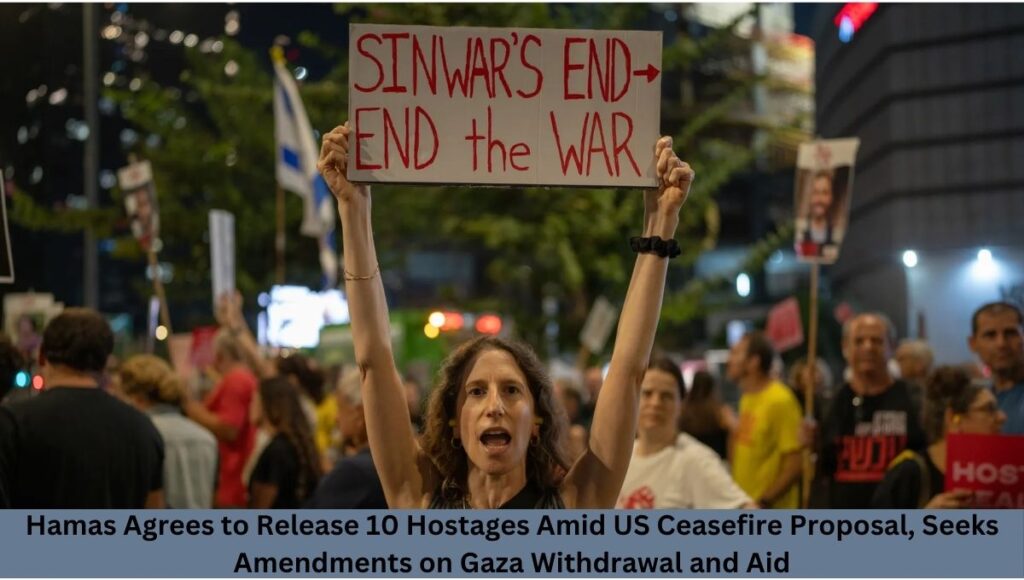
Hamas Agrees to Release 10 Hostages Amid US Ceasefire Proposal, Seeks Amendments on Gaza Withdrawal and Aid
Key Demands: Israeli Withdrawal and Humanitarian Aid
Despite the positive response to the hostage exchange, Hamas is seeking several amendments to the ceasefire proposal, particularly focusing on:
- The timing and phased release of hostages
- Guarantees from the US regarding the ceasefire enforcement
- Delivery and distribution of humanitarian aid
- Complete withdrawal of Israeli forces from Gaza
A senior Hamas official, speaking anonymously to the press, emphasized that these conditions are critical to ensure a sustainable peace. The US envoy Steve Witkoff however described Hamas’s response as “totally unacceptable,” urging the group to accept the deal as the framework for imminent negotiations.
Israel’s Position and Political Calculations
While Hamas shows a willingness to negotiate, Israel maintains a firm stance on the conditions for ending the war. Israeli officials insist that Hamas must:
- Completely disarm
- Dismantle its military and governing structures in Gaza
- Release all remaining hostages (currently estimated at 58 alive)
Israeli Prime Minister Benjamin Netanyahu reportedly told hostage families that Israel accepted the ceasefire proposal. Yet, the prime minister’s office has declined further comment publicly.
Netanyahu’s political position is widely viewed as a factor in the ongoing military campaign, with some analysts suggesting that a ceasefire could weaken his government domestically.
The Humanitarian Crisis in Gaza: Growing Hunger and Aid Blockades
The situation in Gaza remains dire amid an ongoing blockade imposed by Israel that has lasted nearly three months. The blockade has pushed more than two million Palestinians to the brink of famine.
Hunger and desperation have led to the looting of 77 UN aid trucks, primarily carrying flour destined for bakeries across Gaza. Aid organizations, including the World Food Program (WFP), have warned repeatedly of a looming famine and the urgent need for increased aid deliveries.
Although Israel allowed some humanitarian trucks into Gaza recently, the volume remains drastically below pre-conflict levels. Current deliveries amount to approximately 579 trucks per week, compared to the 600 trucks per day permitted during previous ceasefires. This stark reduction has severely limited food, medicine, and fuel supplies.
Impact of the Conflict: Casualties and Destruction
The conflict was sparked by a brutal Hamas attack on October 7, 2023, which killed over 1,200 Israelis and resulted in the abduction of 251 hostages.
In response, Israel launched an extensive military operation in Gaza, resulting in over 54,000 Palestinian deaths, according to Gaza health officials. The campaign has devastated the Gaza Strip, destroying infrastructure and leaving many displaced.
The Role of the United States and International Community
The United States has played a central role as a mediator in the conflict, with the ceasefire proposal originating from Washington. However, critics accuse the US of bias, emphasizing Israel’s demands while not sufficiently addressing Gaza’s worsening humanitarian conditions. Former President Donald Trump expressed optimism, saying a deal was “very close,” but the overall peace process remains fragile.
International aid groups have condemned the insufficient aid deliveries and urged for safe, consistent access to Gaza. Philippe Lazzarini, head of the UN agency for Palestinian refugees, called the limited aid “a mockery of the mass tragedy” unfolding in Gaza.
Challenges to Peace: Deep Distrust and Political Deadlock
Despite some progress, the ceasefire negotiations face significant obstacles. Hamas insists on a full Israeli withdrawal and guarantees for uninterrupted aid, while Israel demands Hamas disarmament and complete hostage release before any truce. The deep mistrust between the two sides complicates efforts to restore calm.
The ongoing blockade, the devastating humanitarian situation, and political calculations by both Israel and Hamas contribute to a complex and volatile situation. The international community watches closely, hoping diplomacy can eventually bring relief to Gaza’s civilians and a lasting peace.
Conclusion: A Fragile Opportunity for Ceasefire Amid Crisis
Hamas’s conditional agreement to release hostages marks a rare moment of potential progress in the conflict, but their demand for a full Israeli withdrawal and improved aid access reveals the continued challenges ahead.
With Gaza’s humanitarian crisis worsening daily, urgent international pressure and cooperation are critical to prevent further suffering.
The success of the US ceasefire proposal depends on whether both Hamas and Israel can make necessary compromises and if global actors will effectively support humanitarian efforts. For now, the path to peace remains fragile but not impossible.
Also Read: Israel Accepts US-Backed Gaza Ceasefire Proposal; Hamas Still Wary of Truce Terms
Also Read: Trusting Trump: Why Hamas gambled on giving up Gaza hostages
Related Posts:
- Israel–Hamas Ceasefire Under Strain: 4 More Hostage…

- Trump’s 20-Point Gaza Peace Plan Gains Urgent Global…

- 5 Major Takeaways from the US Supreme Court's…

- 7 Heartbreaking Facts About Venezuela's Earthquake Disaster

- Afghanistan–Pakistan War 2025: Inside the 48-Hour Ceasefire

- Trump’s Historic Gaza Ceasefire Deal 2025: A…
