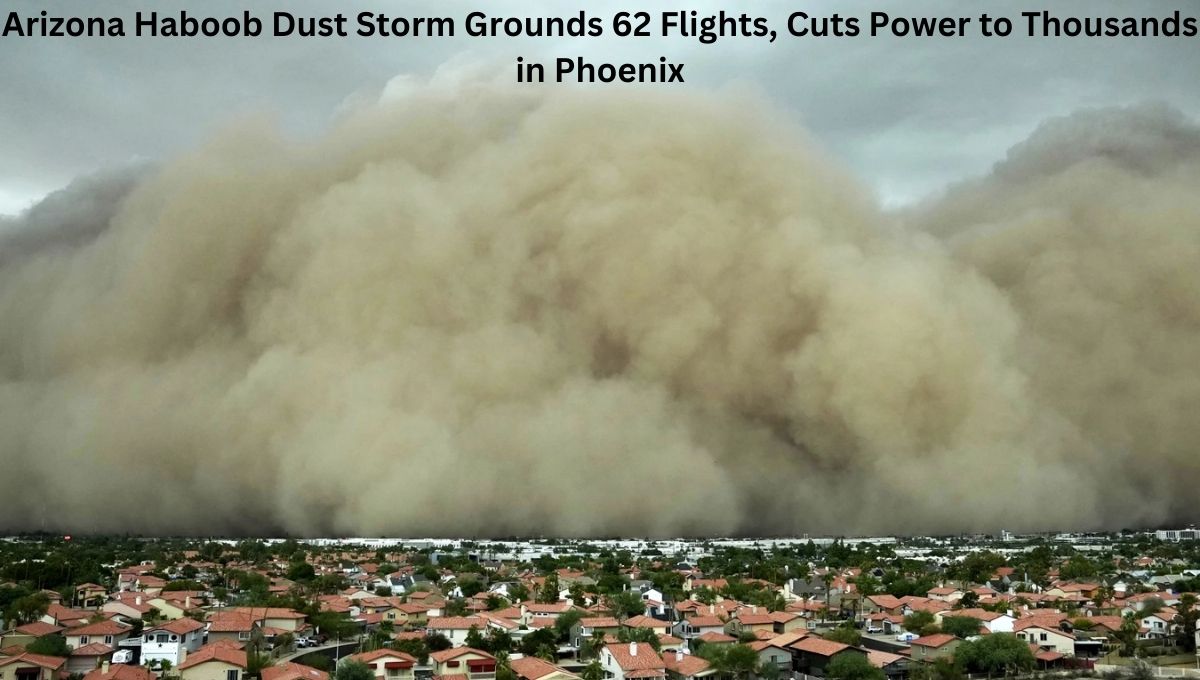
Arizona Haboob Dust Storm Grounds 62 Flights, Cuts Power to Thousands in Phoenix, raises health and safety risks. Arizona residents were thrown into chaos on Monday as a powerful haboob dust storm rolled across metro Phoenix, plunging neighborhoods into darkness, grounding flights, and shutting down parts of the city’s infrastructure.
The storm, triggered by intense monsoon activity, carried walls of dust thousands of feet high, cutting power for more than 60,000 residents, stranding travelers at Phoenix Sky Harbor International Airport, and reducing visibility on highways to near zero. The event served as a stark reminder of the power and danger of Arizona’s monsoon-driven haboobs—natural phenomena that are as visually stunning as they are disruptive.
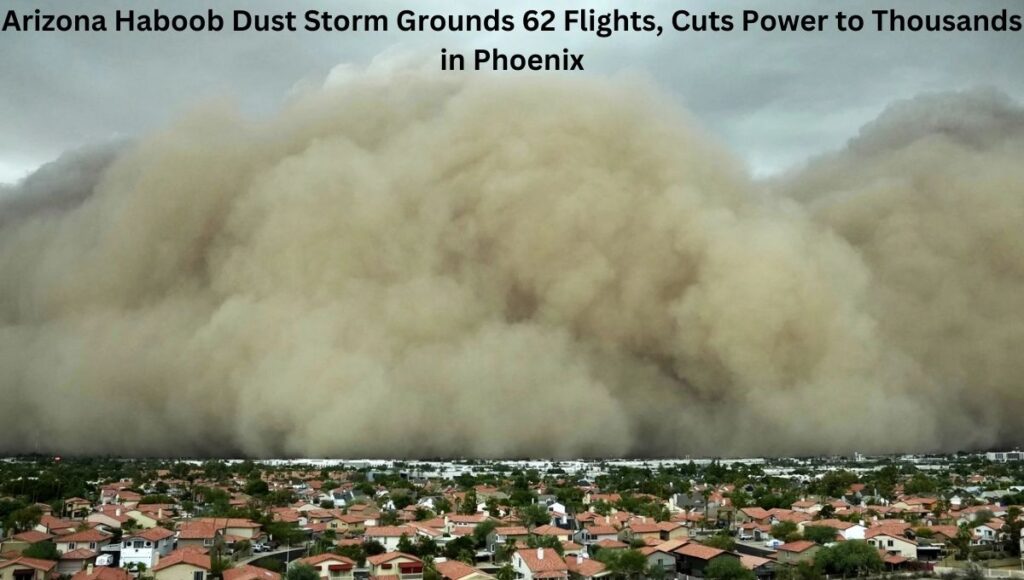
Arizona Haboob Dust Storm Grounds 62 Flights, Cuts Power to Thousands in Phoenix
What Happened in Phoenix?
Power Cuts Impact Thousands
As the dust storm swept through Maricopa and Pinal counties, massive power cuts were reported.
- More than 52,000 utility customers lost power in Phoenix.
- SRP (Salt River Project) reported about 47,400 outages, while APS (Arizona Public Service) said 9,000 customers were affected.
- At least 15,000 households in Maricopa County alone were left in the dark, according to PowerOutage.us.
The Phoenix division of the National Weather Service (NWS) issued dust advisories, warning that the storm could impact over two million people in the metro area.
Flights Delayed and Grounded at Sky Harbor
The storm also disrupted air travel at Phoenix Sky Harbor International Airport, one of the busiest airports in the country.
- At least 62 flights were grounded or delayed.
- Strong winds and heavy rain damaged a terminal roof, forcing crews to identify leaks and clean up water inside passenger areas.
- The PHX Sky Train, the airport’s people mover, was shut down for an hour as a safety precaution.
Airport spokesperson Heather Shelbrack confirmed crews were still addressing damage hours after the storm passed.
What Is a Haboob Dust Storm?
A haboob is a type of wind-driven dust storm caused by thunderstorms or weather fronts in flat, arid regions. The term comes from the Arabic word hab, meaning “to blow.”
Science of Haboobs
- Formation: They occur when collapsing thunderstorms produce downbursts, pushing strong winds outward that scoop up loose desert soil.
- Size: Haboobs can stretch miles long and reach heights of up to 10,000 feet.
- Wind Speed: Gusts can hit 50 to 70 miles per hour, strong enough to uproot trees and hurl debris into the air.
- Duration: These walls of dust can last 10–30 minutes but may leave lingering air quality issues.
According to the National Weather Service in Phoenix, most dust storms in Arizona during monsoon season are classified as haboobs due to their formation mechanism.
Firsthand Accounts: Fear and Awe
Many residents caught in Monday’s haboob described terrifying experiences. Bernae Boykin Hitesman, driving with her children near Arizona City, said visibility dropped to zero.
“I couldn’t see my hand in front of my face if I put my hand outside,” she recalled. “My kids were really scared, and I was trying to be brave for them.”
Others said the storm carried dust into their homes through every crack and crevice. Retired professor Richard Filley of Gilbert called the event both unsettling and strangely beautiful:
“The windstorm part of it, I’m glad it’s gone. But haboobs are a spectacular natural phenomenon. They’re kind of beautiful in their own way.”
Health Hazards of Haboobs
While dramatic in appearance, haboobs pose serious health risks:
- Respiratory issues: Dust particles worsen asthma, bronchitis, and other respiratory conditions.
- Valley Fever risk: Spores of the fungus Coccidioides, which causes Valley Fever, are stirred up during dust storms. Arizona reports about 20,000 cases annually.
- Heavy metals: Dust can carry contaminants like arsenic and lead from abandoned mines.
- Lingering particles: If rain doesn’t follow, dust can remain suspended for days, posing extended exposure risks.
Health experts recommend staying indoors, using HEPA filters or high-quality HVAC systems, and wearing masks if caught outside during or after a haboob.
Environmental and Climate Impacts
Experts say climate change may be intensifying haboobs by fueling the conditions that trigger them:
- Hotter summers dry out desert soils, making them easier to lift.
- Stronger winds from unstable weather systems increase storm intensity.
- Longer dry seasons contribute to dust-prone terrain.
According to climate scientist Hesham El-Askary, “Extreme winds, hotter days, and drier summers will make haboobs more frequent and severe.”
Interestingly, research shows that desert dust storms may have a slight cooling effect globally by reflecting sunlight. But the local environmental damage and health risks often outweigh this benefit.
The Arizona Monsoon Connection
Haboobs are most common during the North American Monsoon season, which runs from June through September.
Why Arizona Gets So Many Haboobs
- Moisture from the Gulf of California fuels intense thunderstorms.
- When these storms collapse, they create downbursts of wind.
- Loose desert soil around Phoenix, Tucson, and the I-10 corridor provides ample dust to be lifted into massive clouds.
As Sean Benedict of the NWS explains: “With the high pressure in place, storms build and collapse, producing downbursts. These downbursts are the trigger for haboobs.”
Transportation Dangers
For drivers, haboobs are among the most dangerous weather events in Arizona.
- Visibility can drop to near zero within minutes.
- Highway accidents are common, especially along I-10 between Phoenix and Tucson, a dust-prone corridor.
- Experts warn: “Pull aside, stay alive.” Motorists should stop safely, turn off lights, and wait until the storm passes.
The Arizona Department of Transportation (ADOT) routinely issues dust storm warnings, urging drivers to avoid travel during such events.
Lessons From Monday’s Haboob
Monday’s haboob left a trail of disruption in its wake:
- 60,000+ people without electricity.
- 62 grounded flights at Sky Harbor Airport.
- Infrastructure damage, including a leaky terminal roof and a halted PHX Sky Train.
- Public safety concerns as drivers and pedestrians were caught in near-blackout conditions.
But experts say the event was not unusual. Phoenix has been drier than usual this monsoon season, but surrounding regions have received patchy rainfall.
According to meteorologist Mark O’Malley, that’s typical:
“Monsoons are very hit and miss. You can have dry spells in one area and heavy rain in another.”
How to Stay Safe During a Haboob
Authorities and experts recommend the following safety measures:
- Before the storm: Check NWS dust advisories.
- If driving: Pull over, turn off lights, and keep your foot off the brake.
- At home: Stay indoors, seal windows and doors, and run air purifiers.
- For vulnerable groups: Those with respiratory illnesses should wear N95 masks if outdoors.
Preparedness is key, as haboobs can strike suddenly and with little warning.
The Bigger Picture: Arizona’s Future With Dust Storms
As Arizona’s climate continues to warm, experts predict more frequent and intense haboobs in the decades ahead.
- Increasing urban sprawl into desert areas may put more people in harm’s way.
- Dust-prone landscapes will expand with prolonged drought conditions.
- Health risks like Valley Fever may become more widespread.
The storm serves as a reminder that Arizona’s desert beauty comes with unique natural hazards and adapting to them will be crucial for residents, infrastructure, and policymakers alike.
Conclusion
The haboob dust storm in Arizona that cut power to more than 60,000 people, grounded 62 flights, and reduced visibility to zero highlights the powerful intersection of weather, climate, and human vulnerability.
While Trumpets of dust rolling across the desert skies may be awe-inspiring, they also underscore the serious risks to health, safety, and infrastructure. For Phoenix and much of Arizona, haboobs are not rare. But as climate pressures mount, these storms may become more destructive, making preparation and resilience critical.
Also Read: Haboob Explained: What are Arizona Dust Storms and Why are They so Dangerous?
Also Read: Typhoon Ragasa Kills 14 in Taiwan, Batters Southern China and Hong Kong Before Weakening