
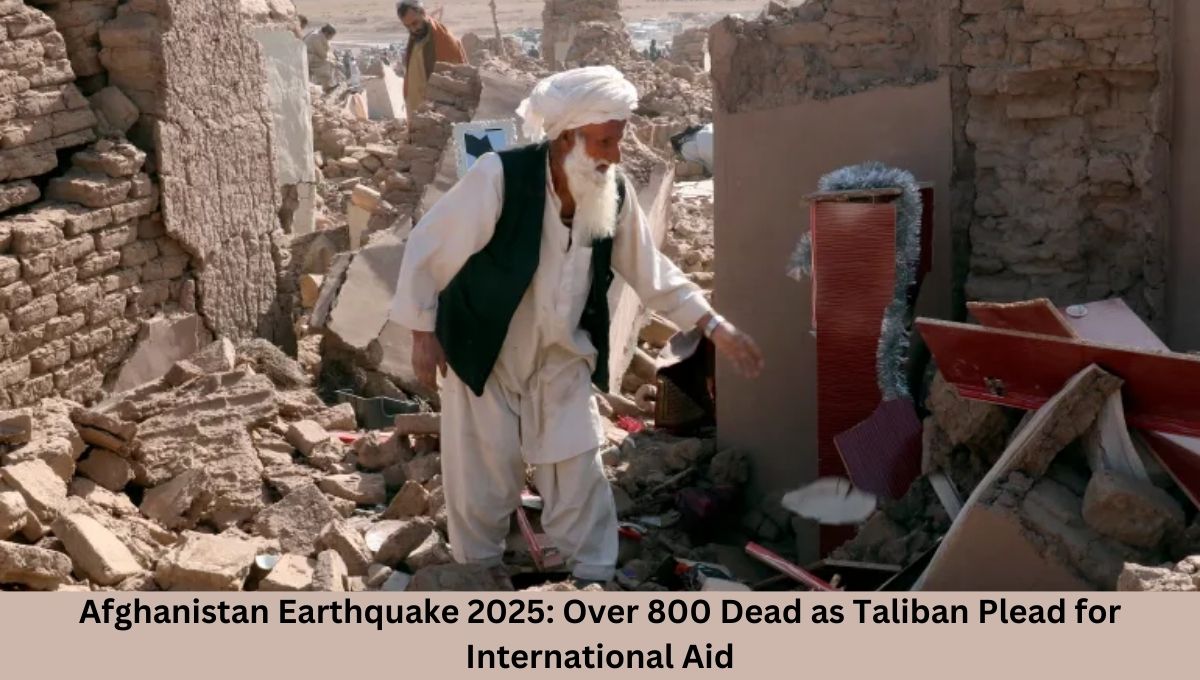
A deadly Afghanistan Earthquake 2025: Over 800 Dead as Taliban Plead for International Aid. Afghanistan has been rocked by one of its deadliest natural disasters in recent years. A 6.0-magnitude earthquake struck late Sunday night near the city of Jalalabad in Nangarhar Province, causing catastrophic destruction across several eastern provinces.
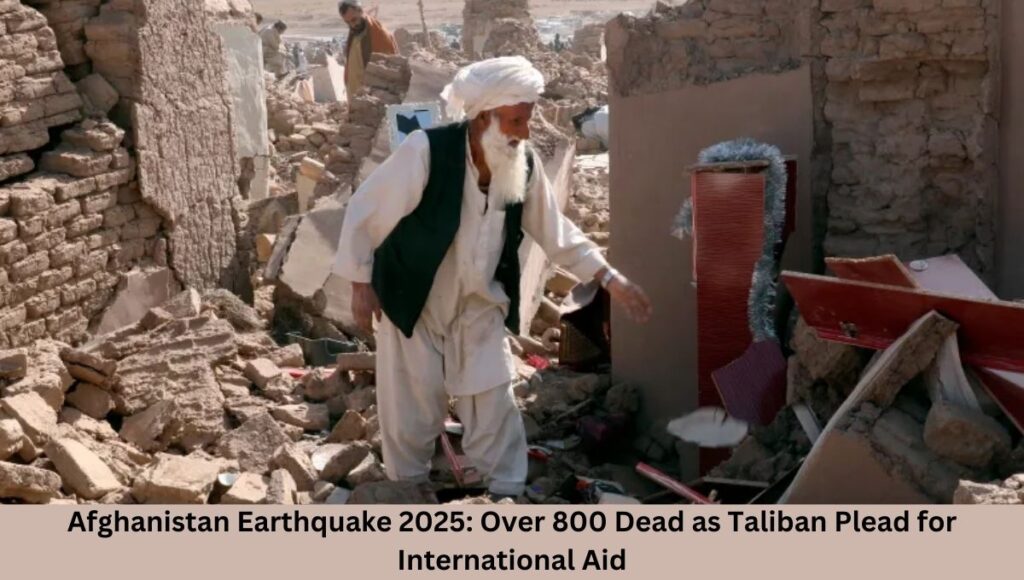
At least 800 people have been killed and more than 2,800 injured, according to official figures released by the Taliban government and confirmed by United Nations assessments. The quake has reduced entire villages to rubble, worsened an already fragile humanitarian crisis, and highlighted Afghanistan’s growing isolation from the global community.
With foreign aid drastically reduced since the Taliban takeover in 2021, rescue operations are hampered by a lack of resources, inaccessible mountain roads, and continuous aftershocks. This report looks in detail at the earthquake, its impact, the humanitarian response, and why its shallow depth made it exceptionally destructive.
Afghanistan Earthquake 2025: Over 800 Dead as Taliban Plead for International Aid
Where Did the Quake Hit?
The United States Geological Survey (USGS) reported that the earthquake struck 27 kilometers northeast of Jalalabad, a bustling city with a population of 200,000 near the Pakistan border.
- Magnitude: 6.0
- Depth: 8 kilometers (classified as a shallow quake)
- Epicenter: Near Jalalabad, Nangarhar Province
- Time: 11:47 pm local time
Provinces Affected
The tremors devastated four main provinces:
- Kunar: Three villages were completely razed.
- Nangarhar: The epicenter province, suffering widespread casualties and building collapses.
- Nuristan: Landslides triggered by the quake cut off entire districts.
- Laghman: Numerous injuries and property damage reported.
The quake was also felt in Pakistan, particularly in Khyber Pakhtunkhwa and Punjab provinces, though no major damage was reported there.
The Scale of Human Loss
The Taliban government has confirmed 812 deaths and at least 2,817 injuries, though officials warn the numbers could rise as rescuers dig through rubble.
Eyewitness Accounts
Survivors’ stories underscore the tragedy:
- Sadiqullah, a resident of Kunar province, described how he was “half-buried and unable to get out” after his home collapsed. His wife and two sons were killed. He was trapped for hours before neighbors pulled him free.
- Ahmad Zameer, a resident of Kabul, over 100 miles from the epicenter, said the earthquake jolted his entire neighborhood, with people rushing into the streets in fear.
- Sanaullah, another survivor, said: “Everyone I know here has lost at least three to five family members. Every house is mourning.”
Hospitals Overwhelmed
Local hospitals in Kunar and Nangarhar declared emergencies. The Ministry of Defence said it had flown in 30 doctors and 800 kg of medical supplies to support regional hospitals. Helicopters ferried hundreds of injured to better-equipped facilities in Kabul.
Why the Afghanistan Earthquake Was So Destructive
Although the magnitude was moderate compared to some quakes, its shallow depth of just 8 km made the impact catastrophic.
Experts Explain
- Shallow earthquakes (0–70 km deep) release energy much closer to the Earth’s surface, causing stronger shaking and more destruction.
- By contrast, deeper earthquakes dissipate more energy before reaching populated areas.
USGS seismologist Susan Hough likened it to “setting off a bomb directly under a city.”
Historical Comparisons
- Nepal 2015 earthquake (depth 8.2 km, over 8,000 killed).
- Italy 2016 earthquake (depth 9 km, nearly 300 killed).
- Indonesia 2022 Cianjur quake (depth 9.9 km, 268 killed).
- Afghanistan 2023 Herat earthquakes (depth 8–10 km, over 2,000 killed).
Search and Rescue Efforts
The Taliban government quickly mobilized local teams, but geography and limited resources slowed progress.
Challenges
- Blocked roads: Landslides and mudslides made it nearly impossible for trucks to reach villages.
- Heavy rain: Ongoing storms compounded the misery, further weakening structures and complicating rescues.
- Remote terrain: Entire villages in the mountains remained cut off for days.
Government Response
Taliban spokesperson Zabihullah Mujahid said:
“Right now, local officials and residents are making all the efforts to rescue affected ones. Support teams from the capital and nearby provinces are also on their way. All available resources will be used for the rescue and relief of the people.”
Helicopters and military flights have carried over 420 injured and deceased from remote areas.
International Aid and Response
Taliban Appeal for Assistance
The Taliban’s Health Ministry spokesperson Sharafat Zaman urged:
“We need it because here lots of people lost their lives and houses.”
Countries That Responded
- India: Delivered 1,000 family tents to Kabul and 15 metric tons of food aid to Kunar. More shipments are expected.
- United Kingdom: Announced £1 million ($1.3 million) in emergency funding, split between the UN Population Fund and the International Red Cross.
- China: Expressed readiness to provide disaster relief “according to Afghanistan’s needs and within its capacity.”
- Iran: Offered full medical and humanitarian aid.
UN & NGOs
- United Nations: Teams are on the ground providing emergency assistance.
- World Food Programme (WFP): Working to deliver food supplies, though air drops are limited due to funding cuts.
- International Rescue Committee (IRC): Warned the humanitarian needs will exceed the 2023 Herat quake disaster.
Funding Cuts Crippling Aid
One of the biggest obstacles is Afghanistan’s dwindling access to global aid.
- In 2022, international humanitarian aid totaled $3.8 billion.
- By 2025, this had shrunk to just $767 million, according to Reuters.
- Earlier this year, the US halted $1.7 billion in aid contracts. The UK, France, and Germany followed suit.
This has left organizations like the World Food Programme unable to sustain operations such as airlifting supplies to remote villages.
Agriculture and Food Security at Risk
The Food and Agriculture Organization (FAO) warned that the earthquake has jeopardized Afghanistan’s fragile food system.
- Over 39,000 sq km of wheat cultivation may be affected.
- At least 349,000 tonnes of wheat are at risk of being lost.
- Livestock damage is significant, with 1.38 million animals affected in quake-hit districts.
For a country already battling chronic food insecurity, this disaster could worsen hunger for millions.
Afghanistan’s Earthquake History
Afghanistan lies near the collision zone of the Indian and Eurasian tectonic plates, making it highly earthquake-prone.
- October 2023 (Herat): 2,000 killed in back-to-back quakes.
- June 2022 (Paktika): 1,150 killed in 5.9 quake.
- 2002 (Baghlan): 1,000 killed in 7.4 quake.
- 1998 (Takhar): 4,500 killed in twin quakes.
The 2025 Jalalabad earthquake is now among the top five deadliest in Afghanistan’s modern history.
What Comes Next?
With aftershocks continuing, the death toll is expected to rise as rescuers reach previously inaccessible villages. The focus now is on:
- Search and rescue for those trapped under rubble.
- Immediate relief: shelter, food, medical supplies.
- Long-term recovery: rebuilding homes, restoring agriculture, and addressing food shortages.
Global Pressure
Human rights organizations have called on the international community not to let politics block aid. While some governments hesitate to engage directly with the Taliban, Afghan civilians are paying the price.
Conclusion
The 2025 Afghanistan earthquake has left thousands of families grieving, entire villages destroyed, and an already fragile nation pushed to the brink. With over 800 dead and nearly 3,000 injured, the disaster is a reminder of how geography, poverty, and politics combine to turn natural hazards into humanitarian catastrophes.
As Afghanistan’s Taliban rulers plead for international support, the world faces a critical question: will political disputes be set aside to deliver aid to one of the world’s most vulnerable populations?
Also Read: Over 200 Inmates Escape Malir Jail After Karachi Earthquake: One of Pakistan’s Worst Jailbreaks
Also Read: Magnitude 6 offshore earthquake rattles Taiwan’s northeast
Related Posts:
- Another Earthquake Strikes Afghanistan After 1,400…
- Afghanistan Earthquake 2025: Over 600 Killed, 1,500…
- Third Earthquake Strikes Afghanistan: Death Toll…
- 6.3-Magnitude Earthquake Devastates Northern Afghanistan
- 7 Heartbreaking Facts About Venezuela's Earthquake Disaster

- Afghanistan–Pakistan War 2025: Inside the 48-Hour Ceasefire
