7 Critical Reasons Kharg Island Is Iran’s Oil “Crown Jewel” in the Middle East War and a key target. As the war between the United States, Israel, and Iran intensifies, a small island in the Persian Gulf has suddenly become one of the most strategically important places on the planet. Kharg Island — often described as Iran’s oil “crown jewel” — plays an outsized role in the global energy system despite its tiny size.
Spread across only about 20 square kilometres, the island processes roughly 90 percent of Iran’s total crude oil exports, making it the central hub of the country’s petroleum economy. Recent US military strikes targeting military installations on the island have drawn global attention to this otherwise little-known territory.
The attack has significantly raised the stakes in the Middle East war, not only because of Kharg Island’s economic value to Iran but also because of its potential impact on global energy markets. Analysts warn that any damage to the island’s oil infrastructure could disrupt supply chains and push crude oil prices even higher.
Understanding why Kharg Island is so important requires looking at its geography, oil infrastructure, economic significance, and military implications.
Here are seven critical reasons why Kharg Island has become a focal point in the escalating Middle East conflict.
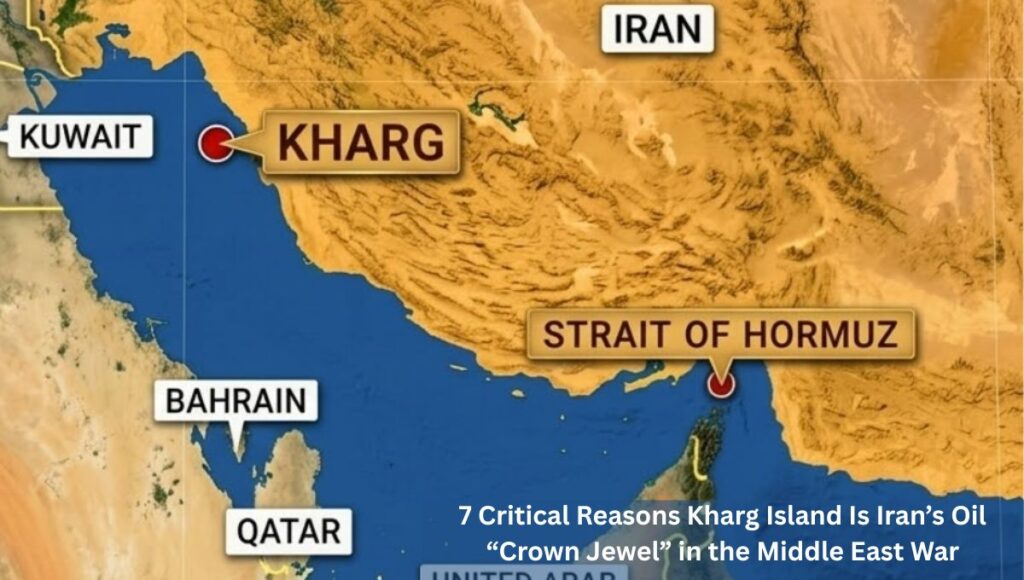
7 Critical Reasons Kharg Island Is Iran’s Oil “Crown Jewel” in the Middle East War
1. Kharg Island Handles Nearly 90% of Iran’s Oil Exports
The single most important reason Kharg Island matters is its role in Iran’s oil export system.
Iran relies heavily on petroleum exports to fund government operations, economic programs, and military activities.
According to energy analysts, the majority of these exports flow through Kharg Island.
The island hosts Iran’s primary oil export terminal, where crude oil from several major oil fields is collected, stored, and shipped to international markets.
Tankers dock at the island’s terminals before transporting oil to buyers across Asia and other regions.
Estimates suggest the island has a loading capacity of up to seven million barrels per day, making it one of the most important oil hubs in the Middle East.
If the island were damaged or captured, Iran could lose the ability to export the majority of its crude oil — a scenario that could cripple the country’s economy.
2. The Island Connects Major Iranian Oil Fields
Kharg Island acts as the central node in Iran’s vast petroleum pipeline network.
Crude oil from some of Iran’s largest oil fields is transported to the island through pipelines and offshore facilities.
Among the major fields connected to Kharg are:
- Aboozar
- Forouzan
- Dorood
- Ahvaz
- Marun
- Gachsaran
Oil from offshore platforms flows through subsea pipelines to the island’s processing plants.
Once processed, it is pumped into massive storage tanks before being loaded onto oil tankers.
This integrated network allows Iran to export massive quantities of oil efficiently.
Energy experts say the island handles around 950 million barrels of crude oil annually, making it one of the most critical infrastructure hubs in Iran’s energy sector.
3. Its Geography Makes It Perfect for Oil Tankers
Kharg Island’s location gives it a major logistical advantage. Much of Iran’s coastline in the Persian Gulf is too shallow for large oil tankers to dock safely.
However, the waters surrounding Kharg Island are deep enough to accommodate supertankers.
This deep-water access is crucial for global oil shipping. Large vessels can dock directly at the island’s terminals, load crude oil quickly, and depart for international markets.
Without Kharg Island, Iran would face major logistical challenges in exporting oil.
This geographic advantage was one of the main reasons the island became the centerpiece of Iran’s oil export infrastructure during the country’s oil expansion in the 1960s and 1970s.
4. Kharg Island Generates Massive Revenue for Iran
Oil exports represent a key pillar of Iran’s economy, and Kharg Island is at the center of that system.
In recent years, Iran has earned tens of billions of dollars annually from crude oil exports. Much of this revenue flows through the island’s export terminals.
These earnings fund a wide range of government activities, including:
- national infrastructure projects
- social programs
- military spending
- missile and drone development
Energy analysts note that the island essentially serves as Iran’s financial lifeline.
If Kharg Island were disabled, Iran could lose a large portion of its oil revenue almost overnight.
This is why some analysts believe the island represents a major strategic vulnerability for the Iranian government.
5. The Island Is Located Near Critical Global Shipping Routes
Another factor increasing Kharg Island’s strategic importance is its proximity to the Strait of Hormuz. The strait is one of the most important maritime chokepoints in the world.
Roughly 20 percent of global oil shipments pass through this narrow waterway, which connects the Persian Gulf to the Gulf of Oman and the wider international ocean routes.
Iran has threatened to block or disrupt shipping through the strait during the current conflict.
If tensions escalate further, Kharg Island could become a key operational base for monitoring or influencing shipping routes in the region.
Because of this, any military activity around the island could have far-reaching consequences for global trade and energy markets.
6. The Island Is Now a Military Target
As the war between the United States, Israel, and Iran has intensified, Kharg Island has moved from being purely an economic hub to a potential military objective.
US President Donald Trump recently said American forces had carried out large-scale strikes on military targets on the island.
According to US officials, the strikes focused on:
- missile storage facilities
- naval mine depots
- air defense systems
- military infrastructure
The oil infrastructure itself was reportedly left untouched, but Trump warned that the United States could target the island’s petroleum facilities if Iran continues interfering with shipping through the Strait of Hormuz.
This warning has significantly raised tensions in the region.
Iran has responded by threatening to attack energy infrastructure belonging to US allies if its own facilities are targeted.
7. Seizing Kharg Island Could Change the War
Military analysts believe that controlling Kharg Island could dramatically shift the balance of the conflict.
Because the island handles the majority of Iran’s oil exports, capturing or disabling it could cut off a large portion of the country’s financial resources.
However, such an operation would be extremely complex.
Experts say it would likely require:
- naval operations
- air superiority
- amphibious assaults
- thousands of ground troops
Some estimates suggest around 5,000 troops might be needed to capture and secure the island.
Even if successful, such a move could trigger massive retaliation from Iran, including missile strikes and attacks on regional energy infrastructure.
Cultural and Historical Significance of Kharg Island
Although Kharg Island is primarily known for its oil infrastructure today, it also has deep historical and cultural roots.
The island contains archaeological sites and religious landmarks dating back centuries, including:
- the Mir Mohammad Shrine from the 7th century
- Zoroastrian burial grounds
- Christian graves
- Sassanid-era tombs
- remnants of a Dutch fort built in 1747
Iranian writer Jalal Al-e-Ahmad once referred to the island as the “orphan pearl of the Persian Gulf.”
Today, however, its economic and geopolitical importance has overshadowed its cultural heritage.
Impact on Global Oil Markets
Energy markets are closely watching developments around Kharg Island.
Even limited disruptions to the island’s operations could significantly tighten global oil supplies.
Iran exports between 1.1 million and 1.5 million barrels of crude oil per day, much of it from Kharg Island.
If those exports were halted, analysts warn that oil prices could rise dramatically.
Some forecasts suggest crude prices could climb beyond $120 or even $150 per barrel if the conflict escalates and the island’s infrastructure is damaged.
Such a surge would have major implications for global inflation, transportation costs, and economic growth.
What Kharg Island Means for the Global Economy
Because oil remains one of the most important commodities in the global economy, any threat to major export hubs can trigger widespread market reactions.
Kharg Island represents roughly 2 percent of global oil supply, making it a significant contributor to the world’s energy system.
For countries heavily dependent on imported oil — including India, China, and many European nations — disruptions could lead to higher fuel prices and economic pressure.
Financial markets, shipping companies, and governments around the world are therefore closely monitoring the situation.
Rising Tensions Across the Middle East
The strikes on Kharg Island come as the broader conflict in the Middle East enters its third week.
Airstrikes, missile attacks, and military operations have expanded across multiple countries in the region, including Lebanon and Israel.
Thousands of casualties have been reported, and millions of people have been displaced.
At the same time, Iran has attempted to disrupt shipping in the Strait of Hormuz, raising fears of a prolonged global energy crisis.
The deployment of additional US military forces to the region — including thousands of Marines and amphibious warships — suggests the conflict could intensify further.
Conclusion: A Tiny Island With Global Consequences
Kharg Island may be small, but its influence extends far beyond the Persian Gulf.
As the primary hub for Iran’s oil exports, the island plays a crucial role in the country’s economy, military funding, and geopolitical leverage.
At the same time, its importance to global energy markets makes it a strategic asset that could reshape the trajectory of the ongoing Middle East conflict.
Whether the island becomes a direct target in the war or remains a symbol of Iran’s economic resilience, one thing is clear:
the fate of Kharg Island could have consequences for global politics, energy markets, and international security.
In a conflict already marked by escalating tensions and high stakes, this tiny island has emerged as one of the most critical battlegrounds in the modern geopolitical landscape.
Also Read: 7 Powerful Reasons the U.S. Is Letting Countries Buy Russian Oil Amid the Iran War
Related Posts:
- 3 Explosive Conditions Iran Sets to End War with US…

- 7 Explosive Facts About the US Strike on Iran’s…
- 10 Explosive Signals as Trump Threatens New Strikes…
- 10 Powerful Revelations from the Trump–Putin Call on…

- 10 Explosive Warnings as Donald Trump Calls Iran…
- 10 Explosive Signals Trump Says Iran War Could End…