
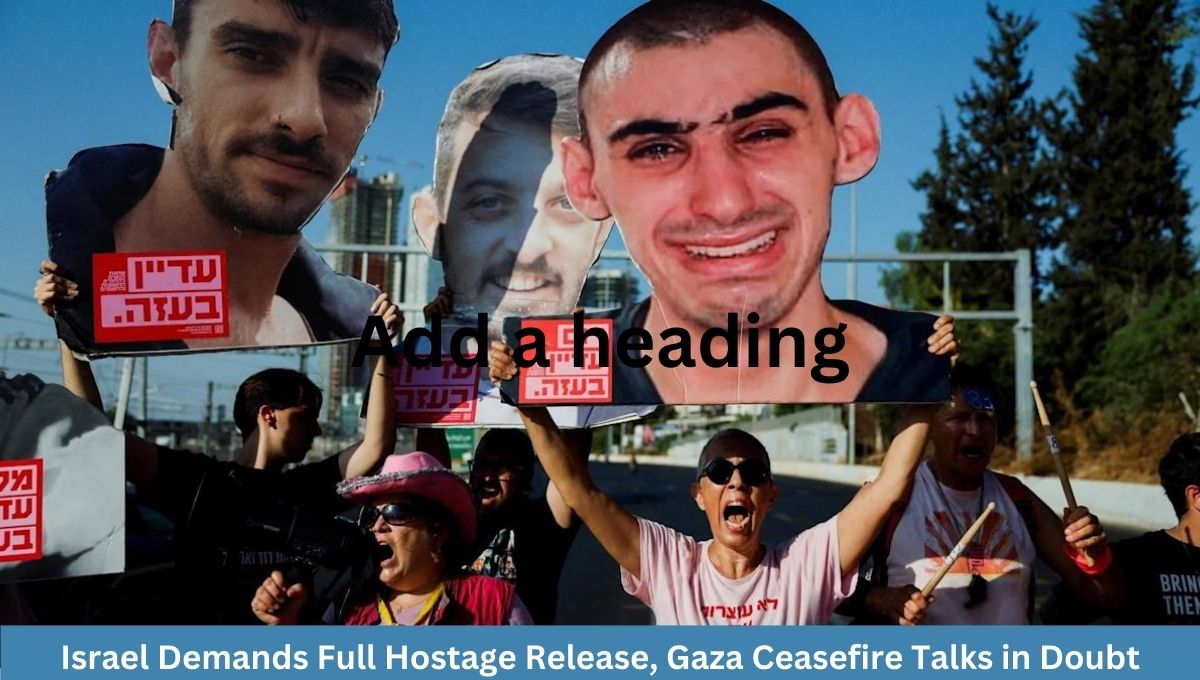
Israel-Gaza Conflict: Israel Demands Full Hostage Release, Gaza Ceasefire Talks in Doubt. The war in Gaza, now stretching into its 22nd month, remains at a deadlock despite a new ceasefire proposal that has been accepted by Hamas and backed by key mediators Egypt and Qatar.
Israel, however, has demanded the release of all 50 hostages believed to remain in Gaza before it considers halting military operations. This firm position has cast uncertainty over the chances of a breakthrough.
As international mediators push for a truce and Palestinians endure worsening humanitarian conditions, Israeli Prime Minister Benjamin Netanyahu faces pressure both from hardline coalition partners who oppose any deal with Hamas and from hostage families demanding an immediate agreement.

Israel Demands Full Hostage Release, Gaza Ceasefire Talks in Doubt
The New Ceasefire Proposal: What’s on the Table
On Monday, Hamas announced that it had agreed to a 60-day ceasefire proposal put forward by Egypt and Qatar.
According to Palestinian officials, the deal would see the staged release of hostages both living and deceased over the two-month truce period in exchange for the release of Palestinian prisoners and detainees held in Israeli prisons.
The framework, described by Qatari officials as “98% similar” to a U.S. plan previously accepted by Israel, includes:
- Release of eight living hostages on day one, with two more released on day 50.
- Gradual handover of the remains of deceased hostages on days 7, 30, and 60.
- In exchange, Israel would free 1,500 Palestinian detainees, including 150 serving life sentences.
- Israeli forces would partially withdraw to buffer zones but remain in strategic southern corridors.
Hamas described the proposal as a “partial deal leading to a comprehensive deal,” stressing that negotiations for a permanent ceasefire would begin immediately upon implementation.
Israel’s Response: No “Partial Deals”
Despite the international optimism surrounding the Egyptian-Qatari proposal, Israel has not accepted it.
Government spokesperson David Mencer told the BBC that Israel is “not interested in partial deals” and reiterated that all hostages must be released at once.
An Israeli political source echoed this stance:
“Israel’s policy remains consistent and unchanged. Israel demands the release of all 50 hostages in accordance with the principles set by the cabinet to end the war. We are in the final stage of defeating Hamas and will not leave any hostage behind.”
This firm position has complicated negotiations, as Hamas insists on phased releases tied to broader truce arrangements.
The Hostage Question: Numbers and Lives at Stake
Of the roughly 251 hostages taken during Hamas’s October 7, 2023 attack on Israel, Israel believes around 50 remain in Gaza. Officials estimate that only 20 of them are still alive.
Families of the hostages have become some of Netanyahu’s most vocal critics, accusing him of setting “unworkable conditions” that jeopardize their loved ones’ return.
Tens of thousands of Israelis have taken to the streets in recent weeks demanding that the government prioritize a deal.
Einav Zangauker, whose son Matan is believed to be alive in Gaza, said:
“Netanyahu is deliberately setting unworkable conditions as an obstacle. About a month ago, we were closer than ever to signing a deal.”
Netanyahu’s Military Plans and Domestic Pressures
Prime Minister Netanyahu has publicly declared that Israel intends to conquer all of Gaza, including Gaza City, where millions of displaced Palestinians have sought refuge.
The Israeli cabinet is expected to approve plans for a full military occupation of the city this week.
In a video message on Monday, Netanyahu claimed:
“Like you, I hear the reports in the media, and from them you can get one impression—Hamas is under immense pressure.”
Yet, Netanyahu himself faces enormous political pressure:
- From the far-right: Finance Minister Bezalel Smotrich and National Security Minister Itamar Ben-Gvir have demanded that the war continue until Hamas is defeated and Gaza annexed.
- From the public: Families of hostages and large sections of the Israeli population want an immediate deal to end the war and bring the captives home.
This internal tug-of-war has left Israel’s official position rigid, despite international appeals.
The Role of Egypt and Qatar in Mediation
Egypt and Qatar have emerged as the primary mediators between Israel and Hamas. Both countries have stressed the urgency of reaching a deal before Israel launches its next major offensive.
Qatar’s foreign ministry spokesman Majed al-Ansari said:
“If this ceasefire proposal fails, the crisis will exacerbate. Hamas has agreed to the terms under discussion. We’re not there yet, but this is an opportunity.”
Egyptian Foreign Minister Badr Abdelatty echoed similar sentiments, suggesting that a ceasefire could be reached “very soon” if Israel shows political will.
The U.S. Proposal and Its Similarities
The current Egyptian-Qatari framework is nearly identical to a U.S. plan presented in June by envoy Steve Witkoff.
That proposal also envisioned a 60-day truce with staged hostage releases, though Hamas rejected it at the time due to the absence of guarantees for a permanent ceasefire.
Witkoff has since been invited to rejoin the talks, signaling Washington’s continued involvement. U.S. officials maintain that Hamas has no future as a governing or military power in Gaza.
Humanitarian Crisis in Gaza: A War of Attrition
The ongoing war has devastated Gaza. According to the Hamas-run health ministry:
- More than 62,000 Palestinians have been killed since October 2023.
- Over 90% of homes are damaged or destroyed.
- Healthcare, water, and sanitation systems have collapsed.
- Half a million people face famine, according to UN-backed food security experts.
As Israel prepares to advance on Gaza City, thousands more Palestinians are fleeing, though humanitarian zones offer little actual safety.
Abdallah Al-Khawaja, a displaced Palestinian, expressed his skepticism:
“I expect the occupation to be obstinate and reject proposals, as always. I do not expect Israel to accept.”
International Reactions: Global Calls for Restraint
The threat of a new Israeli offensive has drawn condemnation abroad. Humanitarian groups warn that an escalation in Gaza City would cause catastrophic civilian casualties.
Meanwhile, Washington has reiterated support for Israel’s security goals while urging consideration of a hostage deal. Former U.S. Ambassador Mike Huckabee remarked:
“Negotiations have apparently started again, perhaps because Hamas heard the Israelis are determined to go in very hard.”
Protests in Israel: A Nation Divided
Inside Israel, massive protests have erupted demanding that Netanyahu accept a deal to bring the hostages home. The demonstrations represent some of the largest since the war began.
Protesters argue that prolonging the conflict only endangers the remaining hostages while deepening the humanitarian disaster in Gaza.
Netanyahu’s critics accuse him of prioritizing his political survival and coalition over the national interest.
Hamas’s Position: A Tactical Move?
Hamas officials describe their acceptance of the truce deal as a strategic step toward a comprehensive agreement. Hamas official Mahmoud Mardawi said:
“The resistance has thrown the door wide open to the possibility of reaching an agreement, but the real test remains whether Netanyahu will refrain from shutting it again.”
Skeptics, however, argue that Hamas’s willingness stems from mounting battlefield pressure and fear of an Israeli offensive on Gaza City.
What Happens Next?
At this stage, the ceasefire deal remains in limbo. Israel has yet to provide a formal response to mediators. Netanyahu is expected to meet military and political leaders in the coming days to decide on a course of action.
The future hinges on whether Israel insists on its demand for the simultaneous release of all hostages or compromises to allow a phased truce.
Without a breakthrough, the war appears set to intensify with devastating consequences for both Gaza’s civilians and the fate of the remaining hostages.
Conclusion: The Path Forward
The conflict between Israel and Hamas remains one of stalemate, suffering, and strategic brinkmanship. While Hamas has accepted a ceasefire proposal mediated by Egypt and Qatar, Israel’s insistence on a full hostage release has cast doubt over the deal’s viability.
Netanyahu’s government faces enormous internal and external pressures balancing calls from families of hostages, the far-right coalition, and the international community.
Meanwhile, Gaza’s population teeters on the edge of famine, displacement, and continued devastation.
As negotiations continue, the central question remains: Will Israel and Hamas prioritize hostages and civilians, or will the war march on into its third year?
Also Read: Netanyahu Orders Gaza Hostage Talks as Israel Pushes Gaza City Capture and Hamas Defeat
Also Read: Israel demands full hostage release after Hamas backs new truce
Related Posts:
- Trump’s 20-Point Gaza Peace Plan Gains Urgent Global…

- Israel–Hamas Ceasefire Under Strain: 4 More Hostage…

- 5 Key Developments as Israel Confirms Hamas Handed…

- Trump’s Breakthrough Gaza Ceasefire Deal 2025: Key Insights

- Trump’s Historic Gaza Ceasefire Deal 2025: A…

- Marco Rubio Visits Israel After Israeli Strike on…
