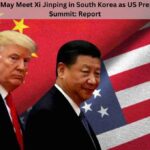
In a dramatic turn of events Trump Signals Softer Stance on China Tariffs: “It Won’t Be 145%.” He signalled a significant shift in his administration’s approach to trade negotiations with China, suggesting that the hefty 145% tariffs on Chinese imports will be reduced “substantially.”
Trump on Tuesday, speaking at a White House press conference, amid the ongoing trade war between the world’s two largest economies offered his most optimistic tone yet.
Alluding to his ongoing efforts to reach a mutually beneficial agreement with Chinese President Xi Jinping, Trump said, “We’re going to be very nice, and they’re going to be very nice. And we’ll see what happens.”

Trump Says He’ll Be “Very Nice” in Talks with Xi Jinping
In a move, the analysts and global markets were caught by surprise as Trump emphasized his intention to avoid harsh tactics in future discussions with China.
“I’m gonna play hard ball with you, President Xi? No, no. We’re going to be very nice,” Trump said. “We want them involved, but they have to make a deal.”
Trump downplayed concerns over a prolonged trade standoff, while he maintained that if China wishes to continue doing business with the United States, they would ultimately have no choice but to come to the negotiating table.
He added, “Ultimately, they have to make a deal because otherwise they’re not going to be able to deal in the U.S.”
Tariffs “Will Come Down Substantially,” Trump Confirms
The President addressed widespread concern over the current 145% tariff rate his administration imposed on Chinese imports following a series of retaliatory moves by Beijing.
Trump said, “145% is very high, and it won’t be that high. It won’t be anywhere near that high. It’ll come down substantially. But it won’t be zero. It used to be zero — we were just destroyed.”
The latest comments indicate a potential path toward de-escalation in a trade conflict that has spanned several years. It had impacted industries ranging from technology and agriculture to energy and defense.
Treasury Secretary Hints at De-Escalation, Markets Respond
Earlier Tuesday, the market-friendly remarks came on the heels of a closed-door summit, where Scott Bessent, U.S. Treasury Secretary also indicated that the tit-for-tat tariff battle is “unsustainable.”
According to a transcript obtained by the Associated Press, Bessent told investors, “Neither side thinks the status quo is sustainable,” and expressed optimism for clarity on the tariff situation. His remarks helped propel the S&P 500 up by 2.5% during Tuesday’s trading session.
Bessent in his previous statements to Yahoo Finance characterized the trade war as “an obstacle to global growth” and called for constructive engagement.
China Responds Cautiously, Signals No Immediate Concessions
No official response was issued by China, while Trump’s comments appeared to be a peace offering. However, on Weibo, a Chinese social media platform, the remarks were trending under hashtags such as “Trump admitted defeat,” signaling how Beijing’s online users and domestic media are interpreting the shift.
In contrast, an editorial in China Daily labeled Trump’s statements as part of the “MAGA agenda’s populist protectionism,” describing the high tariffs as harmful to the global trade system.
Rising Pressure from Third Countries and Allies
Several allies and strategic partners, including India, Japan, the European Union, South Korea, Canada, and Mexico have continued negotiations with Trump’s administration, amid the ongoing U.S.-China standoff.
A recent visit to India by Vice President J.D. Vance also factored into the broader trade landscape, with discussions reportedly covering technology, defense, and energy cooperation. 18 trade proposals from other countries seeking agreements with the U.S. were received and confirmed by the White House.
However, reports from Korean media suggested that China is now pressuring third-party countries to avoid trading with U.S. firms tied to military contractors or those using Chinese critical minerals due to which tensions are on the rise.
China’s Tariff Countermeasures Continue
China has retaliated raising duties on U.S. goods to as high as 125%. In global supply chains, the ongoing back-and-forth has led to confusion and dented investor confidence.
Trump’s administration in addition to the 145% blanket tariff, has levied other targeted tariffs that include a 125% reciprocal tariff, a 20% tariff aimed at the fentanyl crisis, and several Section 301 tariffs ranging from 7.5% to 100%.
Fed Policy and Trade War Uncertainty
The financial volatility caused by the escalating trade war has spilled over into monetary policy discussions. Trump has called on the Federal Reserve to cut interest rates, in fact he even suggested that he has the authority to fire Fed Chair Jerome Powell, a claim he later walked back.
Before clarifying he had no intention of removing the Fed chair, Trump said, “I want Powell to be early in lowering rates.”
What’s Next?
The trade world remains on edge, as both sides weigh their next moves. Analysts caution that although Trump’s softer tone is encouraging, real progress will require formal negotiations, specific concessions, and an agreement on enforcement mechanisms.
For now, touting his strong relationship with Xi, Trump is maintaining his unpredictability, while leaving the door open for unilateral action if China refuses to make a deal.
Trump concluded, “If we don’t make a deal, we’ll set it. We’ll just set the number.”
Also Read: US-China Trade War Escalates: Trump Slaps 245% Tariffs, Beijing Warns of Global Fallout
Also Read: Trump says China tariffs will ‘come down substantially,’ hinting at potential U-turn
Related Posts:
- 9 Explosive Revelations as Trump Declares His Health…
- Trump to Host 2026 G20 Summit at His Florida Golf…
- 10 Big Takeaways from Trump’s 155% Tariff Warning to China

- Trump’s U-Turn on China After “Conspire” Remark at…
- Trump’s 2025 Gaza Peace Plan Signing and Historic…

- Donald Trump May Meet Xi Jinping in South Korea as…