
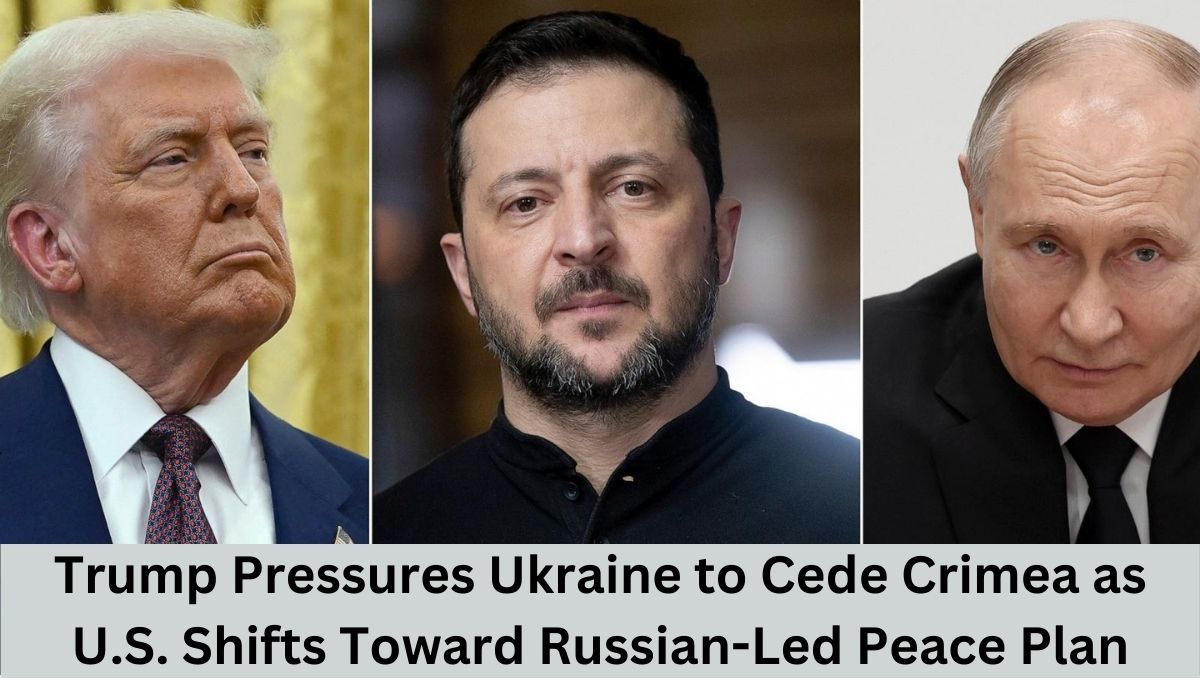
U.S. foreign policy took a dramatic turn as Trump Pressures Ukraine to Cede Crimea as U.S. Shifts Toward Russian-Led Peace Plan. Accepting this controversial peace plan would legitimize Russia’s control over Crimea and block Ukraine’s NATO aspirations. This move has drawn sharp rebukes from Ukrainian leadership and stirred unease among European allies.

Trump Pressures Ukraine to Cede Crimea as U.S. Shifts Toward Russian-Led Peace Plan
Trump and Zelensky Clash Over Crimea
Once again tensions flared between President Donald Trump and Ukrainian President Volodymyr Zelenskyy. Trump scolded the Ukrainian leader for rejecting a U.S.-backed proposal that effectively hands Crimea to Russia. During talks in London aimed at ending the war in Ukraine, Trump publicly declared that “Crimea was lost years ago and is not even a point of discussion.”
Zelenskyy remained defiant, and said, “Ukraine will not recognize Russia’s annexation of Crimea. There’s nothing to talk about here. This is against our constitution.”
A broader shift in U.S. diplomacy is reflected in the heated exchange, where even at the cost of Ukraine’s territorial integrity, Washington appears increasingly eager to strike a deal with Russia.
Peace Deal Favors Russia, Leaves Ukraine in the Cold
The U.S.-crafted proposal, dubbed as the “Trump Peace Plan,” includes two key points aligning with Moscow’s interests: recognition of Crimea as Russian territory and a permanent block on Ukraine joining NATO. Kyiv has flatly rejected both these stipulations.
On Truth Social, a social media post, Trump criticized Zelenskyy’s resistance as “harmful to the peace process” while accusing him of “prolonging the killing field.” Trump posted, “Nobody is asking Zelenskyy to recognize Crimea as Russian territory, but if he wants Crimea, why didn’t they fight for it eleven years ago?”
The “Trump Peace Plan,” falls short of any firm commitments, and also offers vague security guarantees to Ukraine, leaving Ukrainian officials concerned about their future security.
Vice President JD Vance Issues Ultimatum
During the diplomatic visit to India, Vice President JD Vance echoed Trump’s position warning that if Ukraine does not cooperate U.S. might abandon the peace process entirely.
Vance announced, “We’ve issued a very explicit proposal to both the Russians and the Ukrainians, and it’s time for them to either say yes or for the United States to walk away.” He described the proposal as one that “freezes territorial lines at some level close to where they are today.” He called the plan, a best chance for ending the violence.
However, the plan, critics argue, rewards Russian aggression and undermines decades of Western policy aimed at defending sovereign borders.
Diplomatic Fractures Emerge in London Talks
In London, during Wednesday’s talks, hopes for a unified Western approach faltered. Both U.S. Secretary of State Marco Rubio and chief negotiator Steve Witkoff skipped the meeting. This move raised concerns that the Trump administration may be sidelining European allies and prioritizing backchannel negotiations with Moscow.
Lower-level diplomats from Britain, France, Germany, and Ukraine, despite the absence of top U.S. officials, convened for technical discussions. The meeting, without the officials Rubio or Witkoff lacked the political weight needed to make significant progress.
Diplomats from British, French, and German issued a joint statement acknowledging “significant progress” in the meeting, urging all parties to remain committed to Ukraine’s sovereignty.
Ukraine Refuses to Surrender Territory
President Zelenskyy and his top aides opposed the ceding of any part of Ukraine to Russia. Zelenskyy’s chief of staff, Andriy Yermak, on X (formerly Twitter) said, “Ukraine will stand firm on its core principles during negotiations, sovereignty and territorial integrity are non-negotiable.”
Other Ukrainian officials, and Yermak highlighted a 2018 declaration by former Secretary of State Mike Pompeo that rejected Russia’s annexation of Crimea and vowed continued support for Ukraine’s territorial integrity.
Ukraine’s economy minister, Yulia Svyrydenko stated, “We are ready to negotiate — but not to surrender. There will be no agreement that hands Russia the stronger foundations it needs to regroup and return with greater violence.”
Trump Administration Moves Closer to Moscow
The approach of Trump administration towards Ukraine has significantly diverged from that of previous U.S. presidents. At present talks are convened by direct contacts with Moscow. Another round of discussions is being scheduled later this week by Trump’s envoys with the Russian President Vladimir Putin.
Trump’s push for peace, critics argue, has dangerously tilted towards appeasement, especially as the administration considers exploring energy deals with Russia and easing sanctions.
Moreover, the investigative units tasked with probing Russian war crimes, has been dismantled by the Trump administration, signaling a broader policy realignment favoring Moscow’s narrative.
Uncertain Future for Ukraine and Western Unity
Ukraine under increasing pressure by the U.S., Zelenskyy finds himself in a precarious position. As the American weapons shipments slowing down and intelligence sharing under strain, Kyiv has to rely more heavily on European allies who remain skeptical of the Trump administration’s motives.
President Trump has insisted that the U.S. is on the brink of a historic peace deal. Although, with Ukraine unwilling to surrender and European leaders pushing back, the prospect of lasting peace remains fragile.
What remains to be seen is whether Trump’s gamble on Russian cooperation will succeed or leave Ukraine abandoned and conflict unresolved. At present the battle is not just on the front lines, but also at the negotiating table.
Also Read: Coming to a Head”: Trump Warns US May Step Back from Ukraine-Russia Peace Talks if Progress Stalls
Also Read: Peace, profit or Putin? What’s behind Trump’s Russia-friendly policy
Related Posts:
- Trump’s 2025 Gaza Peace Plan Signing and Historic…

- 7 Shocking Reasons FIFA’s Peace Prize for Trump…

- 5 Powerful Highlights as Trump Lands Second Nobel…

- Impacts of the Trump-Putin Call on Ukraine’s 2025 Strategy
- Dramatic Moments Behind Trump’s Gaza Peace Push and…

- Can the EU and NATO Impose Tariffs on India and…
