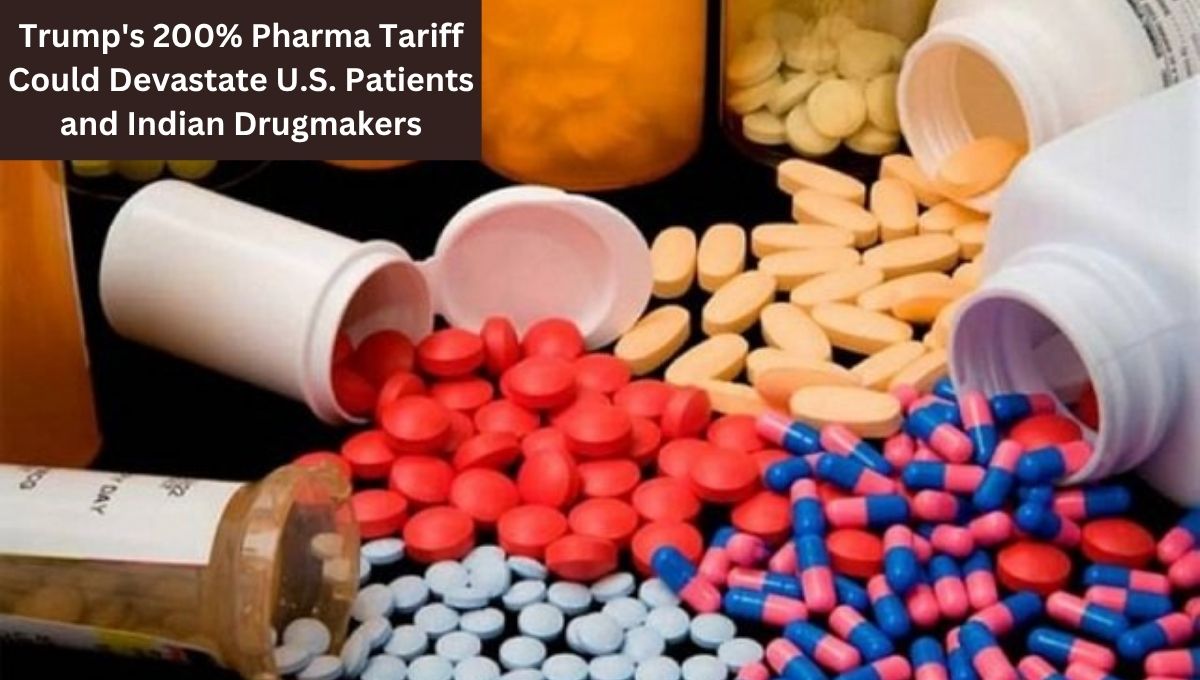
As part of a sweeping reciprocal trade strategy, Trump’s 200% Pharma Tariff Could Devastate U.S. Patients and Indian Drugmakers. U.S. President Donald Trump has signaled his intent to impose pharmaceutical tariffs as high as 200% starting August 1. Healthcare experts warn this could lead to drug shortages, soaring prices, and severe consequences for uninsured Americans, while also shaking the foundations of India’s massive pharmaceutical export sector.
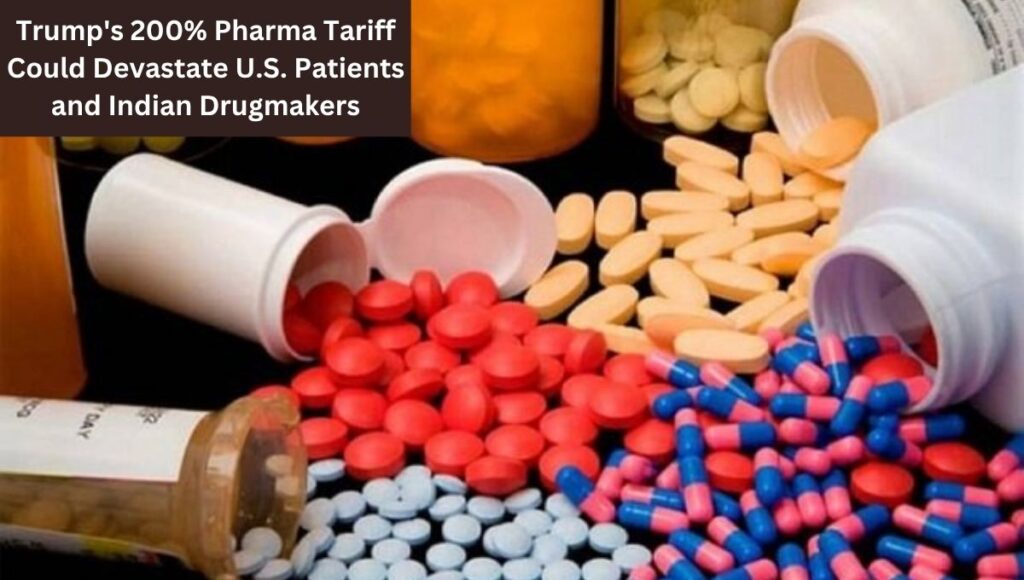
Trump’s 200% Pharma Tariff Could Devastate U.S. Patients and Indian Drugmakers
U.S. Dependent on Generic Drug Imports from India and China
The United States is the world’s largest importer of pharmaceuticals, with generic drugs accounting for 90% of all U.S. prescriptions.
More than 70% of these generics come from India and China, including both finished drugs and Active Pharmaceutical Ingredients (APIs).
U.S. Customs data shows pharmaceutical imports have more than doubled over the past decade, making them the second-largest import category by value.
Any disruption caused by Trump’s pharma tariffs will hit a supply chain that millions of American patients rely on daily.
Why Tariffs Will Hit Generic Drug Prices Hard
While branded drugmakers like Pfizer and Merck enjoy generous margins and flexibility, generic manufacturers operate on razor-thin profits. A 200% tariff would force many to raise prices or abandon certain drugs altogether.
“Since margins are already very thin, the manufacturers would almost certainly pass them on to payers,” said Margaret Kyle, a professor at the Center for Industrial Economics.
Stephen Ezell, VP of Global Innovation Policy at ITIF, echoed this concern: “Higher prices will strain Medicare, Medicaid, and private insurance, and increase out-of-pocket costs for consumers.”
Uninsured Americans: The Hardest Hit
Approximately 26 million Americans are currently uninsured, with the Congressional Budget Office predicting 16 million more to lose coverage by 2034 due to Trump’s One Big Beautiful Bill Act.
“There’s going to be millions more people who can’t afford their medications,” said Ameet Sarpatwari, a Harvard Medical School professor.
“Taxpayers will eventually foot the bill in ERs and ICUs when preventable conditions escalate.”
Medicaid Could Lose Purchasing Power
Even those insured through Medicaid are at risk. New budget cuts, combined with inflated drug prices due to tariffs, could erode purchasing power and limit access to affordable medicines.
Ezell warned that this would disproportionately hurt vulnerable communities: “Less coverage, higher costs, and longer treatment delays will result.”
Risk of Generic Drug Shortages
Experts say essential generics like antibiotics, blood pressure medications, and cancer treatments could vanish from the market.
According to a HealthAffairs report, the tariffs may force manufacturers to abandon production of low-profit but vital drugs.
Generics often cost 80-85% less than branded alternatives, and switching isn’t feasible for most patients.
Ezell cited oncology as an example: “Interruptions in generic chemotherapy availability could be fatal.”
Domestic Drug Manufacturing: Easier Said Than Done
Trump argues the tariffs will boost domestic drug manufacturing. But experts say achieving that will require:
- Regulatory reform
- Skilled labor
- Billions in investment
- Years of development time
“India dominates generic production due to mature infrastructure and cost efficiency,” Ezell noted. “The U.S. can’t replicate that overnight.”
Professor Kyle added that “protection from foreign competition will weaken incentives for domestic firms to innovate and cut costs.”
FDA Cuts Could Compromise Oversight
The FDA recently suffered a 5.5% budget cut and lost 3,500 employees, slowing approval of new facilities and reducing overseas inspections.
“If manufacturers are squeezed by tariffs, they may defer equipment maintenance or cut staff, which could affect drug quality,” Ezell warned.
Drug Safety Already Under Scrutiny
FDA inspections in May uncovered disturbing issues, including at Granules India, which had bird droppings and feathers near its air handling units.
Over 33,000 bottles of hypertension meds were recalled. A study from Ohio State University linked Indian generics to a higher rate of severe adverse events.
“We already have too few generic producers,” Sarpatwari noted. “Losing even one critical manufacturer destabilizes the market.”
Indian Drugmakers in the Line of Fire
Indian pharmaceutical companies derive a significant share of revenue from the U.S.:
- Biocon: 44% of FY24 revenue
- Lupin: 37%
- Sun Pharma: 32%
- Laurus Labs: 17%
Others, like Dr Reddy’s, Zydus Lifesciences, and Gland Pharma, are also deeply exposed. A CNBC report indicated that many Indian firms are already working to diversify their export markets.
Malaysia and Global Ripple Effects
While Malaysia doesn’t export directly to the U.S., it relies on 60% imported pharmaceuticals, making it vulnerable to global supply shifts.
MPS President Prof. Amrahi Buang said Malaysia is focusing on regional ties with ASEAN, BRICS, and China to mitigate risk.
Pharmaniaga Berhad MD Zulkifli Jafar emphasized supply chain monitoring and contingency planning: “Our priority remains uninterrupted service.”
APHM President Dr. Kuljit Singh said Malaysia’s generics ecosystem is strong but warned: “If Indian firms redirect exports to the U.S., secondary markets like Malaysia could face delays or shortages.”
Can Generic Medicine Fill the Gap?
According to MCPG President Sarah Abdullah, local generics may absorb some of the demand surge. However, availability depends on access to raw materials and a stable supply chain.
“Generics here meet Good Manufacturing Practices,” she noted, “but geopolitics could affect raw input prices and availability.”
Trump Pushes Ahead with Trade Talks
Trump said the tariffs are part of broader reciprocal trade efforts under Section 232 of the Trade Expansion Act.
He hinted at pending trade agreements with India and possibly Indonesia, in exchange for reduced tariff rates and expanded U.S. exports.
The EU, currently facing a 30% tariff, is also in negotiations. “Some countries are opening up; some aren’t,” Trump stated.
Final Thoughts: Who Pays the Price?
Trump’s proposed 200% pharmaceutical tariff may fulfill political goals around reshoring and national security, but experts warn it risks:
- Higher costs for uninsured and underinsured Americans
- Strained public health programs like Medicaid and Medicare
- Drug shortages and treatment delays
- Quality risks due to manufacturer cost-cutting
- Disruption to global supply chains
Unless paired with serious public investment and regulatory planning, this policy may hurt more than it helps, with the poorest Americans and global healthcare systems paying the steepest price.
Stay with The News for continued coverage of global trade, healthcare, and economic policy developments.
Also Read: Trump’s Tariff Tsunami: 50% on Copper, 200% Warning on Pharma – India in the Crossfire
Also Read: ‘Absurd, Self-Defeating’: Indian Pharma Industry Calls Out Trump’s 200% Tariff Threat