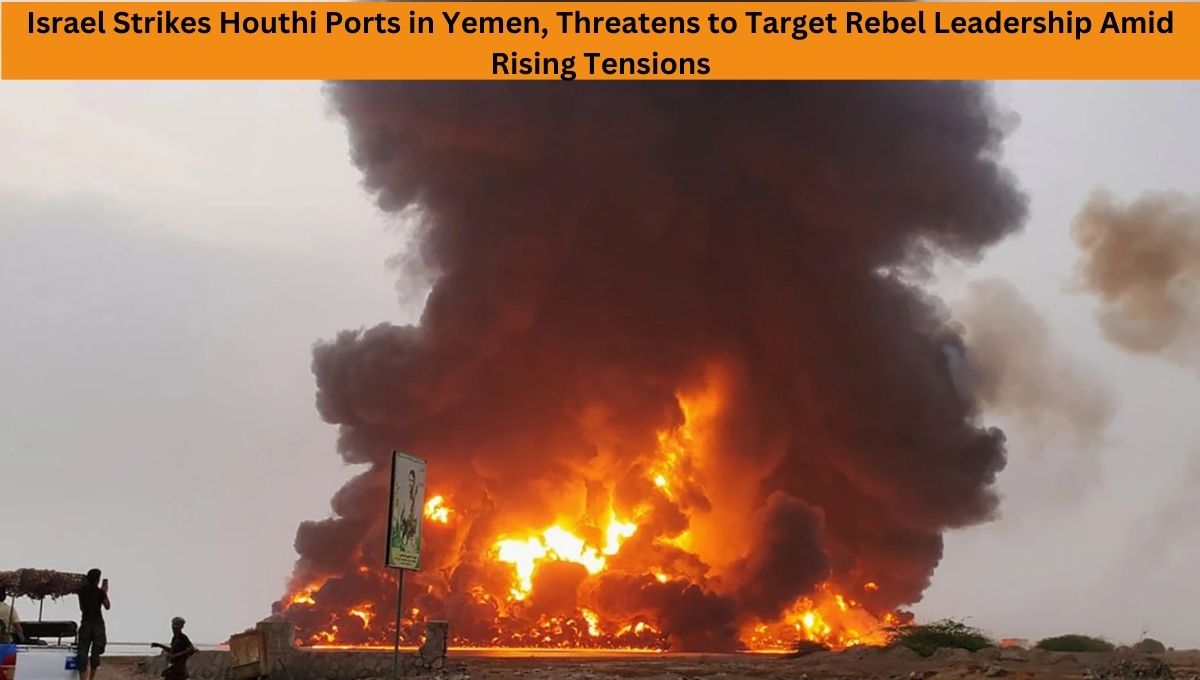
In Israel Houthi conflict, Israel Strikes Houthi Ports in Yemen, Threatens to Target Rebel Leadership Amid Rising Tensions. On Friday, the Israel Defense Forces (IDF) launched airstrikes targeting the Houthi-controlled ports of Hodeidah and Salif along Yemen’s Red Sea coast. The strikes mark a significant escalation in the Israel-Houthi conflict, as tensions continue to rise across the region in the wake of the ongoing Gaza war.
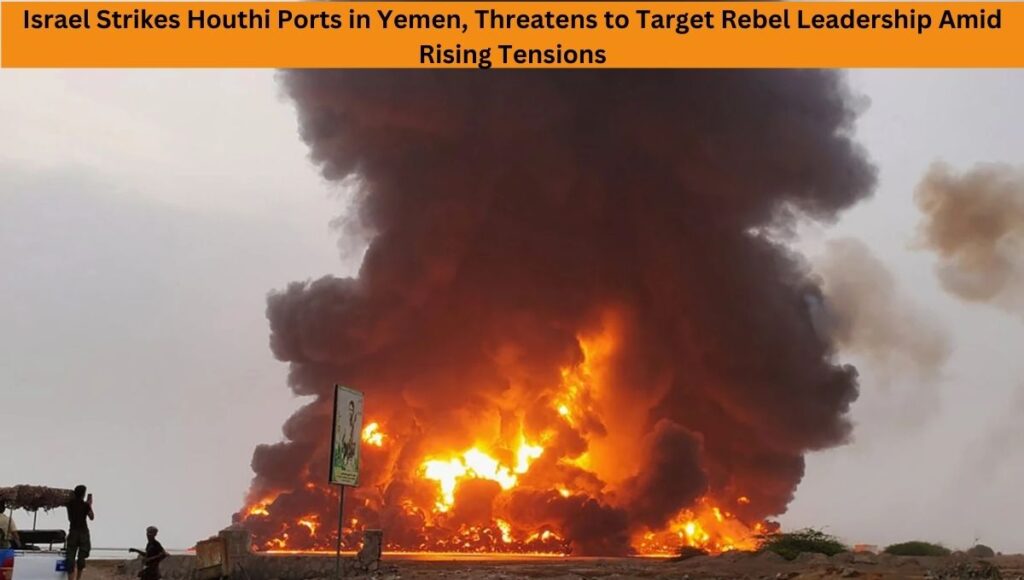
Israel Strikes Houthi Ports in Yemen, Threatens to Target Rebel Leadership Amid Rising Tensions
Amid Escalating Regional Conflict, Israel Hits Houthi Ports in Yemen
Saturday night’s sirens came after two Houthi-controlled ports in Yemen were struck by the IDF. According to the IDF, the ports were being used to transfer Iranian-supplied weapons and facilitate the Houthi group’s missile launches toward Israel.
Over 30 munitions were dropped on what Israel described as “terrorist infrastructure” within the port areas. The Houthi-run health ministry confirmed at least one person was killed and nine others were wounded in the strikes.
Ports of Hodeidah and Salif Allegedly Used for Weapons Transfer
The Israeli military emphasized that both Hodeidah and Salif ports were part of a broader logistical network used by the Iran-backed Houthi rebels to smuggle and launch missiles. In an official statement posted on X (formerly Twitter), the IDF declared:
“These ports are used to transfer weapons and are a further example of the Houthi terrorist regime’s systematic and cynical exploitation of civilian infrastructure in order to advance terrorist activities.”
To minimize civilian casualties, the IDF said the airstrikes were preceded by “numerous advanced warnings” to residents in the area, urging them to evacuate.
Netanyahu and Katz Vow to Target Houthi Leaders
Israeli Prime Minister Benjamin Netanyahu and Defense Minister Israel Katz issued a stern joint warning, promising further retaliation if Houthi missile attacks persist.
“If the Houthis continue to fire missiles at the State of Israel, they will be severely harmed, and we will also hurt the leaders,” the statement said.
They specifically mentioned Abdul Malik al-Houthi, leader of the Houthi movement, as a potential future target. Comparisons were drawn to previous targeted killings of Hamas’ Yahya Sinwar and Mohammed Deif, as well as Hezbollah leader Hassan Nasrallah.
Katz further stated on social media,
“We will hunt down and eliminate Abdul-Malik al-Houthi in Yemen, just as we did with terror leaders across the region. We will defend ourselves by our own strength.”
Houthi Defiance and Iran’s Shadow
In response, Mohammed Ali al-Houthi, a senior Houthi official, dismissed the threats from Israel as “illusions,” accusing Tel Aviv of setting unattainable goals and trying to “buy time.”
The Houthis, a key player in Iran’s Axis of Resistance alongside Hezbollah in Lebanon and Hamas in Gaza continue to portray their missile launches as acts of solidarity with Palestinians in Gaza.
Despite agreeing to halt attacks on U.S. naval assets earlier this month in a truce with Washington, the Houthis have intensified attacks against Israel. Since March 18, when Israel resumed its offensive in Gaza, the Houthis have launched at least 34 ballistic missiles and 10 drones toward Israel.
Sirens Sound Across Israel Following Yemen Missile Launch
Just hours after the IDF strikes on Yemeni ports, air raid sirens blared across central and coastal Israel. The IDF reported intercepting a missile launched from Yemen, marking the fifth such attack in a week.
Emergency services confirmed no casualties, aside from a minor injury in Bat Yam during a rush to a shelter. The missile was intercepted without impact, though debris searches were underway.
The timing of the sirens coincided with a rare celebratory moment for Israel its second-place win in the Eurovision Song Contest further underscoring the reach and disruption caused by Houthi missile activity.
Trump’s Middle East Visit and Ceasefire Hopes
The airstrikes also come during former U.S. President Donald Trump’s visit to the Gulf states, where he discussed regional crises including the conflict in Gaza.
Although Trump did not stop in Israel, hopes had risen that his trip might revive talks of a ceasefire or bring humanitarian relief to Gaza.
Speaking from Abu Dhabi, Trump stated: “We’re looking at Gaza… A lot of people are starving. There’s a lot of bad things going on.”
However, Israeli officials have made it clear that their policy going forward is to retaliate forcefully for every projectile launched toward Israeli territory, regardless of ceasefire efforts involving other nations.
Ports Damaged, Further Strikes Expected
According to Israeli military estimates, the strikes have rendered both Hodeidah and Salif ports inoperable for at least a month. With the Houthis continuing their attacks and Israel pledging to strike harder, the situation remains volatile.
As Netanyahu put it, “We are not willing to sit idly by and allow the Houthis to harm us. We will strike them much harder, including their leadership and all the infrastructure that enables them to harm us.”
The Israel-Houthi conflict now threatens to open yet another front in an already destabilized Middle East, with the Red Sea’s security and global shipping lanes also at stake.
Conclusion
With tensions escalating, both sides appear locked in a dangerous tit-for-tat cycle. The IDF airstrikes on Hodeidah and Salif, the threat to Abdul Malik al-Houthi, and renewed missile attacks from Yemen signal that the Israel-Houthi conflict is far from over and may soon pull in more regional players.
As both Israel and the Houthis dig in, the Red Sea’s fragile stability and humanitarian concerns across the region hang in the balance.
Also Read: Houthis deny Israeli attacks on Yemeni ports after warning
Related Posts:
- Houthi Prime Minister Ahmed al-Rahawi Killed in…

- Yemen War 2025: Israeli Strike Kills Houthi Military…

- Israel’s Gaza Takeover Plan: What’s Been Achieved…

- Israel–Hamas Ceasefire Under Strain: 4 More Hostage…

- Israel Strikes Iranian Airfields, Destroys 15 Jets…
- 5 Key Developments as Israel Confirms Hamas Handed…
