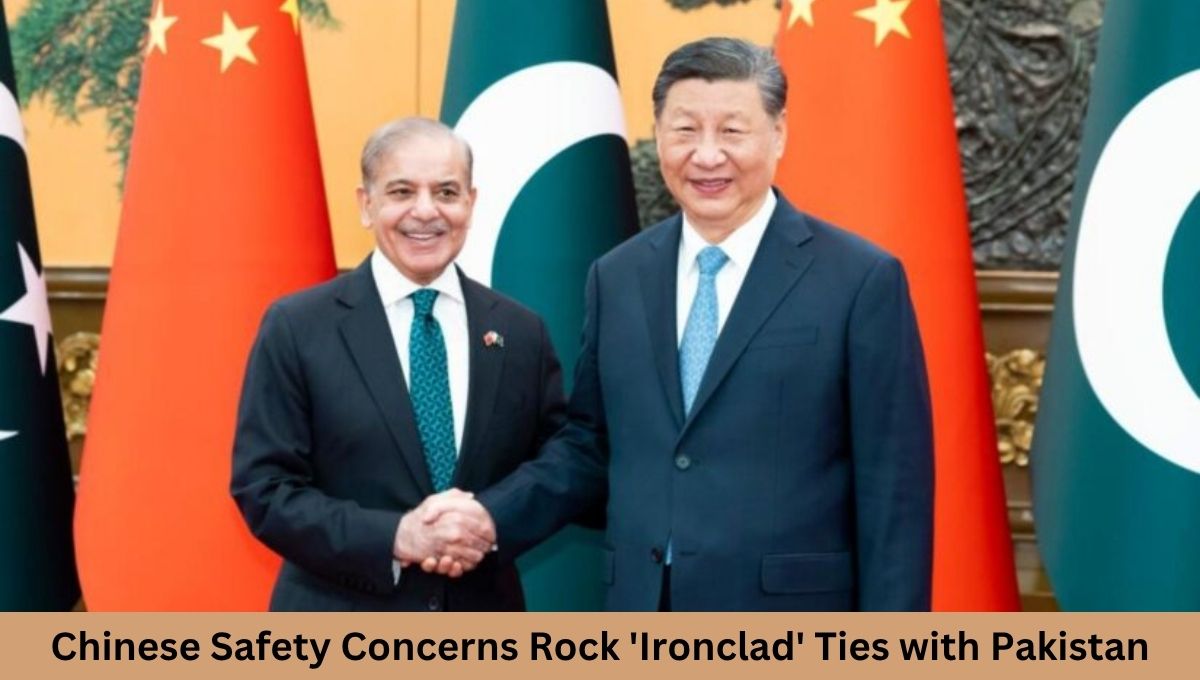
Chinese Safety Concerns Rock ‘Ironclad’ Ties with Pakistan, as repeated attacks on Chinese nationals spark diplomatic friction and calls for enhanced security measures. Pakistan’s newly appointed Field Marshal General Asim Munir received a harsh diplomatic reality check during his latest visit to China.
Instead of a celebratory welcome, Munir was met with visible displeasure from Chinese Foreign Minister Wang Yi, who raised urgent concerns about the safety of Chinese nationals in Pakistan. The meeting took place amidst an increasingly tense backdrop of targeted attacks against Chinese citizens, undermining decades of supposed “ironclad” friendship between the two countries.
Chinese Safety Concerns Rock ‘Ironclad’ Ties with Pakistan
Repeated Attacks on Chinese Nationals Undermine Trust
China’s frustration is rooted in a disturbing pattern of violence. Over the past few years, Chinese engineers, educators, and workers have been targeted in deadly attacks, primarily carried out by the Balochistan Liberation Army (BLA) and other insurgent groups like Tehrik-i-Taliban Pakistan (TTP).
Major Incidents Include:
- October 2024: Suicide bombing near Karachi Airport killed two Chinese nationals.
- March 2024: Five Chinese engineers and one Pakistani driver killed in a suicide attack in Bisham.
- August 2023: A convoy en route to Gwadar Port was ambushed; four Chinese citizens were among the dead.
- April 2022: Three Chinese teachers died in a targeted bombing at Karachi University.
- July 2021: Dasu Dam bus attack claimed nine Chinese lives.
Despite repeated promises of protection from Islamabad, the persistent failure to prevent such attacks has deeply alarmed Beijing.
CPEC In Jeopardy: Billions at Risk
At stake is the multi-billion dollar China-Pakistan Economic Corridor (CPEC), a flagship of Beijing’s Belt and Road Initiative (BRI). With over $60 billion invested, China views CPEC as critical to its regional ambitions.
Yet, growing unrest in Pakistan, especially in Balochistan and Khyber Pakhtunkhwa, now threatens these ambitions.
Chinese intelligence had recently flagged heightened threats, prompting increased pressure on Pakistani leadership to act decisively.
Wang Yi’s Stern Warning to Asim Munir
According to diplomatic sources, the tone during the Beijing talks was unusually blunt. Wang Yi raised “grave concerns” about the continuing attacks, directly confronting Munir about Islamabad’s repeated failure to protect Chinese lives and assets.
While both sides reaffirmed the symbolic strength of their “ironclad friendship”, the subtext was clear: China’s patience is wearing thin.
The language used by Wang Yi reportedly included sharp warnings about the implications of continued violence, with statements like, “If you cannot guarantee security, how can we guarantee cooperation?”
Munir’s Reassurances: Promises Amid Constraints
General Munir responded with assurances of increased security, promising deeper military patrols, fortified infrastructure, and expanded counter-terrorism cooperation.
He reaffirmed that the Pakistani military would take “all necessary measures” to ensure the safety of Chinese nationals.
He also praised Beijing’s ongoing support, calling China a “rock-solid partner” and describing the friendship as being “forged in blood and trust.”
But assurances alone may no longer suffice. Pakistan is grappling with internal instability, economic challenges, and a growing insurgency.
With militant networks emboldened, the question remains: can Islamabad deliver?
Chinese Public Opinion Turns Wary
China’s concern is not limited to diplomacy. The attacks have sparked outrage on Chinese social media platforms, where users have expressed dismay over the Pakistani state’s inability to protect their compatriots.
There are increasing calls within China to reassess investments and deploy private security forces a move that Beijing has already quietly initiated in 2024.
Chinese Embassy Reacts Firmly
Following the October 2024 Karachi attack, the Chinese Embassy in Islamabad condemned the violence and urged Pakistani authorities to apprehend the perpetrators swiftly.
A statement said, “The Chinese Embassy and Consulate in Pakistan strongly condemn this terrorist act, express deep condolences to the victims, and demand enhanced security guarantees for Chinese nationals.”
A Pattern of Delayed Justice and Inaction
From 2018’s attack on the Chinese Consulate in Karachi to 2024’s Karachi airport bombing, a pattern has emerged: high-profile attacks followed by Pakistani reassurances, but limited progress in actual deterrence.
This cycle has led Beijing to demand not just promises, but concrete outcomes.
Internal Pressures on Pakistan
General Munir’s China visit came just weeks after Operation Sindoor, a retaliatory Indian military campaign against Pakistani-backed terrorist infrastructure.
India accused Pakistan of harboring The Resistance Front (TRF), responsible for an April 2025 massacre in Kashmir.
The Indian Army claimed that China had provided live surveillance data to Pakistan during Operation Sindoor.
While unverified, this has added another layer of geopolitical intrigue to the regional security dynamic.
China’s Response: Strategic Yet Unyielding
Despite its growing displeasure, China remains committed to the partnership. Wang Yi reiterated support for Pakistan in his official statement, calling Pakistan a “priority in China’s regional diplomacy.”
However, Beijing’s continued support now hinges on tangible steps toward counter-terrorism.
“China supports Pakistan in resolutely combating all forms of terrorism and hopes that the Pakistani military will continue to make every effort to ensure the safety of Chinese personnel, projects and institutions in Pakistan.” – Chinese Foreign Ministry
Future of CPEC Hangs in Balance
If Pakistan fails to clamp down on terrorism, CPEC’s viability could be undermined. Already, project timelines have been delayed, investor confidence is shaken, and newer joint ventures are being reconsidered.
China may increase its military footprint or deploy private contractors in sensitive regions. But such a step could provoke domestic backlash within Pakistan, where foreign boots are a sensitive subject.
Broader Regional Implications
The repeated attacks on Chinese nationals are reshaping Beijing’s risk calculus not just in Pakistan, but across its Belt and Road investments.
The Baloch insurgency, in particular, is now viewed as a strategic threat, not a local nuisance.
Additionally, India is watching closely. Any cracks in the China-Pakistan partnership offer New Delhi an opportunity to push back against CPEC’s expansion into disputed territories.
Conclusion: A Rock-Solid Partnership Facing Fragile Realities
Asim Munir’s visit to China was intended to reinforce Pakistan’s military ties with Beijing. Instead, it exposed the deep fissures in their so-called “ironclad” relationship. With Chinese lives at risk and economic stakes running high, Beijing has sent a clear message: it will no longer tolerate empty assurances. Whether Pakistan can act decisively remains uncertain. But one thing is clear China is no longer willing to look the other way.
Also Read: Chinese Nationals Arrested in U.S. for Smuggling Deadly Fungus Linked to Agroterrorism
Related Posts:
- 9 Powerful Signals Behind Saudi Arabia Honoring…

- Pak Army Chief Asim Munir Heads to US Again, Deepens…

- Trump Hosts Pakistan’s Munir, Claims Credit for Averting War

- 9 Critical Pressures Trapping Pakistan’s Army Chief…

- Trump Keeps Pakistan PM Shehbaz Sharif & Army Chief…

- 7 Key Developments as Pakistan Senate Passes…