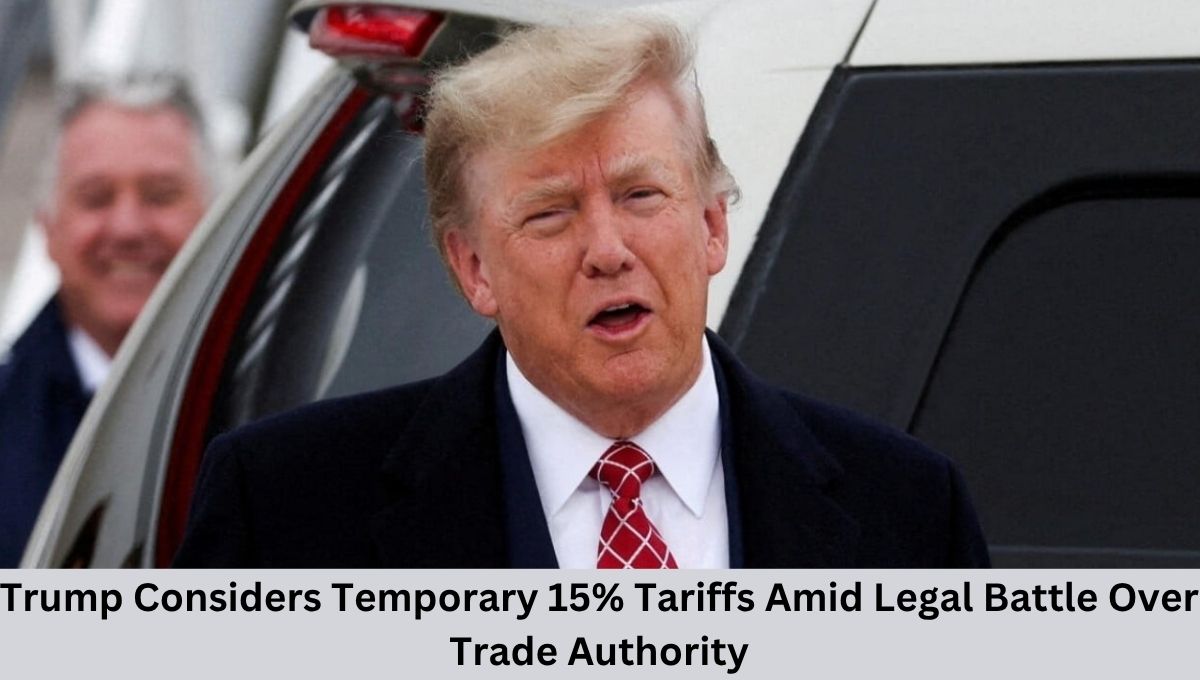
In a new development Trump Considers Temporary 15% Tariffs Amid Legal Battle Over Trade Authority. The Trump administration is weighing a bold move to impose temporary tariffs of up to 15% on foreign goods by invoking a rarely-used section of the Trade Act of 1974.
This development comes as the president faces significant legal challenges over his authority to impose broad tariffs without Congress’s approval. The proposed tariffs could serve as a temporary measure while the administration navigates ongoing court battles and diplomatic negotiations.
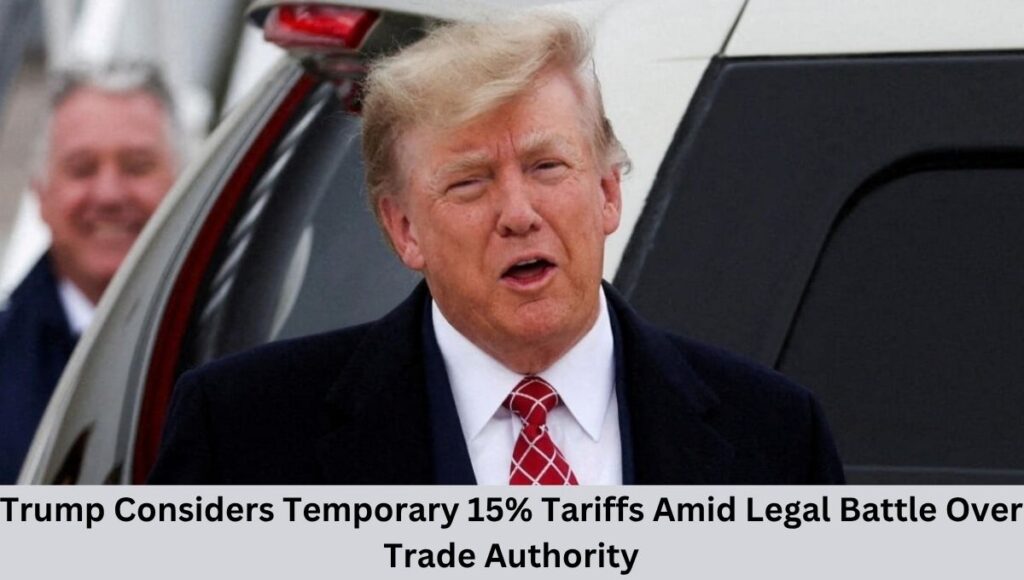
Trump Considers Temporary 15% Tariffs Amid Legal Battle Over Trade Authority
Trump’s Tariff Strategy Hits Legal Roadblocks
President Trump’s sweeping tariff agenda has encountered a major setback. The U.S. Court of International Trade ruled that Trump overstepped his authority by using the International Emergency Economic Powers Act (IEEPA) to impose tariffs.
This law, originally intended for national emergencies, was deemed an improper basis for the broad economic tariffs Trump enacted.
Following this ruling, the administration is now exploring “Plan B” leveraging Section 122 of the Trade Act of 1974, which permits tariffs of up to 15% for up to 150 days during national economic emergencies.
This provision has rarely been used, but it may provide a temporary legal shield as the administration seeks more permanent tariff solutions.
Federal Appeals Court Provides Temporary Relief
Despite the trade court’s ruling, the Court of Appeals for the Federal Circuit granted a temporary stay, allowing many of Trump’s tariffs to remain in place. This means the effective tariff rate remains around 15%, a sharp increase from the pre-Trump rate of 2–3%.
This stay gives the administration crucial leverage in ongoing trade negotiations with key partners like Japan, China, and India. According to Oxford Research, this legal reprieve sustains Trump’s ability to influence global trade talks while the courts continue to review the case.
Supreme Court Appeal Looms Large
The White House, undeterred by the initial setback, is preparing to escalate the issue to the Supreme Court. Press Secretary Karoline Leavitt emphasized the administration’s frustration, calling the trade court’s ruling “brazen judicial overreach” that undermines the president’s national security powers and economic mandate.
Leavitt stated the administration may file an emergency appeal as soon as this Friday if the federal appeals court does not extend the temporary stay. Trump and his team argue that the Supreme Court must intervene to protect presidential authority over trade.
Legal Debate: Congress vs. President on Tariff Authority
At the heart of the dispute is a constitutional question: who holds the power to impose tariffs? The trade court ruled that tariff authority belongs to Congress, not the president. The judges noted that allowing the president unlimited tariff powers under IEEPA would be an unconstitutional delegation of legislative power.
This ruling challenged Trump’s justification for tariffs related to national security concerns — including controlling the flow of fentanyl from countries like Mexico, Canada, and China — which had been central to his “Liberation Day” tariff plan.
Administration Pushes Back: Claims of Judicial Overreach
The Trump administration has vocally condemned the court’s ruling. Senior advisors Stephen Miller and Peter Navarro accused the judiciary of bias, labeling courts “pro-importer” and even accusing them of staging a “judicial coup” against Trump’s policies.
Navarro pointed out other legal avenues for tariffs, including the Smoot-Hawley Tariff Act of 1930 and Section 301, which allow for retaliatory trade actions. The administration insists it will explore all options to keep tariffs in place.
Ongoing Trade Negotiations Amid Uncertainty
Meanwhile, trade discussions continue, with a U.S. delegation scheduled to visit India in early June to negotiate a Bilateral Trade Agreement (BTA). However, some experts warn that Trump’s confrontational tactics may jeopardize successful deals.
Former U.S. trade official Ray Vickery cautioned that the administration’s “bullying approach” could hinder progress with India and other partners. Meanwhile, Trump has taken credit for helping de-escalate recent tensions between India and Pakistan, although Indian officials attribute the ceasefire to their own diplomatic efforts.
Global Reactions: Mixed Responses to the Tariff Dispute
Internationally, responses to the legal battles and tariffs have been cautious. Canada’s Prime Minister Mark Carney welcomed the trade court’s ruling as consistent with global trade norms. European and British officials have remained neutral, waiting for the appeal outcome.
Experts warn that prolonged legal uncertainty could slow down new trade deals. George Lagarias, chief economist at Forvis Mazars, noted that the current stay provides only temporary relief and time for businesses to prepare for possible tariff changes.
Economic Fallout: Billions in Costs and Supply Chain Disruptions
Reuters reports that Trump’s tariffs have already cost U.S. companies over $34 billion in lost sales and increased supply chain expenses. Major corporations such as Ford, GM, Diageo, and Honda have revised forecasts or moved operations due to ongoing trade volatility.
Small businesses, represented by groups like the Liberty Justice Center, are among the hardest hit. Jeffrey Schwab, senior counsel at the center, warned that these tariffs threaten the survival of many small companies, fueling the legal challenges against the administration.
What Lies Ahead for Trump’s Tariff Agenda?
As the legal battles progress and the Trump administration explores alternate tariff authorities, uncertainty looms over U.S. trade policy. Whether the Supreme Court ultimately sides with the president remains to be seen, but the administration’s resolve to maintain tariffs is clear.
For American businesses and global markets, the prospect of continued tariffs, court rulings, and diplomatic negotiations signals more months of uncertainty and ongoing economic disruption.
Also Read: Trump Administration Eyes 15% Global Tariffs for 150 Days Amid Legal Setbacks
Related Posts:
- What’s Next for Donald Trump After Court Rules His…
- 5 Powerful Takeaways as Trump Calls Supreme Court…

- 7 Explosive Claims as Trump Says Tariffs Will…
- Trump Administration Eyes 15% Global Tariffs for 150…
- Trump Targets Sri Lanka, BRICS with Sweeping Tariffs
- Tariff Storm Looms as Trump’s 90-Day Pause Nears Expiration