Nobel Prizes 2025: Major Discoveries in Medicine & Physics redefine the boundaries of human achievement. The Nobel Prizes 2025 have officially begun, marking the start of a week-long global focus on outstanding contributions to science and human knowledge. The first announcements this year highlighted groundbreaking work in Physiology or Medicine and Physics, demonstrating the continuing importance of research in understanding the human body and the universe.
These awards, widely regarded as the pinnacle of scientific achievement, recognize individuals whose work has the potential to transform healthcare, technology, and our comprehension of natural laws.
Nobel Prizes 2025: Major Discoveries in Medicine & Physics
2025 Nobel Prize in Physiology or Medicine
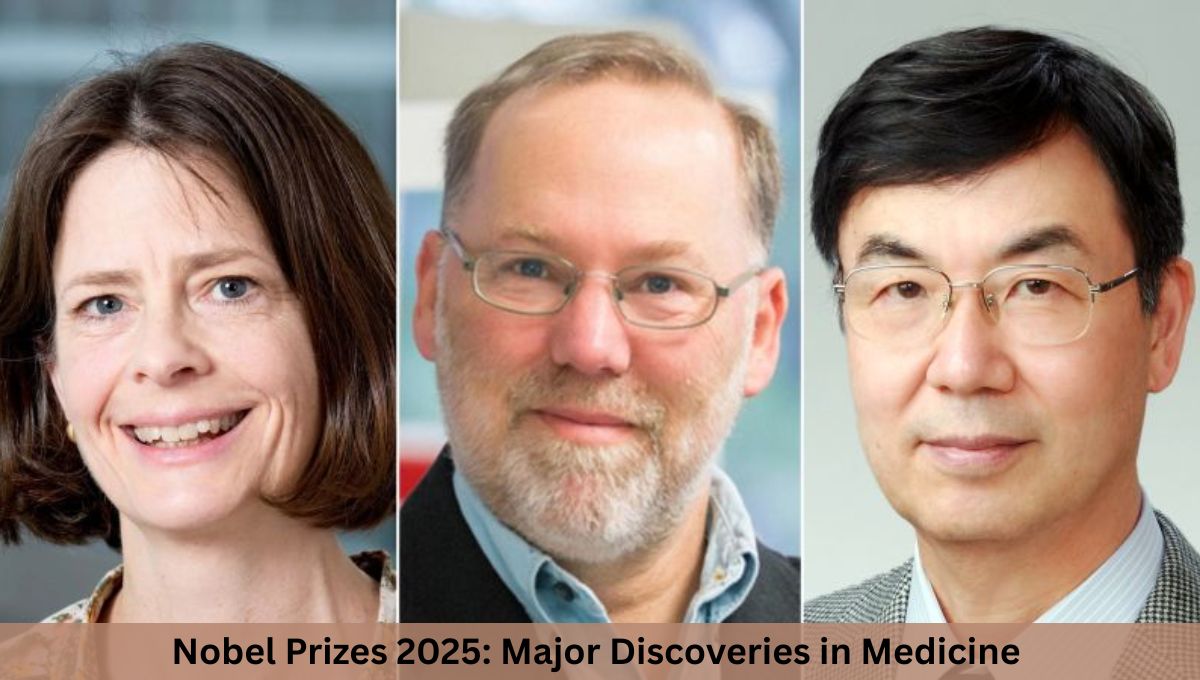
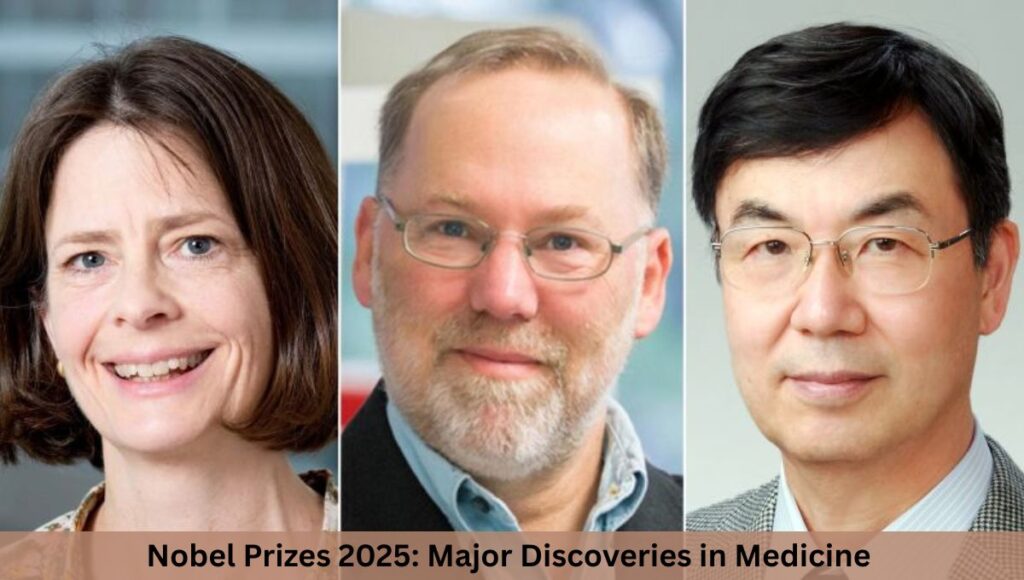
The Nobel Prize in Physiology or Medicine 2025 was awarded to Mary E. Brunkow (USA), Fred Ramsdell (USA), and Shimon Sakaguchi (Japan) for their pioneering discoveries regarding peripheral immune tolerance. Their research explains how the human immune system defends the body from infections while avoiding attacks on its own tissues.
Breakthrough Discoveries
The laureates identified regulatory T-cells, a type of immune cell that functions as the body’s “security guard” to prevent immune cells from attacking healthy tissue. Their work has clarified why autoimmune diseases like type 1 diabetes, multiple sclerosis, and rheumatoid arthritis occur and provides a foundation for novel medical therapies.
- Mary Brunkow and Fred Ramsdell discovered a key mutation in the FOXP3 gene, explaining rare inherited autoimmune disorders and guiding research on immune regulation.
- Shimon Sakaguchi conducted experiments demonstrating how regulatory T-cells suppress harmful immune responses outside the thymus, complementing the discoveries of Brunkow and Ramsdell.
Significance and Applications
The Nobel Committee highlighted that these findings have laid the groundwork for new treatments in autoimmune disease management, cancer therapy, and organ transplantation. The discoveries illuminate the mechanisms of immune system balance, offering strategies to either boost or suppress immune responses depending on medical needs.
Award Details
- Prize money: 11 million Swedish kronor (~$1.2 million), shared equally among the three laureates.
- Ceremony: To be presented in Stockholm on December 10, the anniversary of Alfred Nobel’s death.
- Institutions involved: The award was conferred by the Nobel Assembly at the Karolinska Institutet in Sweden.
The recognition of Brunkow, Ramsdell, and Sakaguchi underscores the continuing impact of fundamental medical research, where decades of experiments reveal mechanisms with transformative potential for global health.
2025 Nobel Prize in Physics
The Nobel Prize in Physics 2025 was awarded by the Royal Swedish Academy of Sciences for groundbreaking discoveries that deepen understanding of the fundamental properties of matter and energy. The recipients’ work expands knowledge in areas with both theoretical and practical significance, including quantum phenomena, cosmology, and material science.
Key Discoveries
While the committee’s announcement focuses on 2025 laureates, the awarded research demonstrates:
- Advances in quantum systems, providing insights into how particles behave at microscopic scales.
- Innovations in measurement techniques, enabling more precise observation of physical processes.
- Applications with broad implications, ranging from semiconductor technology to new energy solutions.
The Physics prize continues to highlight the link between theoretical exploration and practical technological progress, emphasizing research that can influence both academic understanding and everyday life.
Award Details
- Ceremony: The Physics prize, along with Chemistry and Economics awards, will be formally presented in Stockholm on December 10.
- Prize money: Each laureate receives a share of 11 million Swedish kronor (~$1.2 million).
- Nominating and awarding body: The Royal Swedish Academy of Sciences handles both nominations and selection.
The announcement of the 2025 Physics Nobel Prize reinforces the international recognition of scientists who advance humanity’s knowledge of the universe while paving the way for innovations in technology and engineering.
Also Read: Nobel Prize 2025: Physics award honours breakthroughs in quantum mechanics
The Nobel Prizes: Overview
The Nobel Prizes were established through the will of Swedish industrialist Alfred Nobel in 1895, intended to reward those who “conferred the greatest benefit to humankind.” Initially awarded in Physics, Chemistry, Medicine, Literature, and Peace, the Nobel Prizes now also include Economic Sciences, established by Sweden’s central bank in 1968.
- Award components: Gold medal, diploma, and a cash prize from the Nobel Foundation.
- Annual timeline: Prize announcements occur in October, followed by ceremonies in December.
- Selection process: Nominations are confidential and are submitted by experts, previous laureates, and academics.
For 2025, the prizes continue to highlight scientific innovation with real-world applications, showcasing research that not only advances knowledge but also improves human health, safety, and understanding of natural laws.
2025 Nobel Prize Schedule
The announcements for the remaining categories in 2025 are scheduled as follows:
- Tuesday, October 7: Physics (announced)
- Wednesday, October 8: Chemistry
- Thursday, October 9: Literature
- Friday, October 10: Peace
- Monday, October 13: Economics
The Medicine and Physics awards already provide a strong foundation for this year’s Nobel cycle, with discoveries poised to influence both academic research and practical applications globally.
Why the 2025 Announcements Matter
The 2025 Nobel Prizes reflect ongoing global challenges and scientific achievements:
- Medical research: Addressing autoimmune disease, cancer, and immune system regulation.
- Physics discoveries: Deepening understanding of fundamental forces, matter, and energy.
By focusing on Medicine and Physics, the early 2025 awards underscore the continued relevance of science to improving human life and understanding the universe. The discoveries honored this year exemplify the Nobel mission of recognizing work that benefits humanity.
Also Read: Trump Says He Deserves Nobel Peace Prize for Ending ‘Seven Wars,’ Including India-Pakistan Conflict
Related Posts:
- 7 Groundbreaking Insights: Nobel Prize Winners…

- Chemistry Nobel Prize 2025: Groundbreaking Discoveries
- From Zebra-Striped Cows to Pizza-Loving Lizards:…

- 5 Amazing Facts About 2025 Nobel Physics Winners
- Jane Goodall Dies at 91: Trailblazing Conservation Icon

- Dramatic Moments Behind Trump’s Gaza Peace Push and…
