As Trump stalls U.S. involvement Israel-Iran War Escalates: Cluster Bombs, Missile Strikes, and Fading Hopes for Peace. As the deadly Israel-Iran conflict enters its second week, the war has entered a perilous new phase marked by the first use of cluster munitions by Iran, retaliatory missile strikes by Israel on nuclear facilities, rising civilian casualties, and a clear refusal by U.S. President Donald Trump to intervene diplomatically at least for now.
Despite global outcry, failed diplomatic attempts in Geneva, and growing concern at the United Nations, both Tehran and Tel Aviv appear locked into a trajectory of escalating retaliation.
Israel-Iran War Escalates: Cluster Bombs, Missile Strikes, and Fading Hopes for Peace
Iran Fires Cluster Bomb at Israel: First Use in Ongoing War
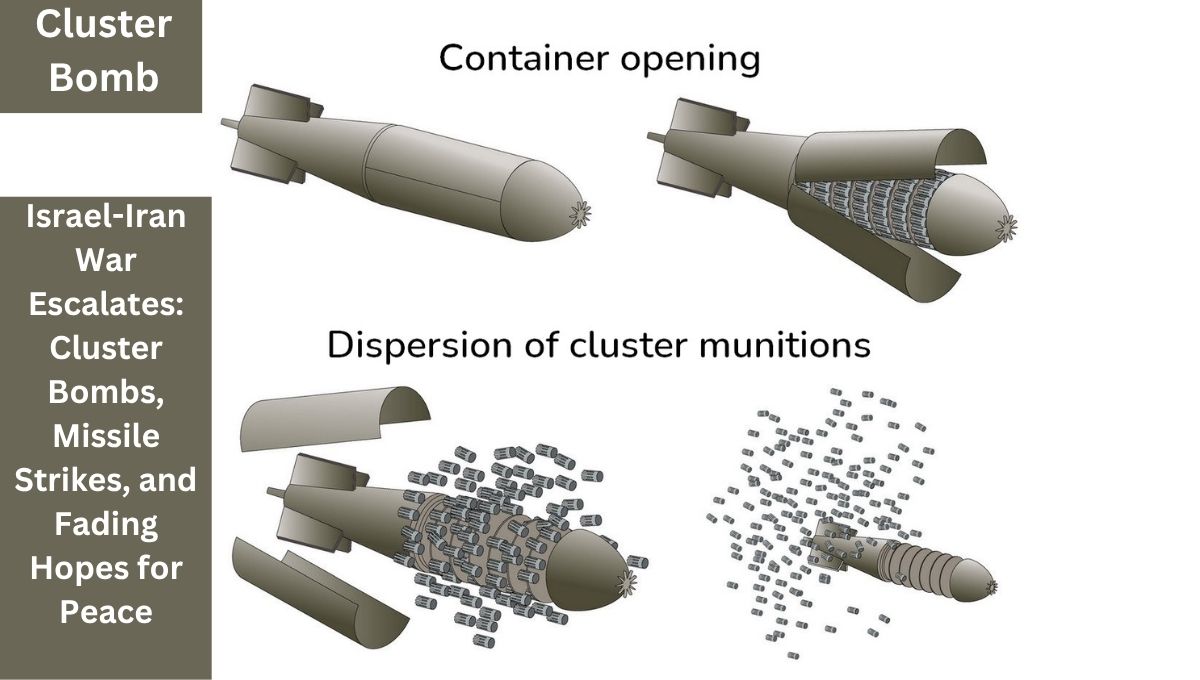
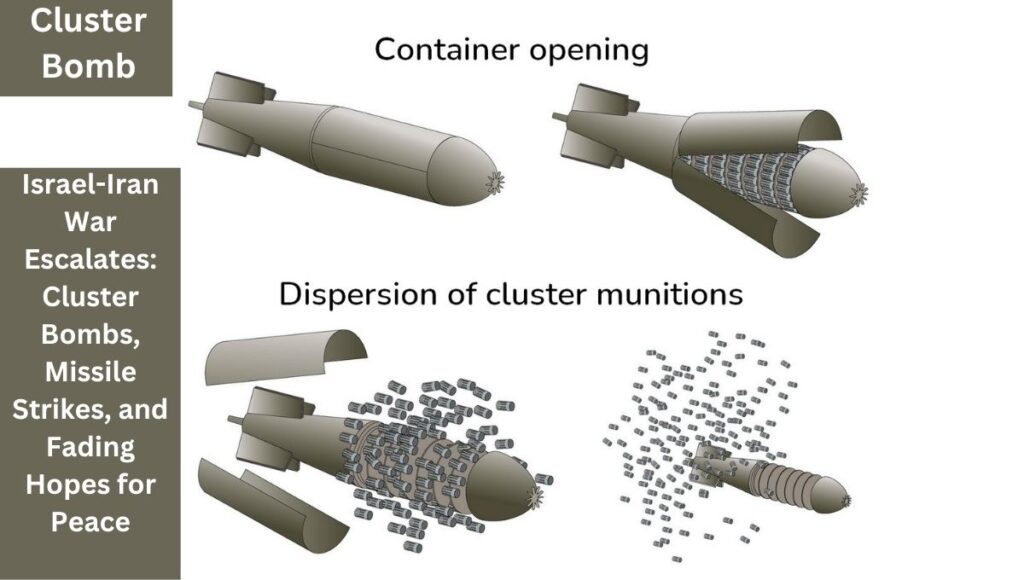
On June 19, Iran reportedly fired a ballistic missile carrying a cluster bomb warhead toward central Israel, in what analysts say is the first confirmed use of such internationally banned weapons in this conflict.
The Israel Defense Forces (IDF) stated the missile detonated at around 7 kilometres altitude, scattering 20 bomblets across an 8-kilometre radius, with one damaging a house in Azor, near Tel Aviv.
Cluster munitions are widely condemned due to their indiscriminate impact, especially in civilian areas. Over 100 countries ban their use under the 2008 Convention on Cluster Munitions, though Iran, Israel, the U.S., Russia, and China are not signatories.
What Are Cluster Munitions and Why Are They Controversial?
Cluster bombs are designed to disperse multiple small submunitions over a broad area. Unlike conventional warheads that detonate on impact, cluster bombs open mid-air, blanketing the target zone with bomblets.
Their unpredictability, high civilian casualty risk, and the potential for unexploded ordnance (UXO) have made them a focus of global arms control efforts. These bomblets often fail to explode on impact, remaining deadly for months or years after a conflict ends.
“These are weapons of indiscriminate destruction,” said Daryl Kimball, Executive Director of the Arms Control Association. “Their use in civilian areas may constitute war crimes.”
A Tactical Shift in Iran’s Missile Strategy
Iran’s use of cluster bombs marks a dangerous shift in its military tactics. Previously reliant on precision strikes and hypersonic missiles like the Fattah-1, Iran is now introducing munitions designed for area-wide impact.
Despite Israeli claims of air superiority and successful strikes against Iranian missile sites and leadership, Iran continues to fire Sejjil missiles, hypersonics, and now, multi-warhead ballistic missiles, proving its retaliatory capacity remains intact.
Israeli officials warn that even though each bomblet carries a smaller payload, the wider area of threat poses a significant danger, especially in densely populated zones like central Israel.
Geneva Talks Fail: Iran Holds Ground on Enrichment Rights
As missiles rained down, diplomatic talks in Geneva on Friday between Iranian Foreign Minister Abbas Araghchi and European diplomats failed to break the deadlock.
Iran reiterated that it won’t negotiate under military threat and refused to abandon uranium enrichment, though a senior Iranian official indicated Tehran may accept limits on enrichment short of a complete ban.
European leaders, including UK Foreign Secretary David Lammy, warned the next two weeks are critical to de-escalation. “This is a narrow window for diplomacy,” Lammy said. “It must not be wasted.”
Trump Declines Ceasefire Push, Cites Israeli Momentum
Meanwhile, U.S. President Donald Trump made it clear on Friday that he will not pressure Israel into a ceasefire, stating: “If somebody is winning, it’s a little bit harder to do than if somebody is losing.”
Speaking from Morristown, New Jersey, Trump confirmed that the U.S. is talking directly to Iran not through Europe but added he has no immediate plans to engage militarily, instead waiting to “see whether or not people come to their senses.”
Though reports indicate Trump has approved a strike plan, he appears to be delaying action to gauge Iran’s willingness to halt its nuclear program.
Israel’s Retaliation: Strikes on Iran’s Nuclear Infrastructure
In response to Iran’s cluster bomb attack and continued missile fire, Israel launched major airstrikes on June 20 targeting Iran’s nuclear facilities including the Arak reactor and Natanz enrichment site.
The Israeli military claimed the strikes were aimed at crippling Iran’s nuclear program, and at least one “inactive reactor” was “neutralized” to prevent restoration.
At the United Nations, Israeli envoy Danny Danon said military operations would continue until Iran’s nuclear threat is fully dismantled.
Civilian Casualties Climb as War Enters 9th Day
The war has already taken a severe human toll:
- Israel: 25 deaths, including a woman found in rubble from an earlier missile strike.
- Iran: At least 224 fatalities, including nuclear scientists, IRGC leaders, and civilians, according to independent reports.
The IDF also confirmed that 639 Iranians have been killed since the start of the campaign, citing drone strikes and targeted assassinations.
The human toll worsened when an Iranian missile struck Soroka Hospital in Beersheba, injuring 40 people and setting fire to the medical center. While Iran denied it was the intended target, Prime Minister Netanyahu vowed Tehran would pay a “heavy price.”
Pro-Iranian Militias and Global Powers React
Tensions are now threatening to expand regionally. Pro-Iranian militias in Iraq have threatened to retaliate if the U.S. intervenes.
Meanwhile, satellite images show U.S. military aircraft being repositioned from Qatar, indicating preparations for potential engagement.
At the UN Security Council, Russia and China have demanded immediate de-escalation, while Iran’s UN envoy warned that the U.S. may be preparing to enter the war.
Back home, hundreds of U.S. citizens have evacuated Iran, and international airlines have halted flights to both Tehran and Tel Aviv.
Trump Warns of Iran’s Nuclear Timeline
Adding to the urgency, President Trump stated on Friday that Iran could develop a nuclear weapon within “weeks or months.”
The claim contrasts sharply with U.S. Director of National Intelligence Tulsi Gabbard, who previously said no clear evidence exists to prove Iran is building a nuclear bomb.
“We can’t let that happen,” Trump said, reinforcing the idea that his two-week decision window hinges on both battlefield dynamics and intelligence updates.
No Sign of Ceasefire as Tensions Rise
Iran has refused further talks unless Israel halts its aggression. At the same time, Israel has vowed to continue military operations until Iran’s nuclear program is dismantled and its long-range capabilities neutralized.
Despite growing global calls for de-escalation, including from human rights organizations, no ceasefire appears imminent.
The use of cluster munitions and strikes on hospitals and nuclear sites suggest both sides are willing to cross long-standing red lines.
Conclusion: A Regional War on the Brink
With cluster bombs now in play, Geneva diplomacy in tatters, and Trump withholding action, the Israel-Iran conflict risks spilling into a wider Middle East war. While Israel insists on dismantling Iran’s nuclear capabilities and Iran retaliates with advanced missile strikes, the window for peace is rapidly closing.
Unless urgent diplomacy intervenes, the coming days may bring more banned weapons, greater civilian tolls, and international involvement plunging the region deeper into uncertainty.
Also Read: Trump Demands Iran’s ‘Unconditional Surrender’ as Israel-Iran Air War Sparks Mass Panic in Tehran
Also Read: Israel attacks nuclear sites, Iranian missiles damage hospital as conflict escalates
Related Posts:
- 7 Powerful Measures: Trump Sanctions Russian Oil…

- Trump’s 20-Point Gaza Peace Plan Gains Urgent Global…

- Can the EU and NATO Impose Tariffs on India and…

- Dramatic Moments Behind Trump’s Gaza Peace Push and…

- In 8 Moves, EU Targets China-Linked Refineries and…

- Trump’s Historic Gaza Ceasefire Deal 2025 - Powerful…
