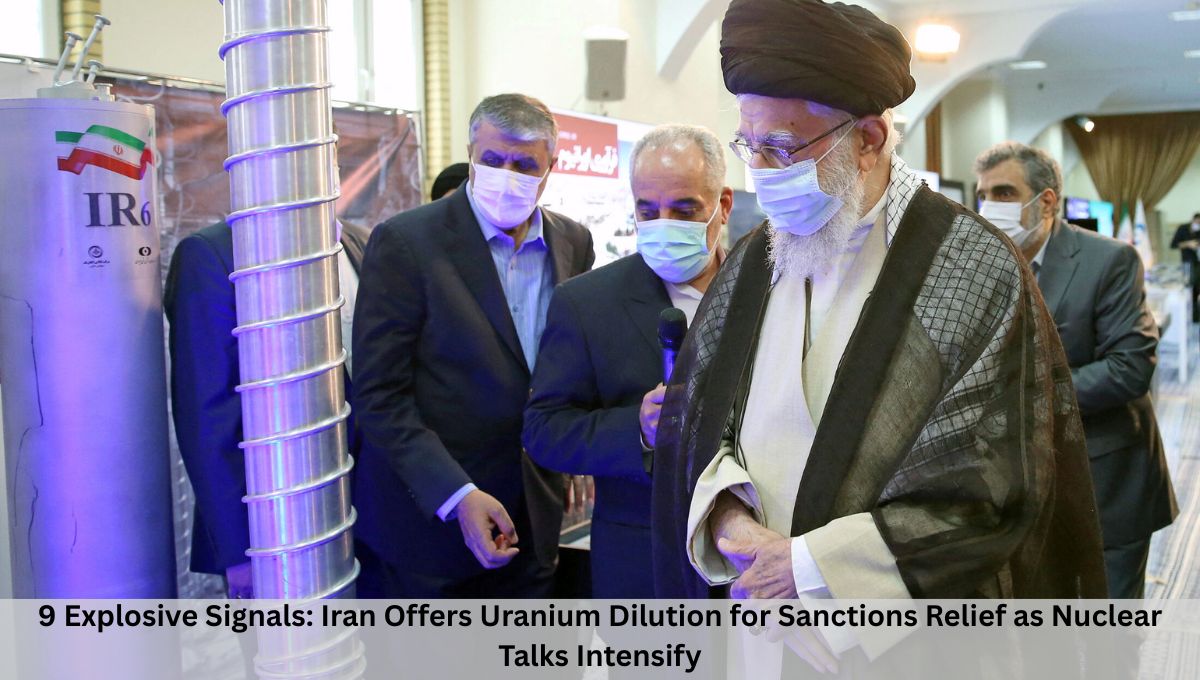
9 Explosive Signals: Iran Offers Uranium Dilution for Sanctions Relief as Nuclear Talks Intensify amid high tensions in Washington and Israel. Iran has signaled a potential breakthrough in its long-running nuclear standoff with the United States, suggesting it could dilute its stockpile of highly enriched uranium if sanctions against the country are lifted.
The offer, made by Iran’s top nuclear official, comes as indirect talks between Tehran and Washington resume in Oman following months of escalating military and diplomatic tensions.
The proposal marks one of the clearest indications yet that Iran is willing to compromise on a key US demand—though significant obstacles remain, including deep mistrust, unresolved verification issues, and pressure from Israel to maintain a hardline stance.
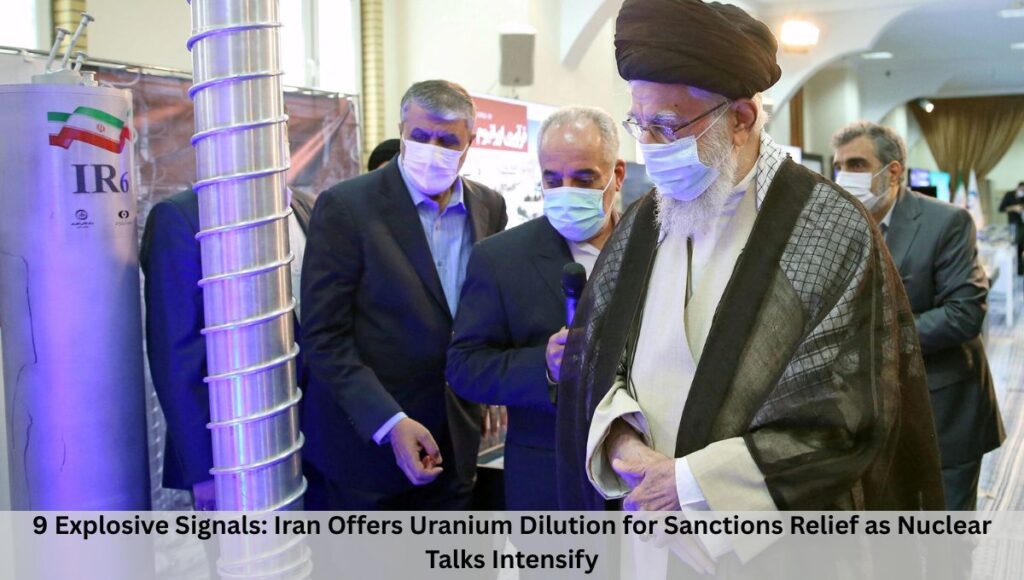
9 Explosive Signals: Iran Offers Uranium Dilution for Sanctions Relief as Nuclear Talks Intensify
What Iran Is Offering—and What It Wants in Return
Mohammad Eslami, head of the Atomic Energy Organization of Iran (AEOI), told reporters that Tehran is open to diluting its uranium enriched to 60 percent, a level dangerously close to weapons-grade material.
However, Eslami made clear that such a step would be conditional.
The move would depend on whether all sanctions are lifted in return, he said, according to Iran’s state-run IRNA news agency.
Crucially, Eslami did not clarify whether Iran is seeking:
- The removal of only US sanctions, or
- All international sanctions, including those tied to terrorism, missiles, and human rights.
This ambiguity reflects Iran’s broader negotiating strategy: offering technical concessions while demanding sweeping economic relief.
Why 60% Uranium Is a Red Line for the World
Understanding Uranium Enrichment
Uranium enrichment refers to increasing the concentration of the U-235 isotope:
- 3–5% → civilian nuclear power
- 20% → advanced research reactors
- 60% → near weapons-grade
- 90% → nuclear weapons
Iran is currently the only non-nuclear-armed country enriching uranium to 60 percent, according to the International Atomic Energy Agency (IAEA).
Dilution would involve blending the enriched material with lower-grade uranium to reduce its concentration below sensitive thresholds—a reversible but confidence-building measure.
The Missing Uranium Stockpile Raises Alarm
One of the most serious unresolved issues is the whereabouts of more than 400 kilograms of highly enriched uranium Iran possessed before last year’s war with Israel and the United States.
UN nuclear inspectors last confirmed the location of this material on June 10, just days before Israeli airstrikes targeted Iranian nuclear facilities.
According to a May 2025 IAEA report, this stockpile would be sufficient to produce:
- More than nine nuclear weapons if further enriched to 90 percent
The lack of clarity over this uranium has intensified Western concerns and complicated ongoing negotiations.
Impact of US and Israeli Strikes on Iran’s Nuclear Program
June 2025: A Turning Point
In June last year, Israel launched widespread strikes against Iranian nuclear sites, military bases, and infrastructure.
Days later, the United States escalated the campaign, deploying bunker-buster bombs against key facilities at:
- Fordo
- Natanz
- Isfahan
While the attacks caused severe damage to Iran’s enrichment capabilities, IAEA Director General Rafael Grossi has since warned that Iran could resume enrichment within months.
The strikes also hardened political positions on both sides, making diplomacy more urgent—but more fragile.
Oman Talks: A Diplomatic Reset After War
Indirect negotiations resumed in Oman last week, marking the first formal talks since the June conflict.
The discussions involved:
- Iranian Foreign Minister Abbas Araghchi
- US Middle East envoy Steve Witkoff
Both sides described the talks as constructive, agreeing to continue discussions.
Eslami’s remarks on uranium dilution followed these meetings, suggesting Tehran is testing the waters for a broader deal.
Iran’s Position: Rights First, Sanctions Lifted
Iranian leaders have consistently framed their nuclear stance around national sovereignty and international law.
Key Iranian Demands
- Recognition of Iran’s right to civilian enrichment
- Binding guarantees against future US withdrawal
- Lifting of what Tehran calls “unjust sanctions”
President Masoud Pezeshkian described the negotiations as an “important opportunity” for a fair solution, while warning that Iran will not accept coercion.
Foreign Minister Araghchi echoed that sentiment, noting a persistent “wall of mistrust” toward Washington rooted in past US actions.
Trump’s Hard Line—and Mixed Signals
US President Donald Trump has repeatedly insisted that Iran must accept a total ban on uranium enrichment, a demand Tehran considers unacceptable and more restrictive than the now-defunct 2015 nuclear deal.
At the same time, Trump has offered contradictory messaging:
- Praising talks as “very good”
- Warning of “steep consequences” if no deal is reached
He has also reinforced military pressure by deploying an aircraft carrier and accompanying warships to the Middle East.
“They know the consequences if they don’t [make a deal],” Trump said.
Israel Pushes for Maximum Pressure
Israeli Prime Minister Benjamin Netanyahu is expected to meet Trump this week, urging Washington to take a harder stance.
Israel is demanding:
- Complete dismantling of Iran’s enrichment program
- Restrictions on ballistic missiles
- Limits on Iran’s regional alliances
Israeli officials have warned they may act unilaterally if Iran crosses perceived red lines, further raising the risk of escalation.
No Uranium Export on the Table
Iran has categorically rejected proposals to ship enriched uranium to third countries.
Eslami clarified that:
- Exporting uranium was not discussed
- Iran has no intention of transferring its stockpile abroad
This position was reaffirmed by Iranian officials during the Oman talks and reported by regional media.
A Dual-Track Strategy: Diplomacy and Deterrence
While engaging in talks, Iran has simultaneously signaled a shift toward military opacity.
State media reported that Iran’s Defense Ministry has halted public displays of new weapons systems to preserve strategic surprise—a move widely interpreted as preparing for potential conflict if negotiations fail.
Supreme Leader Ayatollah Ali Khamenei reinforced a message of resistance, urging Iranians to rely on national resolve rather than foreign pressure.
Are the Talks Moving Toward a Deal?
Security analysts say the tone has improved, but risks remain high.
Andreas Krieg, an associate professor at King’s College London, said both sides appear closer to a deal than weeks ago—but warned that coercion is still in play.
He noted that:
- US military pressure remains active
- Messaging from Oman, Qatar, and Gulf mediators has been positive
- The challenge now is translating momentum into technical details
What Happens Next
Key developments to watch:
- Follow-up talks after the Oman meetings
- Trump-Netanyahu discussions in Washington
- Possible IAEA involvement in verification mechanisms
- Clarification on sanctions scope and sequencing
Whether Iran’s offer to dilute enriched uranium becomes a turning point—or another missed opportunity—will depend on how far both sides are willing to compromise.
Conclusion: A Narrow Window for De-Escalation
Iran’s willingness to dilute its highly enriched uranium marks a rare moment of flexibility in one of the world’s most dangerous nuclear standoffs.
Yet the gap between Tehran’s demand for full sanctions relief and Washington’s insistence on zero enrichment remains wide.
With regional tensions high, military forces deployed, and mistrust deeply entrenched, the coming weeks may determine whether diplomacy prevails—or whether the crisis slides back toward confrontation.
Also Read: Iran Rejects IAEA Report on Enriched Uranium Amid Growing Global Tensions
Also Read: Inside Iran’s mistrust dilemma: Is Tehran managing risk by engaging the US?
Related Posts:
- UN Security Council Blocks China-Russia Resolution…
- 11 Explosive Warnings as Trump Vows to ‘Knock the…

- Trump’s 20-Point Gaza Peace Plan Gains Urgent Global…

- In 8 Moves, EU Targets China-Linked Refineries and…

- 9 Crucial Developments in Explosive Iran–U.S.…
- 7 Powerful Measures: Trump Sanctions Russian Oil…
