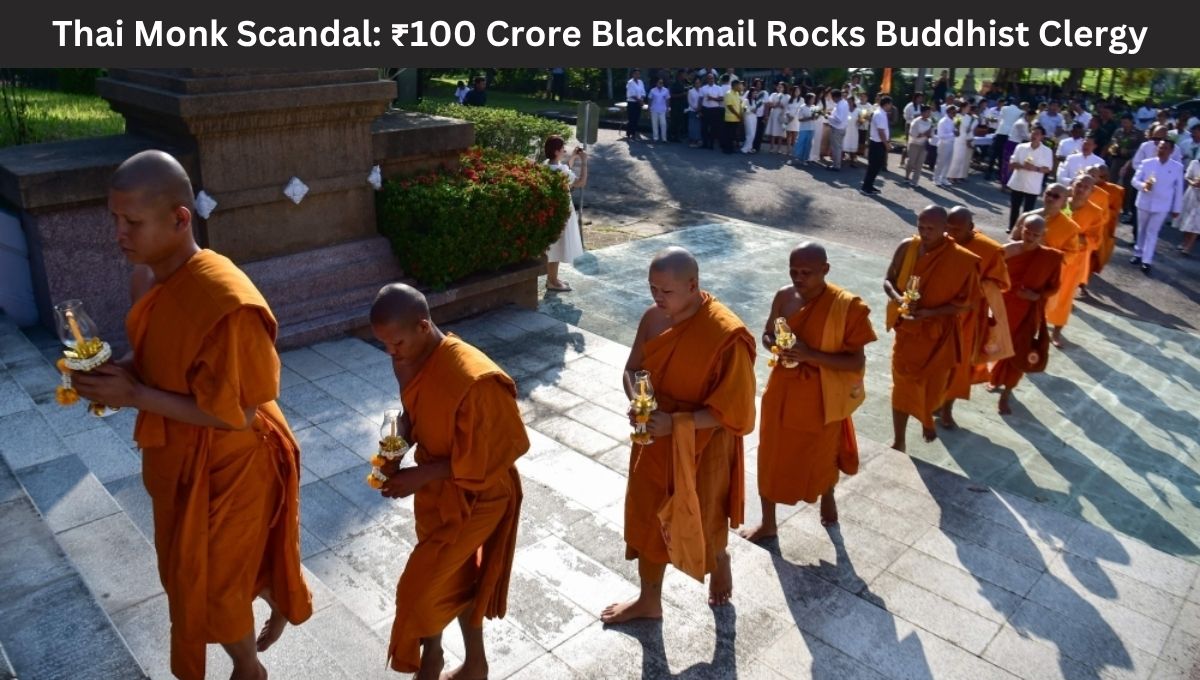
A woman known as “Ms Golf” and Thai Monk Scandal: ₹100 Crore Blackmail Rocks Buddhist Clergy. In a shocking scandal that has shaken Thailand’s Buddhist foundations, a woman identified as Wilawan Emsawat, known by the alias “Ms Golf,” has been arrested for blackmailing senior monks with explicit photos and videos, extorting more than ₹100 crore (385 million baht) over three years.
This unprecedented case has triggered a nationwide reckoning across Thailand’s monastic institutions, led to the disrobing of multiple monks, and prompted intervention from both the Thai government and the Sangha Supreme Council, the highest authority in Thai Buddhism.
Thai Monk Scandal: ₹100 Crore Blackmail Rocks Buddhist Clergy
Who Is Wilawan Emsawat?
Wilawan Emsawat, a 35-year-old woman from Nonthaburi province, just north of Bangkok, was arrested by the Royal Thai Police Central Investigation Bureau (CIB) on charges of extortion, money laundering, and receiving stolen goods.
Police allege she deliberately seduced at least nine senior monks, mostly abbots, and recorded their private encounters using hidden cameras and chats, later using them as blackmail material.
Her tactic, dubbed a “targeted seduction and extortion campaign,” is believed to have been meticulously executed over a span of three years, revealing a disturbing digital archive of over 80,000 intimate files including photos, videos, and private messages.
How the Scandal Was Exposed
The scandal began unraveling in mid-June 2025, when an abbot from a major Bangkok temple abruptly left monkhood, sparking suspicion.
Police later discovered that he was coerced into paying 7.2 million baht (₹2 crore) after Wilawan claimed to be pregnant and demanded child support.
As investigations expanded, a larger pattern emerged: numerous monks had wired vast amounts of money to Wilawan’s accounts to suppress similar threats.
Alarmingly, some of these transactions originated from temple bank accounts, raising questions about misuse of religious donations.
80,000+ Files: A Digital Trail of Blackmail
A police raid on Wilawan’s residence revealed a shocking digital collection of over 80,000 files stored on her smartphones and devices.
These included sexually explicit videos and photos as well as intimate conversations with monks. Many of the files are believed to have been recorded without the monks’ full consent.
“These were methodically organized and clearly meant for long-term blackmail,” said Deputy Commissioner Jaroonkiat Pankaew, who is heading the investigation. “She is extremely dangerous. We had to act fast.”
Gambling Addiction and Lavish Spending
Despite accumulating ₹100 crore, Wilawan is reported to have lost most of the extorted money to online gambling platforms.
Investigators revealed that the funds were quickly funneled through various betting websites, leaving little behind.
This gambling trail has added new layers of complexity to the case, as police are now investigating online gambling networks possibly linked to the scandal.
Monk Misconduct and Disrobing
So far, at least nine abbots and senior monks have been disrobed and expelled from monkhood.
Reports suggest the number could rise to 15 monks or more, as more victims come forward or are identified through digital evidence.
This deeply undermines the public image of Thai Buddhism, where monks are seen not just as spiritual leaders but also moral exemplars.
In Thailand, where over 90% of the population is Buddhist, many men temporarily become monks as a rite of passage to gain merit.
Systemic Issues in Buddhist Institutions
The Thai monk scandal has not only exposed individual failings but also institutional flaws particularly concerning temple finances. With little oversight, abbots often control significant donations made by followers.
The fact that monks used temple funds to pay hush money has alarmed both authorities and the public.Government officials now admit that the system lacks accountability.
“This is a wake-up call. We need strict auditing and financial transparency in temples,” said Government Spokesperson Jirayu Houngsub.
Royal Intervention and Public Backlash
In a rare symbolic move, Thailand’s King Vajiralongkorn revoked the royal titles of 81 monks following revelations of misconduct.
This royal rebuke highlights the magnitude of the scandal and the need to protect Buddhism’s sanctity.
Public sentiment is equally strong. Social media platforms are flooded with anger and disillusionment, as people question how such blatant misconduct went unnoticed.
The public is now calling for long-overdue reform within Buddhist institutions.
Government and Sangha Council Announce Reforms
In response to the escalating crisis, Acting Prime Minister Phumtham Wechayachai has ordered a full review of temple laws, calling for new regulations to govern monk behavior, financial management, and donations.
Meanwhile, the Sangha Supreme Council has formed a special investigative committee to revise monastic rules and identify weaknesses in enforcement.
A hotline and Facebook page have been launched to enable the public to report misconduct by monks an unprecedented move in a traditionally hierarchical and closed system.
Previous Scandals Cast Long Shadows
This is not Thailand’s first monk-related scandal. In 2017, monk Wirapol Sukphol was convicted of fraud, sex offenses, and embezzlement after flaunting a lavish lifestyle with luxury cars and private jets.
In 2022, an entire temple in Phetchabun province was left empty when all its monks were arrested during a drug raid.
Such recurring incidents have led many to question whether the Sangha can effectively police itself or if it is time for civilian oversight of religious institutions.
Experts Warn of Deep-Rooted Problems
Academic voices are adding urgency to the debate. Suraphot Thaweesak, a prominent religious scholar, said, “The Sangha Council is deeply authoritarian.
Junior monks fear speaking up. True reform requires dismantling this power structure.”
Prakirati Satasut, a sociologist from Thammasat University, added, “The Council must be willing to sacrifice parts of itself to preserve Buddhism as a whole.”
A Nation at a Crossroads
The arrest of Wilawan Emsawat and the revelations of her blackmail scheme mark a critical moment in the history of Buddhism in Thailand.
As legal cases mount and public pressure intensifies, Thailand’s religious authorities must confront a difficult choice: embrace transparency or risk further erosion of public trust.
“This is bigger than one woman or nine monks,” said a senior CIB official. “This is about saving the soul of Thai Buddhism.”
Conclusion: Will Thai Buddhism Reform or Erode?
As Thailand reels from the ₹100 crore monk blackmail scandal, the nation faces a moral crisis that could either lead to genuine reform or deepen disillusionment with sacred institutions.
With senior monks disrobed, royal titles revoked, and new laws in the pipeline, there is hope that this moment will spark long-lasting change. But the path forward demands more than ritual and repentance. It will require courage, accountability, and structural overhaul. Only time will tell if Thailand’s Buddhist leadership will rise to the occasion or repeat the mistakes of the past.
Also Read: Dan Bongino vs. Susie Wiles: White House Erupts Over Epstein Memo
Also Read: Who is Wilawan Emsawat? Woman at center of $11.9 million monk extortion scandal