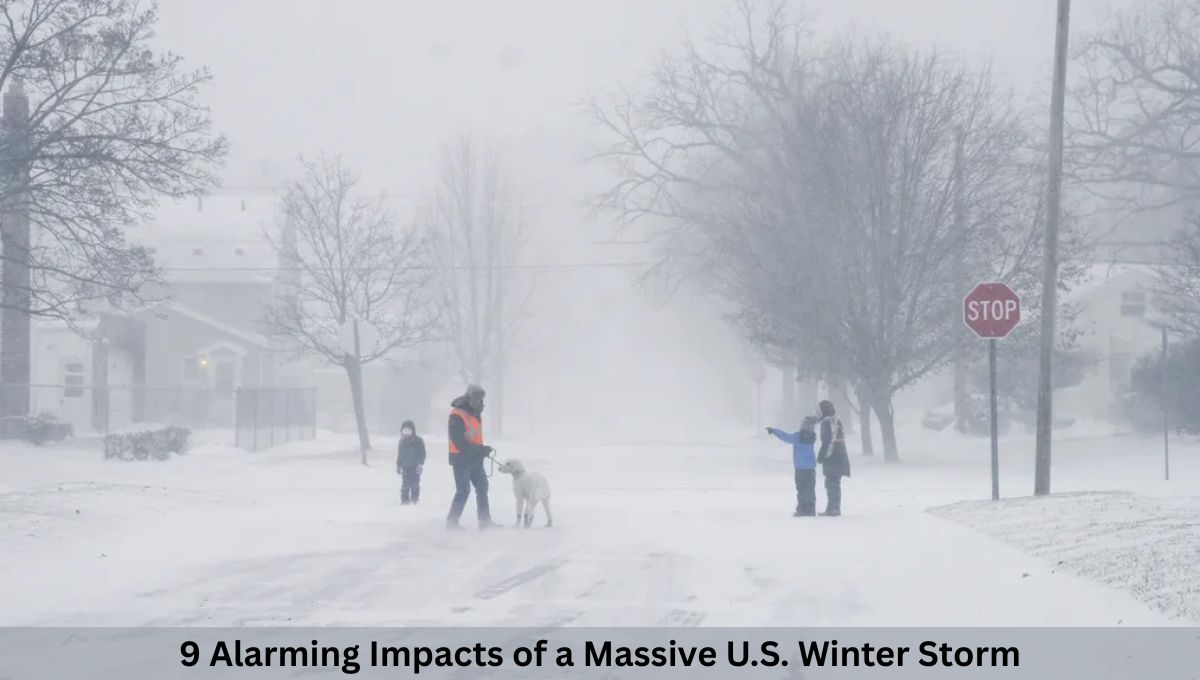
9 Alarming Impacts of a Massive U.S. Winter Storm as Arctic air, snow, and ice stretch emergency services to the limit. A massive winter storm stretching across large swathes of the United States has unleashed a cascade of disruptions, plunging communities into darkness, grounding air travel, and pushing consumers into panic buying as forecasters warn of prolonged and dangerous conditions.
The sprawling system, driven by an intense Arctic blast, has combined heavy snow, freezing rain, and bitterly cold temperatures, affecting tens of millions of Americans from the Midwest and Plains to the Northeast and parts of the South. Authorities describe the storm as one of the most disruptive weather events of the season, with impacts extending far beyond snowfall totals.
Power companies, airlines, emergency responders, and state governments are struggling to keep pace as the storm tests infrastructure already strained by extreme weather and aging grids.
9 Alarming Impacts of a Massive U.S. Winter Storm
How the Storm Formed: Arctic Air Meets Moisture
Meteorologists say the storm developed as a powerful surge of Arctic air plunged southward, colliding with warm, moisture-laden systems moving in from the Gulf of Mexico.
This volatile combination created a vast weather front capable of producing blizzard conditions in some areas and crippling ice accumulation in others.
Snow, Ice, and Wind
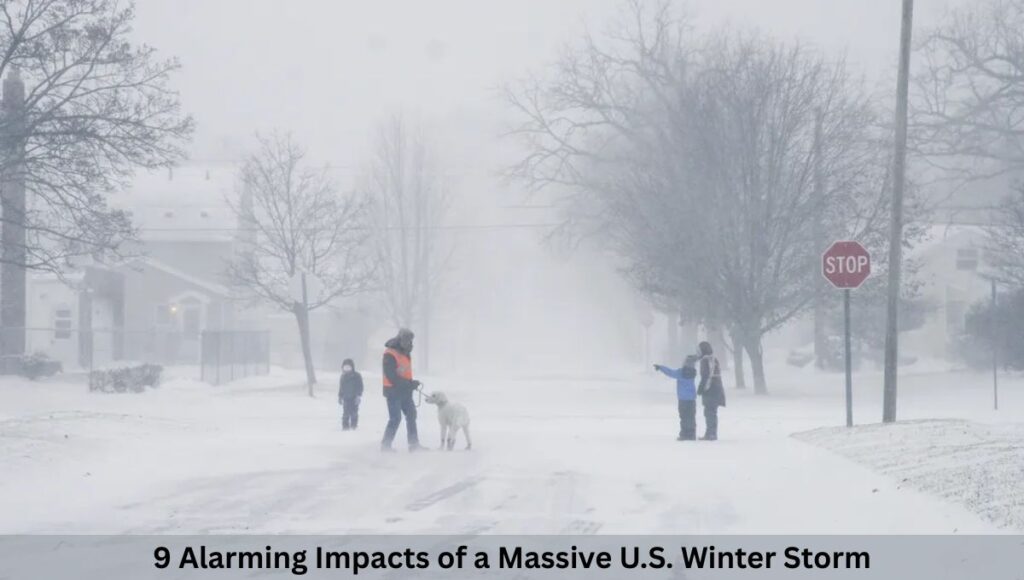
In northern regions, heavy snowfall and strong winds have produced whiteout conditions, making travel extremely dangerous or impossible.
In transitional zones, freezing rain has coated roads, trees, and power lines with ice, dramatically increasing the risk of outages and accidents.
Further south, plunging temperatures have turned rain into ice overnight, catching many communities unprepared for winter conditions of this severity.
Power Outages: Millions Left in the Dark
One of the most immediate and visible impacts of the storm has been widespread power outages.
Utility companies report that ice-laden power lines and falling trees have knocked out electricity to millions of homes and businesses.
In some states, outages have persisted for days as repair crews battle hazardous conditions.
Strain on the Power Grid
The surge in electricity demand for heating, combined with physical damage to infrastructure, has placed enormous strain on regional power grids.
Officials have warned that restoration efforts could be slow in rural and heavily iced areas, where access is limited and repairs require specialized equipment.
For vulnerable populations, including the elderly and those relying on medical devices, the loss of power has become a life-threatening concern.
Travel Chaos: Flights Cancelled and Roads Closed
The winter storm has triggered widespread travel disruption across the country.
Airlines Grounded
Thousands of flights have been cancelled or delayed as major airports contend with snow-covered runways, icy aircraft, and staffing shortages.
Airlines have issued travel waivers, allowing passengers to rebook without fees, but the sheer scale of cancellations has left many stranded during an already busy travel period.
Highways Turn Deadly
On the ground, icy roads have led to multi-vehicle pileups and countless accidents. State troopers and transportation departments have urged drivers to stay off the roads unless travel is absolutely essential.
Several major highways have been closed entirely as conditions deteriorated, complicating emergency response and supply deliveries.
Panic Buying: Store Shelves Emptied
As forecasts warned of prolonged outages and impassable roads, consumers rushed to stock up on essentials.
Supermarkets across affected regions reported empty shelves where bread, milk, bottled water, batteries, and heating fuel once stood.
Fear of Prolonged Disruption
Retailers say the surge in demand reflects not only fear of short-term shortages but also growing anxiety about the reliability of infrastructure during extreme weather events.
Local officials have urged calm, emphasizing that supply chains remain intact, but acknowledge that delivery delays are likely in heavily impacted areas.
Emergency Declarations and Government Response
Governors in multiple states have declared states of emergency, mobilizing the National Guard and unlocking federal resources.
Emergency shelters have been opened for residents without heat, while warming centers have been established in libraries, schools, and community centers.
Federal Coordination
Federal agencies are coordinating with state and local authorities to provide disaster assistance, including fuel supplies, generators, and logistical support.
Officials have stressed that residents should heed weather warnings and evacuation orders where issued.
Human Toll: Injuries, Deaths, and Isolation
The storm’s impact has not been limited to infrastructure and commerce. Authorities have confirmed storm-related injuries and deaths, many linked to traffic accidents, hypothermia, and improper use of heating equipment.
In rural areas, entire communities have been cut off as snow and ice block access routes, delaying emergency medical care.
Risks from Cold Exposure
Health officials warn that prolonged exposure to extreme cold can be deadly, particularly for unhoused populations and those without reliable heating.
Carbon monoxide poisoning has also emerged as a serious risk as residents turn to generators and alternative heating sources indoors.
Impact on Schools, Businesses, and the Economy
School districts across multiple states have closed or shifted to remote learning, while businesses have shuttered temporarily.
Economists say widespread disruptions to transportation and commerce could have ripple effects, particularly if the storm’s aftermath drags on.
Supply Chain Concerns
Delays in trucking and rail transport threaten to disrupt deliveries of food, fuel, and industrial goods, adding pressure to regional economies.
Climate Context: Are These Storms Becoming More Severe?
While winter storms are not unusual, scientists note that climate change may be contributing to more extreme and erratic weather patterns.
Some researchers argue that warming in the Arctic can weaken the polar vortex, allowing frigid air to spill southward more frequently and intensely.
This evolving climate dynamic complicates preparedness efforts and challenges long-held assumptions about winter weather risks.
What Happens Next: Forecast and Recovery
Meteorologists warn that while snowfall may taper off in some regions, dangerously cold temperatures are expected to persist.
Utility crews face a long recovery process, particularly in areas with severe ice damage.
Officials urge residents to remain vigilant, conserve energy where possible, and check on vulnerable neighbors.
Conclusion: A Stark Reminder of Winter’s Power
The massive winter storm sweeping the United States has exposed the fragility of critical systems and the human cost of extreme weather.
From darkened homes and stranded travelers to overwhelmed emergency services, the storm’s reach has been vast and unforgiving.
As communities dig out and assess the damage, the event stands as a stark reminder that winter remains one of nature’s most formidable forces — and that preparation, coordination, and resilience are more vital than ever.
Also Read: 11 Powerful Impacts as Winter Storm Cripples US Flights During Holiday Travel
Also Read: More than half the US threatened with ice, snow and cold in massive winter storm
Related Posts:
- 9 Devastating Impacts of America’s Historic Winter…
- 11 Powerful Impacts as Winter Storm Cripples US…
- 7 Stunning Reasons Saudi Arabia’s Desert Saw Snow…

- 7 Critical Signals Behind Trump’s Claim of a Ukraine…

- In 8 Moves, EU Targets China-Linked Refineries and…

- Afghanistan–Pakistan War 2025: Inside the 48-Hour Ceasefire
